Products
Features
YouTube Video Summarizer
Summarize YouTube videos
Web & PDF Highlighter
Highlight web pages & PDFs
Chat with PDF
Ask any PDF questions with AI
Ask AI Clone
Chat with your highlights & memories
Audio Transcriber
Transcribe audio files to text
Glasp Reader
Read and highlight articles
Kindle Highlight Export
Export your Kindle highlights
Idea Hatch
Hatch ideas from your highlights
Integrations
Obsidian Plugin
Notion Integration
Pocket Integration
Instapaper Integration
Medium Integration
Readwise Integration
Snipd Integration
Hypothesis Integration
Apps & Extensions
Chrome Extension
Safari Extension
Edge Add-ons
Firefox Add-ons
iOS App
Android App
Discover
Discover
Ideas
Discover new ideas and insights
Articles
Curated articles and insights
Books
Book recommendations by great minds
Posts
Essays and notes from readers
Quotes
Inspiring quotes collection
Videos
Curated videos and summaries
Explore Glasp
Glasp Newsletter
Weekly insights and updates
Glasp Talk
Interview series with great minds
Glasp Blog
Latest news and articles
Glasp Use Cases
Learn how others use Glasp
Build & Support
Glasp API
Access Glasp's API for developers
MCP Connector
Connect Glasp to Claude & ChatGPT
Community
Glasp Reddit Community
Students
Student discount and benefits
FAQs
Frequently Asked Questions
AboutPricing
DashboardLog inSign up

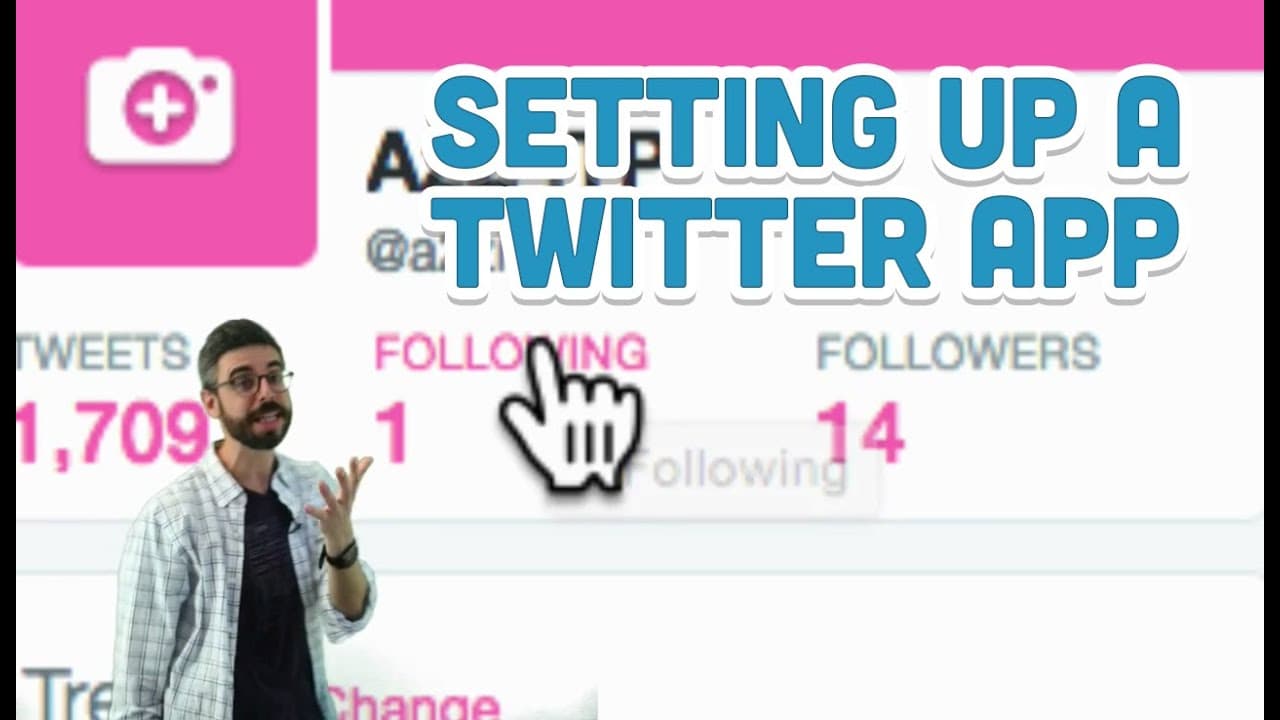
15.3: Setting up a Twitter app - Twitter Bot Tutorial
142.2K views
•
November 12, 2015
by
The Coding Train
YouTube video player
15.3: Setting up a Twitter app - Twitter Bot Tutorial

TL;DR

Learn how to connect to the Twitter API using Node.js and the twit package, setting up authentication and keys.

Transcript

in this video I'm going to look at how you can write code in a node application to connect to the Twitter API, using the node package twit.So it assumes the previous couple videos where you've got node installed, you've got the twit package installed.And now you're ready, you're readyI, I'm ready we're ready here to actually write some code.So the ... Read More

Key Insights

  • 👨‍💻 Initializing a bot.js file for writing code in a Node application.
  • 📦 Utilizing the twit package for connecting to the Twitter API.
  • 🤩 Securing API keys by storing them in a separate config file.
  • ❓ Authenticating with OAuth for interaction with the Twitter API.
  • 🔐 Importance of organizing and managing API keys for security.
  • 📁 Simplifying codebase by using separate files for configuration.
  • 🔠 Steps to create a Twitter object with API keys for API interaction.

Install to Summarize YouTube Videos and Get Transcripts

Explore YouTube Video Summarizer or Get YouTube Transcript Extractor

Questions & Answers

Q: How do you authenticate with the Twitter API using Node.js?

To authenticate with the Twitter API, you need to create a new Twitter object with consumer key, consumer secret, access token, and access token secret tied to your Twitter account.

Q: Why is it important to store API keys in a separate config file?

Storing API keys in a separate config file helps with organization and security, making it easier to manage keys and ensuring they are not exposed in the main codebase when sharing or publishing the code.

Q: How can you create a new Twitter object in Node.js for API interaction?

By requiring the config file with API keys using require('config'), you can initialize a new Twitter object with the imported keys for API interaction in your Node.js application.

Q: What steps are involved in setting up authentication for the Twitter API in Node.js?

Setting up authentication involves creating a Twitter object, providing OAuth credentials, and using the twit package to make API calls, ensuring secure communication with the Twitter API.

Summary & Key Takeaways

  • Setting up a JavaScript file named bot.js to write code for a Node application.

  • Using the twit package to connect to the Twitter API and authenticating with OAuth.

  • Storing API keys in a separate config file for better organization and security.


Read in Other Languages (beta)

English

Share This Summary 📚

Summarize YouTube Videos and Get Video Transcripts with 1-Click

Download browser extensions on:

Try YouTube Summary with ChatGPT & Claude or YouTube Transcript Generator

Explore More Summaries from The Coding Train 📚
How to Train a Pose Recognition Model with PoseNet and ML5.js thumbnail
How to Train a Pose Recognition Model with PoseNet and ML5.js
The Coding Train
Coding Challenge #70: Nearest Neighbors Recommendation Engine - Part 2 thumbnail
Coding Challenge #70: Nearest Neighbors Recommendation Engine - Part 2
The Coding Train
12.2: The Depth Image - Kinect and Processing Tutorial thumbnail
12.2: The Depth Image - Kinect and Processing Tutorial
The Coding Train
Live Stream Archive: ITP Winter Show 2019 thumbnail
Live Stream Archive: ITP Winter Show 2019
The Coding Train
4.4: Using println() - Processing Tutorial thumbnail
4.4: Using println() - Processing Tutorial
The Coding Train
7.4: Cellular Automata Exercises - The Nature of Code thumbnail
7.4: Cellular Automata Exercises - The Nature of Code
The Coding Train

Summarize YouTube Videos and Get Video Transcripts with 1-Click

Download browser extensions on:

Try YouTube Summary with ChatGPT & Claude or YouTube Transcript Generator

Apps & Extensions

  • Chrome Extension
  • Safari Extension
  • Edge Add-ons
  • Firefox Add-ons
  • iOS App
  • Android App

Key Features

  • YouTube Video Summarizer
  • Web & PDF Summarizer
  • Web & PDF Highlighter
  • Chat with PDF
  • Ask AI Clone
  • Audio Transcriber
  • Glasp Reader
  • Kindle Highlight Export
  • Idea Hatch

Integrations

  • Obsidian Plugin
  • Notion Integration
  • Pocket Integration
  • Instapaper Integration
  • Medium Integration
  • Readwise Integration
  • Snipd Integration
  • Hypothesis Integration

More Features

  • APIs
  • MCP Connector
  • Blog & Post
  • Embed Links
  • Image Highlight
  • Personality Test
  • Quote Shots

Company

  • About us
  • Blog
  • Community
  • FAQs
  • Job Board
  • Newsletter
  • Pricing
Terms

•

Privacy

•

Guidelines

© 2026 Glasp Inc. All rights reserved.