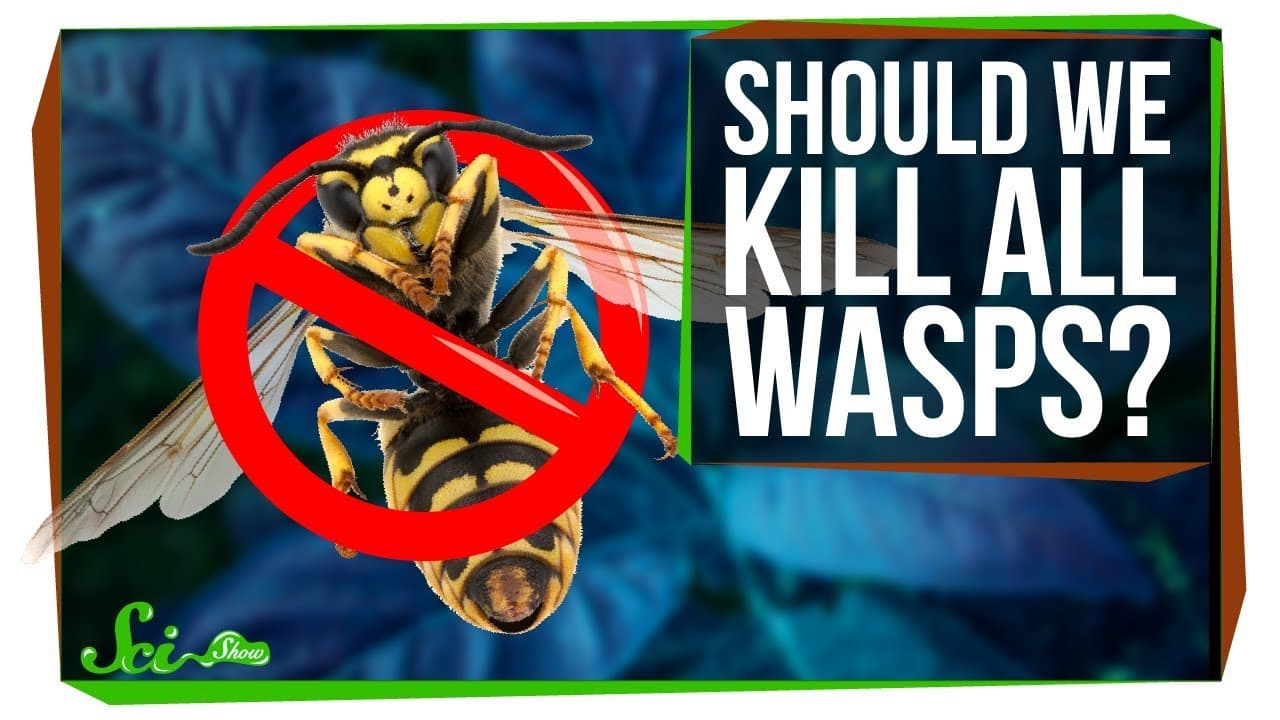
What If We Killed All the Wasps?
TL;DR
Wasps are not just pesky insects, they are important pest control agents, pollinators, and potential sources of medical advancements.
Transcript
♪ Wasps seem to be best known for stinging people, ruining picnics, and generally being jerks. But believe it or not, our lives are actually a lot better because of them. Wasps are nuisance bugs, but they kill lots of other nuisance bugs and are important pollinators. And scientists even think that certain compounds in wasp venom could be used as c... Read More
Key Insights
- 🎮 Wasps are valuable pest control agents, targeting harmful insects and protecting forests and crops.
- 🧑🚒 Certain species of wasps contribute to plant pollination, especially fig trees, which rely on wasps for reproduction.
- ♋ Wasp venom contains mastoparans, which show promise as potential cancer therapies and antibiotics.
- 🐠 Fig trees, pollinated by wasps, play a vital role in tropical and sub-tropical forest ecosystems.
- 🧑🚒 Wild figs, dependent on wasps for pollination, are consumed by over 1200 types of animals, making them keystone species.
- 🎯 Mastoparans in wasp venom selectively target cancer cells due to different membrane properties.
- 🛀 Mastoparans have shown antimicrobial properties against bacteria, including dangerous pathogens like Staphylococcus aureus.
Install to Summarize YouTube Videos and Get Transcripts
Explore YouTube Video Summarizer or Get YouTube Transcript Extractor
Questions & Answers
Q: Why are wasps important pest control agents?
Wasps, including yellow jackets, prey on harmful insects and help control populations of pests like aphids and caterpillars, benefiting farmers and ecosystems.
Q: How do wasps contribute to plant pollination?
Some wasps, like those that pollinate figs, have a mutually beneficial relationship with certain plants. The wasps lay their eggs inside fig flowers and transfer pollen between fig trees, enabling their reproduction.
Q: How can wasp venom be used in medical treatments?
Mastoparans, peptides found in wasp venom, have shown potential in cancer treatment, as they increase survival rates in mice and selectively kill cancer cells. They also demonstrate antibiotic properties against bacteria and fungi.
Q: Are wasps crucial for human health?
While more research is needed, the antimicrobial and potential cancer-fighting properties of mastoparans in wasp venom suggest they could have significant implications for human health, making wasps worth studying further.
Summary & Key Takeaways
-
Wasps are crucial pest control agents, targeting harmful insects harmful to forests and crops.
-
They contribute to the pollination of certain plants, particularly figs, which are essential for maintaining forest ecosystems.
-
Wasp venom contains peptides called mastoparans, which show potential in cancer treatment and as antibiotics.
Read in Other Languages (beta)
Share This Summary 📚
Summarize YouTube Videos and Get Video Transcripts with 1-Click
Try YouTube Summary with ChatGPT & Claude or YouTube Transcript Generator
Explore More Summaries from SciShow 📚

Summarize YouTube Videos and Get Video Transcripts with 1-Click
Try YouTube Summary with ChatGPT & Claude or YouTube Transcript Generator