NASA Administrator to Discuss Science With Crew Aboard Station
TL;DR
The International Space Station (ISS) astronauts discuss groundbreaking research on the ISS, including 3D printing of human tissues, stem cell research, and remote robotic surgery, which will benefit both space exploration and healthcare on Earth.
Transcript
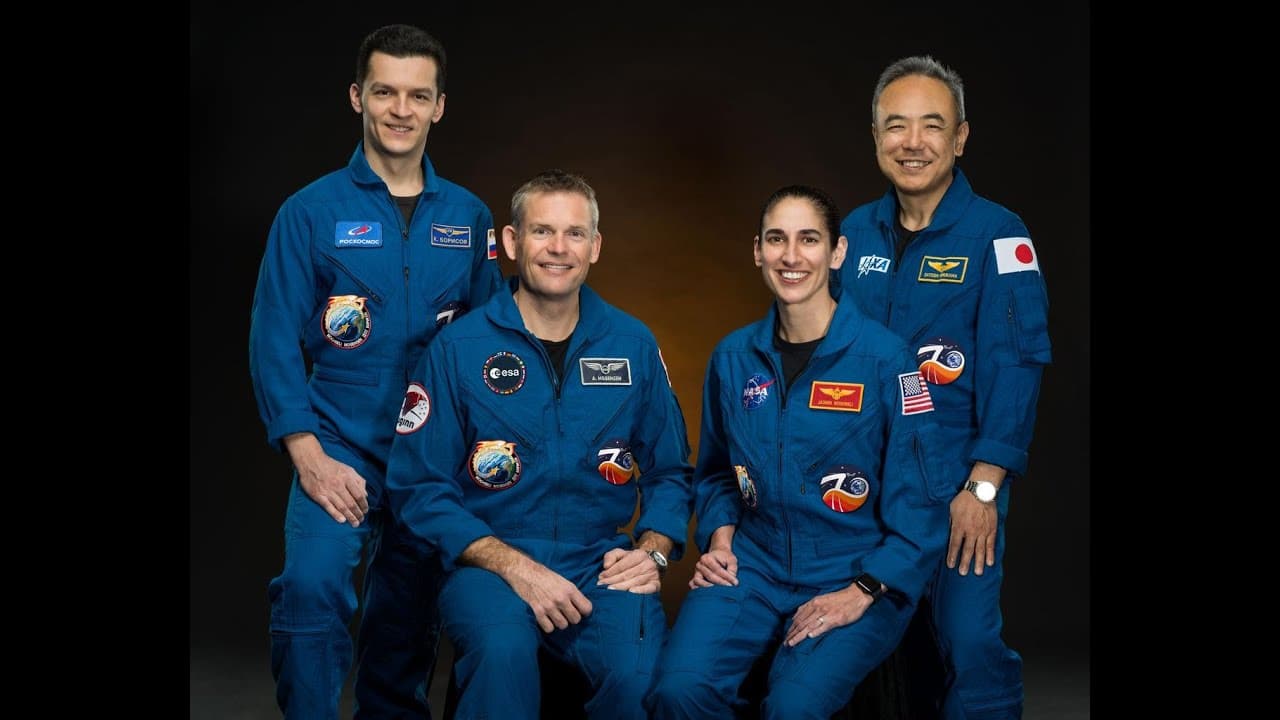
station this is Houston are you ready for the event are you ready for the event we're ready for the event JSC Pao this is Mission Control Houston please call station for a voice check station this is Chelsea BTE with JSC paao how do you hear me hello Chelsea we've got you loud and clear Andreas Jasmine and Satoshi it's so great to see you thank you... Read More
Key Insights
- 👨🔬 The ISS provides a versatile laboratory for conducting groundbreaking research in various scientific fields.
- 😘 The microgravity environment on the ISS allows for advancements in tissue printing, stem cell research, and crystal growth, among other studies.
- ☠️ Insights gained from space experiments have direct applications for healthcare on Earth, including treatments for bone loss and potential advancements in robotic surgery.
- 👨🚀 Conducting research in space presents unique challenges, such as managing floating objects and ensuring astronauts understand the experiments they are working on.
Install to Summarize YouTube Videos and Get Transcripts
Explore YouTube Video Summarizer or Get YouTube Transcript Extractor
Questions & Answers
Q: How does microgravity benefit tissue printing experiments on the ISS?
Microgravity allows for the printing of human tissues in three dimensions, providing a more promising technology for future organ printing. The microgravity environment enhances the ability to study cardiac functions and has the potential to alleviate the need for organ donors in the future.
Q: How can space experiments on the ISS lead to advancements in medical research on Earth?
Many experiments conducted on the ISS have direct implications for healthcare on Earth. For example, studying bone loss in microgravity helps understand mechanisms to prevent and treat bone loss in aging individuals. Stem cell research in space also provides insights into potential treatments for various conditions, including bone loss.
Q: Can remote robotic surgery technology on the ISS be applied to space missions to the Moon, Mars, or beyond?
Remote robotic surgery technology has the potential to revolutionize medical care in space. It enables surgeons on Earth to perform surgeries on astronauts in space, overcoming the limitations of having specialized surgeons on every mission. This technology prepares us for future long-duration space missions where medical resources may be limited.
Q: What is the most challenging aspect of conducting research in space?
Keeping track of objects and samples in the microgravity environment is a significant challenge. Without gravity, everything tends to float, making it essential to secure and organize materials. Additionally, the complexity of experiments requires astronauts to have a solid understanding of the research, even though they may not have the same level of expertise as the scientists on Earth.
Summary & Key Takeaways
-
Astronauts on the ISS discuss the versatility of the space station as a laboratory and highlight the significance of their research in microgravity, including cultivating tomatoes, studying bone loss and muscle atrophy, and investigating fluids, flames, and materials.
-
The scientists emphasize the benefits of studying in a weightless environment, such as printing human tissues in 3D with better results than on Earth and the potential for creating organs for transplantation.
-
The research conducted on the ISS not only aids NASA's mission but also has practical applications on Earth, with implications for longer duration space missions and advancements in stem cell research and remote robotic surgery.
Read in Other Languages (beta)
Share This Summary 📚
Summarize YouTube Videos and Get Video Transcripts with 1-Click
Try YouTube Summary with ChatGPT & Claude or YouTube Transcript Generator
Explore More Summaries from NASA 📚
Summarize YouTube Videos and Get Video Transcripts with 1-Click
Try YouTube Summary with ChatGPT & Claude or YouTube Transcript Generator