Does War Boost Economic Growth?
TL;DR
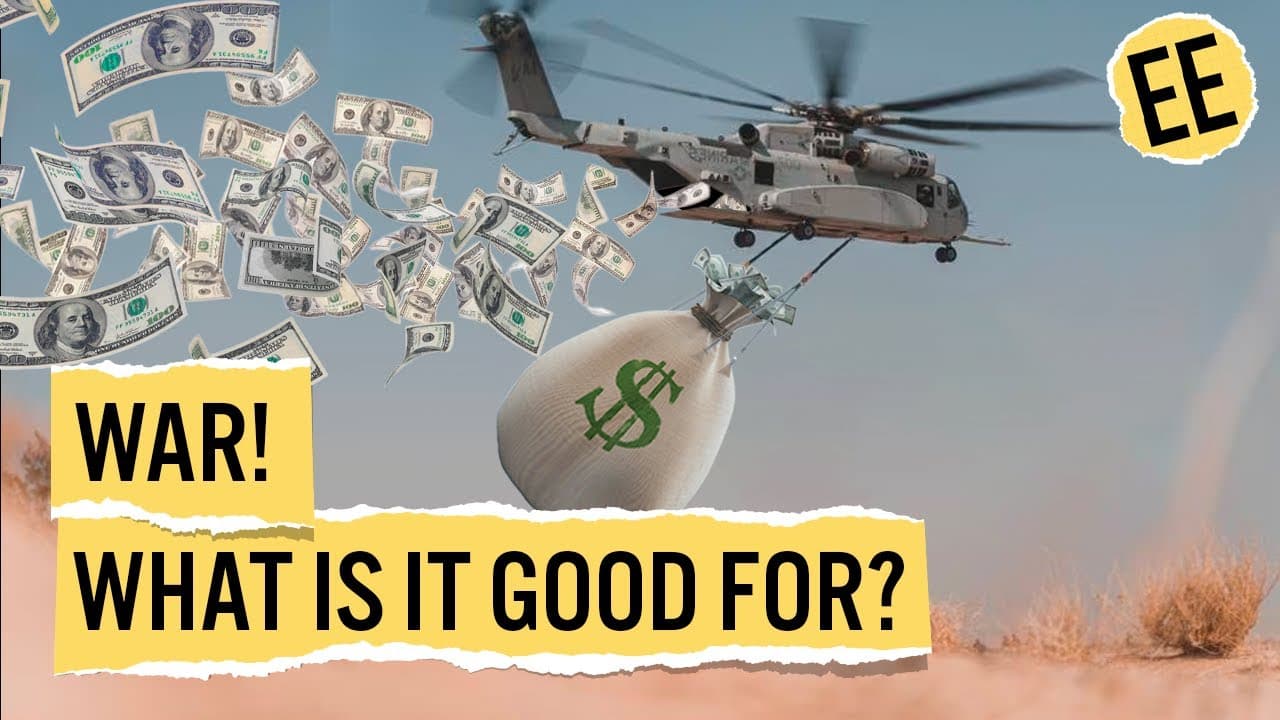
War can temporarily boost GDP through increased government spending and military employment, but it is not a sustainable or efficient way to achieve economic prosperity. The destruction caused by war often outweighs the short-term economic gains, and there are more effective ways to stimulate an economy without resorting to conflict.
Transcript
1929 was the worst economic depression in modern history it's all banks fail soup lines crippling unemployment and a decline in worldwide GDP by over 15% for context the 2008 mortgage crisis in the ensuring recession caused a drop in worldwide GDP of just 1% so yeah this was bad he was also mired by a lot of bad policies because it was a time when ... Read More
Key Insights
- World War II is often credited with ending the Great Depression due to increased government spending and employment.
- Defense spending can artificially lower unemployment rates by employing people in the military.
- Military budgets allocate funds to personnel, operations, procurement, and research, but only a portion directly benefits the economy.
- GDP often rises during wartime due to government spending, but this reflects the broken window fallacy.
- Military spending does not produce consumer goods, thus not directly benefiting consumer economies.
- Wars can drive technological innovation, but consumer-focused economies achieve more innovation without conflict.
- The U.S. economic boom post-World War II was more due to geopolitical positioning than the war itself.
- Economists generally agree that wars do not contribute to long-term economic growth and prosperity.
Install to Summarize YouTube Videos and Get Transcripts
Explore YouTube Video Summarizer or Get YouTube Transcript Extractor
Questions & Answers
Q: How does war affect GDP?
War can temporarily increase GDP through heightened government spending on military efforts and infrastructure rebuilding. This spending creates jobs and stimulates economic activity. However, this is not indicative of genuine economic prosperity, as the destruction and diversion of resources from consumer goods production can have long-term negative effects.
Q: Why is military spending considered a form of welfare?
Military spending is seen as a form of welfare because it provides employment opportunities, especially for young individuals, in a structured environment. It offers training and skills that might be difficult to obtain in a competitive job market. However, this type of spending does not directly contribute to consumer goods production, which is essential for economic growth.
Q: What is the broken window fallacy in economics?
The broken window fallacy suggests that economic activity, such as repairing a broken window, is beneficial because it creates jobs and boosts spending. However, this view ignores the opportunity cost of resources that could have been used for other productive activities. In the context of war, increased GDP from military spending does not equate to real economic prosperity.
Q: How did World War II affect the U.S. economy?
World War II led to increased U.S. government spending, which boosted GDP and employment. However, the long-term economic boom was more due to the U.S.'s geopolitical position post-war, allowing it to establish economic dominance. The war itself was not the primary driver of sustained economic prosperity.
Q: What role does technological innovation play in wartime economics?
Wartime can drive technological innovation as nations seek advantages in conflict. However, consumer-driven economies often achieve more meaningful technological advancements without the destructive context of war. Innovations developed in peacetime are typically more focused on improving quality of life rather than military superiority.
Q: Can military spending improve unemployment rates?
Military spending can artificially lower unemployment rates by employing individuals in defense roles. However, this does not address underemployment or the need for sustainable, productive jobs in the consumer economy. More efficient fiscal policies could achieve better outcomes without relying on military recruitment.
Q: Why is war not a sustainable economic strategy?
War is not sustainable for economic growth because it involves significant destruction and loss of life, which outweighs temporary GDP gains. Resources diverted to military efforts could be used more efficiently in peacetime to produce consumer goods and improve living standards, achieving long-term economic prosperity.
Q: What was the Bretton Woods Conference's impact on the U.S. economy?
The Bretton Woods Conference established the U.S. as the center of the post-war global economy, facilitating economic dominance through favorable trade terms and financial systems. This geopolitical positioning, rather than the war itself, significantly contributed to the U.S.'s economic prosperity in the latter half of the 20th century.
Summary & Key Takeaways
-
War can increase GDP by boosting government spending and employment, but it is not a sustainable economic strategy. The destruction and loss of life often negate any short-term gains. More efficient fiscal policies can achieve similar outcomes without the negative impacts of war.
-
Military spending can reduce unemployment figures by employing personnel in defense roles. However, this does not produce consumer goods or add real value to the economy. Alternative fiscal policies could achieve better economic outcomes without resorting to military spending.
-
Technological advancements can result from wartime innovation, but consumer-driven economies foster more beneficial developments. The post-World War II U.S. economic boom was largely due to geopolitical factors, not the war itself, highlighting the inefficiency of war as an economic tool.
Read in Other Languages (beta)
Share This Summary 📚
Summarize YouTube Videos and Get Video Transcripts with 1-Click
Try YouTube Summary with ChatGPT & Claude or YouTube Transcript Generator
Explore More Summaries from Economics Explained 📚


Summarize YouTube Videos and Get Video Transcripts with 1-Click
Try YouTube Summary with ChatGPT & Claude or YouTube Transcript Generator