The Future of the Book | Hannu Rajaniemi | Talks at Google
TL;DR
Books are evolving as technology advances, with the potential for personalized narratives based on reader's brain activity.
Transcript
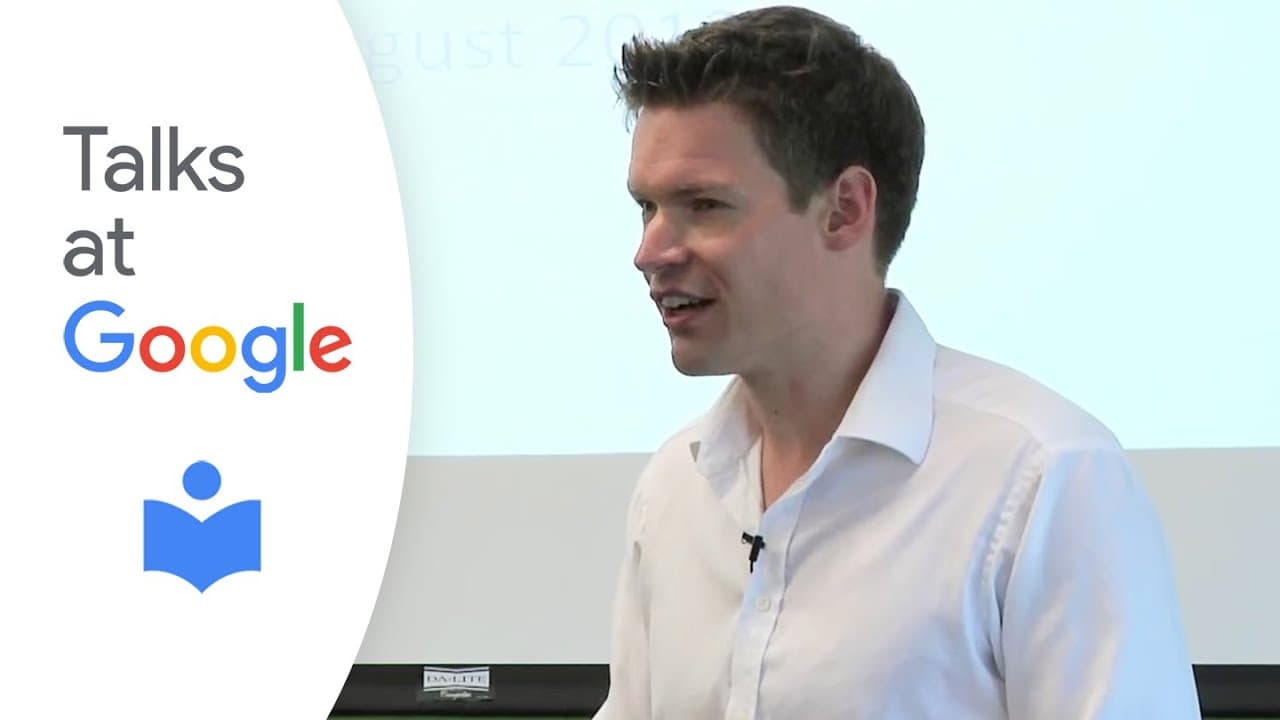
HANNU RAJANIEMI: Hello, everybody. My name is Hannu Rajaniemi. I'm very pleased to be here, and very glad to see so many of you. I'm assuming you are here because you know at least some of my work. So I guess I'm mainly known as the author of the novels "The Quantum Thief," and the "Freckled Prince," and the forthcoming "Causal Angel." If you don't... Read More
Key Insights
- 👾 The future of books includes social reading, annotation features, and merging with computer games.
- 🧠 Books are brain computer interfaces, as they engage readers' brains and simulate virtual reality experiences.
- 📔 The immersion and engagement provided by books can be enhanced by technology that monitors reader response and adapts the narrative accordingly.
Install to Summarize YouTube Videos and Get Transcripts
Explore YouTube Video Summarizer or Get YouTube Transcript Extractor
Questions & Answers
Q: How is technology changing the form of books?
Technology is causing books to become more social, with readers' social networks influencing what books they access. It is also enabling annotation features for users to refer back to discussions and sources related to the book. Additionally, books are becoming more like computer games, allowing readers to interact and make choices that shape the storyline.
Q: What is the significance of reader immersion when it comes to books?
Reader immersion is a crucial aspect of books, as it allows readers to become fully engaged and experience a waking dream. Neuroscience research has shown that reading activates the same parts of the brain as real-life experiences, making the reader mentally simulate the situations described in the book.
Q: How can technology enhance the reading experience?
Technology such as Emotiv EEG headsets and eye-tracking can gather information about the reader's response and concentration while reading. This data can be used to create personalized narratives or adapt the story based on the reader's preferences and engagement. Future books could also retain echoes of the reader's previous experiences, creating a more immersive and personalized reading experience.
Q: What challenges do authors face with evolving technology in books?
One challenge for authors is the cognitive burden of creating multiple paths or endings for a story. Balancing authorial control and reader engagement can be complex, especially with technologies that allow for personalized narratives. However, there is potential for technology to assist authors in generating text based on brain activity and preferences.
Summary & Key Takeaways
-
Author Hannu Rajaniemi discusses the future of books and how the form of the book itself is changing with advancements in technology.
-
He explores different scenarios for the future of books, including social reading, annotation, and merging with computer games.
-
Rajaniemi also presents the idea of books becoming brain computer interfaces, with the potential for stories to adapt to the reader's brain activity.
Read in Other Languages (beta)
Share This Summary 📚
Summarize YouTube Videos and Get Video Transcripts with 1-Click
Try YouTube Summary with ChatGPT & Claude or YouTube Transcript Generator
Explore More Summaries from Talks at Google 📚
Summarize YouTube Videos and Get Video Transcripts with 1-Click
Try YouTube Summary with ChatGPT & Claude or YouTube Transcript Generator