Counting Calories vs. Tracking Macros for Weight Loss
TL;DR
Counting calories is not always necessary, but it can be beneficial for weight management and ensuring a healthy diet.
Transcript
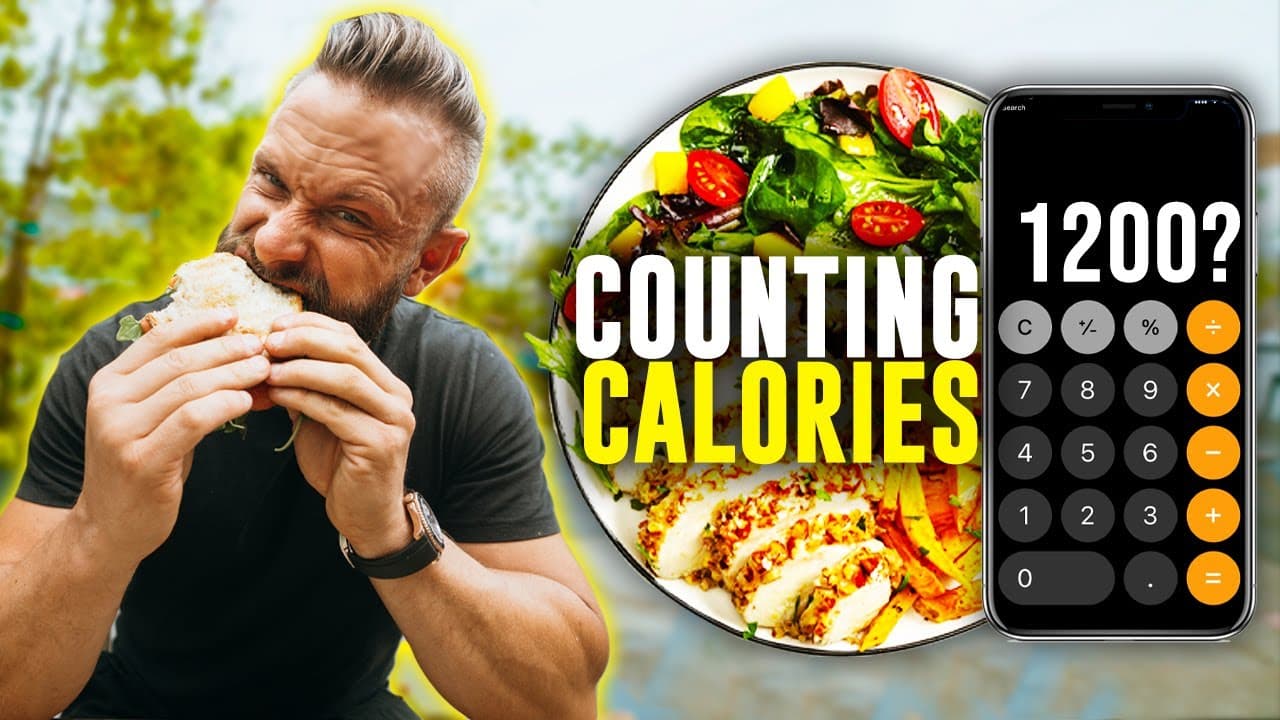
hey magnus here and welcome back to my channel today we're going to talk about calories and if you should be counting them first off what is a calorie calorie is a unit of measurement very specifically it's the amount of energy that's required to raise the temperature of one milliliter which is also a gram of water by one degree celsius all foods c... Read More
Key Insights
- 👣 Calories are a measure of energy and can be used to track overall intake.
- 💨 Counting macros, focusing on portion control, and monitoring energy levels are effective ways to maintain a healthy diet.
- 🏋️ Counting calories can be useful for specific weight goals or when struggling to reach dietary targets.
- 🤑 Fiber-rich carbs are the healthiest option, while sugary carbs should be limited.
- 🛝 Macronutrients and micronutrients play a crucial role in maintaining a well-rounded diet.
- 🪡 Personal adjustments, such as increasing protein intake or portion sizes, may be necessary for individual needs.
- 🤩 Monitoring oneself regularly and adjusting as needed is a key aspect of a successful diet.
Install to Summarize YouTube Videos and Get Transcripts
Explore YouTube Video Summarizer or Get YouTube Transcript Extractor
Questions & Answers
Q: Why is counting calories not usually part of your diet advice?
Counting calories can be time-consuming and can lead to an unhealthy focus on numbers rather than overall nutrition and balance. I believe in focusing on macronutrients and portion control for most people's dietary needs.
Q: Are there any instances when counting calories is beneficial?
Counting calories can be useful when trying to achieve a specific weight loss or weight gain goal. It helps ensure you are consuming fewer calories than you are burning or vice versa.
Q: How does counting macros help with overall nutrition?
Tracking macros ensures a balance of proteins, carbs, and fats, which are essential for muscle building, energy production, and hormonal functions. It also indirectly helps monitor calorie intake, as macros are a significant contributor to overall caloric content.
Q: Should I adjust my portion sizes if I have a small appetite?
If you have a smaller appetite, it may be necessary to adjust portion sizes to ensure adequate energy intake. You can increase the amount of food you consume slightly or opt for more energy-dense foods to meet your needs.
Summary & Key Takeaways
-
Calories are a unit of measurement for energy and can be used to measure all types of food.
-
Counting macros (proteins, carbs, fats) is essential for a balanced diet, but calories can help monitor overall intake.
-
By following a simple system of portion control, tracking macros, and monitoring energy levels, counting calories may not be necessary in most cases.
Read in Other Languages (beta)
Share This Summary 📚
Summarize YouTube Videos and Get Video Transcripts with 1-Click
Try YouTube Summary with ChatGPT & Claude or YouTube Transcript Generator
Explore More Summaries from Magnus Method 📚






Summarize YouTube Videos and Get Video Transcripts with 1-Click
Try YouTube Summary with ChatGPT & Claude or YouTube Transcript Generator