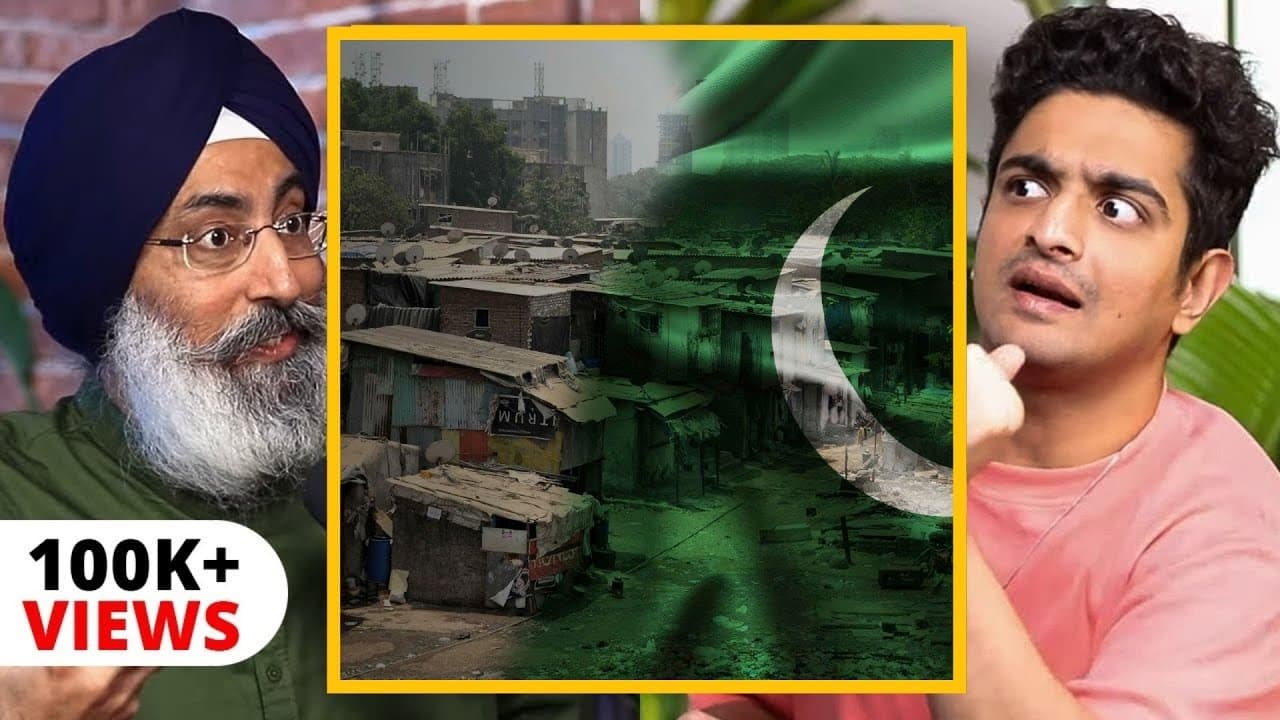
My Time In Pakistan - Sikh Expert Recalls Stories From His Spiritual Visit
TL;DR
The discussion explores social connections and narratives between India and Pakistan, emphasizing shared cultural heritage and evolving perceptions.
Transcript
happiness through Curiosity on DRS clips how do sex feel about a the Punjab in Pakistan look if you listen to any decent Punjabi song we don't see a separation um these are common songs you know because the land itself the world Punjab it means the land of Five Rivers AB is a Farsi or a Persian word for water so when you have two and a half or thre... Read More
Key Insights
- 🌉 Punjab serves as a cultural bridge between India and Pakistan, highlighting shared traditions and collective identity.
- 👻 Internet accessibility is transforming perceptions in Pakistan, allowing citizens to critically evaluate narratives about India and their own identity.
- 🤑 Visiting cultural sites in Pakistan reveals a rich tapestry of diversity that contradicts mainstream media portrayals.
- 👯 The dynamics of people's will versus political will are crucial in driving change and reconciliation efforts between nations.
- ☢️ The Hindu community in Pakistan remains significant, with an active presence and representation in societal issues.
- 🌐 Internal societal structures, such as racism within communities, exist in both India and Pakistan, reflecting global challenges.
- 🇮🇳 Historical contexts and colonial legacies contribute to the contemporary narratives between India and Pakistan.
Install to Summarize YouTube Videos and Get Transcripts
Explore YouTube Video Summarizer or Get YouTube Transcript Extractor
Questions & Answers
Q: What are the key cultural similarities between India and Pakistan discussed in the content?
The content highlights the shared heritage of Punjab as a cultural region, with common songs, traditions, and values that transcend political boundaries. Despite differing national narratives, the speaker emphasizes that both cultures stem from a rich, intertwined history characterized by plurality in religions, languages, and ideas, reinforcing a sense of unity.
Q: How does the speaker view the political climate in Pakistan?
The speaker perceives Pakistan as primarily a security state, influenced significantly by the military. However, he notes that there are positive changes underway, with increasing education levels and internet access fostering critical engagement among citizens. This shift is leading to a growing understanding of India, promoting dialogue rather than division.
Q: What experiences does the speaker share regarding their visits to Pakistan?
The speaker recounts visiting various religious sites, including historical and cultural centers related to Sikhi, Hinduism, and indigenous practices. These visits reveal the vibrancy of local communities, showcasing Pakistan as a place of profound cultural heritage and pluralism, which contrasts sharply with the negative stereotypes often presented in media.
Q: How does the internet influence people's views in Pakistan?
The role of the internet is pivotal in transforming how Pakistanis view India and themselves. Increased access to diverse viewpoints, news, and narratives enables citizens to challenge established state propaganda, fostering a growing sense of education and self-awareness that can bridge perceived gaps between the two countries.
Q: What is the significance of people's will versus political will in the context of India and Pakistan?
The speaker stresses that true change in narratives and relationships between India and Pakistan relies on people's will rather than political agendas. He uses the historical example of Germany overcoming Cold War divisions to highlight that when the collective voice and sentiment of the populace demand change, it can lead to significant shifts regardless of political resistance.
Q: What does the speaker say about the Hindu community in Pakistan?
The speaker emphasizes that the Hindu community in Pakistan is vibrant and larger than commonly believed, with a significant presence and an active role in advocating for their rights. He notes that they face challenges similar to those within minority communities globally, but their resilience and engagement in politics demonstrate a robust and active societal role.
Q: What perspective does the speaker offer on the state of democracy in India?
The speaker provides a critical view of India's current democratic state, suggesting it is trending towards becoming a security state, despite being perceived as more democratic than Pakistan. He advocates for vigilance and awareness among citizens to ensure that democracy thrives amidst pressures that threaten civil liberties and free expression.
Summary & Key Takeaways
-
The speaker discusses the cultural unity of Punjab, emphasizing the interconnected history and shared narratives that persist despite political divisions between India and Pakistan.
-
Education and internet access are enhancing awareness in Pakistan, allowing citizens to challenge dominant state narratives about India and promote a more nuanced understanding of unity.
-
Personal experiences visiting various religious and historical sites in Pakistan reveal a vibrant, pluralistic society that contradicts many popular notions of division and conflict.
Read in Other Languages (beta)
Share This Summary 📚
Summarize YouTube Videos and Get Video Transcripts with 1-Click
Try YouTube Summary with ChatGPT & Claude or YouTube Transcript Generator
Explore More Summaries from TRS Clips 📚


Summarize YouTube Videos and Get Video Transcripts with 1-Click
Try YouTube Summary with ChatGPT & Claude or YouTube Transcript Generator