The Future of Computing

TL;DR
Unprecedented growth challenges in computing paradigm shifts towards data-centric innovation.
Transcript
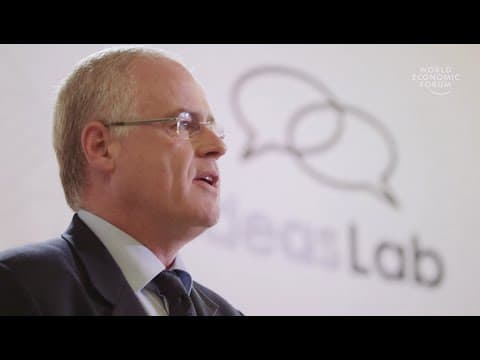
good afternoon and welcome to the session in the beta zone today our topic is the future of computing our guest today is from Hewlett Packard Labs as I've been coached his name is Kirk Breslin Kerr he is the chief architect and fellow a longtime employee of hewlett-packard HP of 29 30 years and the holder of over 28 patents he will share with us to... Read More
Key Insights
- ☠️ Exponential growth curves pose challenges of scale, rate, and tail off in evolving computing paradigms.
- 🪛 Memory scaling, distributed systems, and task-specific processors drive innovation in future computing technology.
- 🎨 Data-centric approaches, predictive models, and energy-efficient design shape the next-generation enterprise landscape.
- 🤗 Adopting open standards and diverse participation accelerates technological advancements and broadens innovation opportunities.
Install to Summarize YouTube Videos and Get Transcripts
Explore YouTube Video Summarizer or Get YouTube Transcript Extractor
Questions & Answers
Q: What are the three critical challenges posed by exponential growth curves in computing?
The challenges are scale, rate of change, and tail off, where understanding the sheer magnitude, continuous change, and eventual resource depletion pose unique obstacles for computing advancement.
Q: How can programming as we know it be replaced by training in the future of computing?
Programming may shift to a more data-centric approach where training algorithms control systems, emphasizing the control and use of data over traditional code-based approaches.
Q: How will the transition from hindsight to foresight in enterprise data management revolutionize businesses?
By shifting to declarative management models, enterprises can leverage data foresight to automate goal-seeking processes, enhancing efficiency and decision-making capabilities.
Q: What role do task-specific processors and open standards play in shaping the future of computing?
Task-specific processors and open standards promote innovation, efficiency, and scalability in computing systems, enabling diverse participation and specialized solutions for emerging challenges.
Summary & Key Takeaways
-
The session with Kirk, HP Labs' chief architect, discusses challenges of exponential growth curves.
-
10 technology trends, like memory scaling and distributed systems, shape the future of computing.
-
Enabling hyper-competitive enterprises to embrace data-centric innovation for the fourth Industrial Revolution.
Read in Other Languages (beta)
Share This Summary 📚
Summarize YouTube Videos and Get Video Transcripts with 1-Click
Try YouTube Summary with ChatGPT & Claude or YouTube Transcript Generator
Explore More Summaries from World Economic Forum 📚
Summarize YouTube Videos and Get Video Transcripts with 1-Click
Try YouTube Summary with ChatGPT & Claude or YouTube Transcript Generator