Do You Need a Copper Pot?
TL;DR
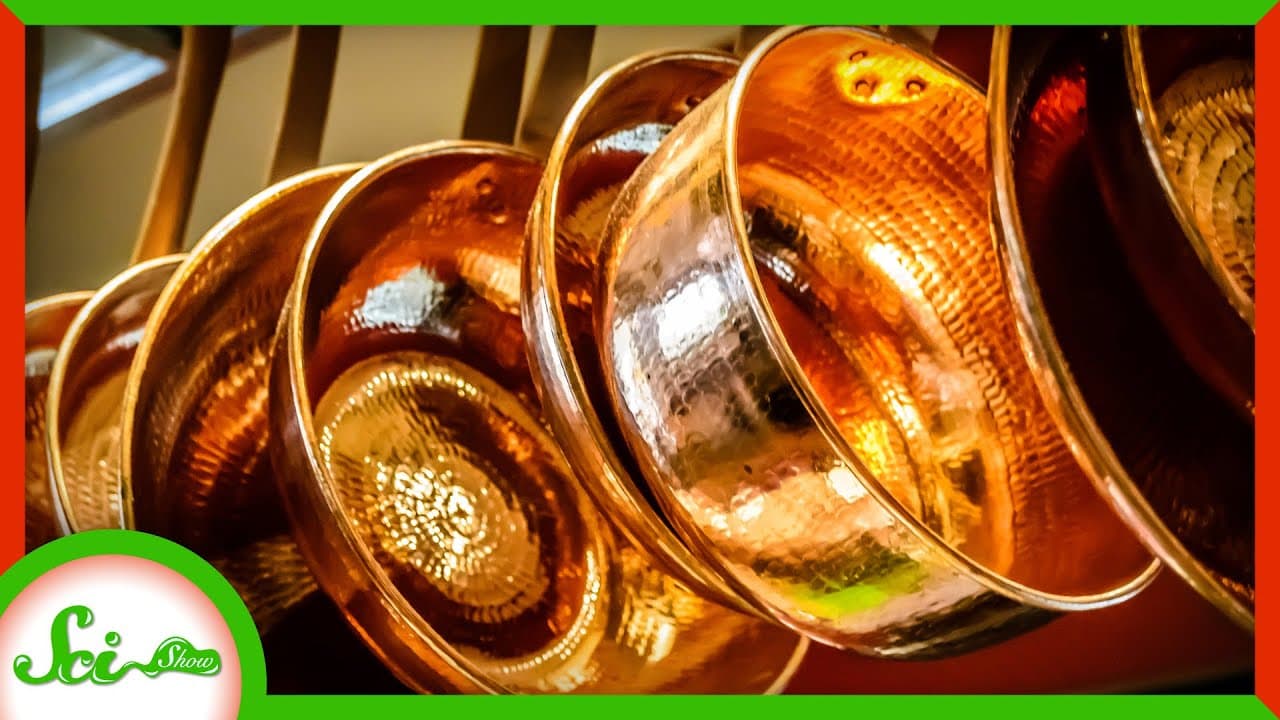
Copper cookware is prized for its excellent thermal conductivity and diffusion, but it can react with acidic foods, leading to potential health concerns.
Transcript
This episode is brought to you by Nature’s Fynd, a fungi-based food company for optimists. Click the link in the description to discover the science behind Nature’s Fynd fungi-based foods. [♪ INTRO] Foodies don’t mess around with the art and science of cooking. The quality of ingredients and execution of techniques are important, but they’re not al... Read More
Key Insights
- 🥵 Copper cookware is valued for its exceptional thermal conductivity, allowing for efficient heat transfer during cooking.
- 🥵 The thermal diffusivity of copper ensures that heat is evenly spread throughout the material, preventing hot or cold spots.
- 🥘 Copper's reactivity with acidic foods necessitates the lining of copper pans with safer metals or alloys to prevent copper leaching.
- 🙂 Stainless steel and aluminum can provide comparable heat storage capacity to copper, albeit with slightly lower conductivity.
- 🥈 Silver cookware, while superior to copper in conductivity, is prohibitively expensive for most consumers.
- 🪡 The choice of cookware ultimately depends on individual preferences and needs.
- 🍳 Nature's Fynd offers sustainable, fungi-based protein alternatives for vegan meals, complementing various cooking preferences and dietary choices.
Install to Summarize YouTube Videos and Get Transcripts
Explore YouTube Video Summarizer or Get YouTube Transcript Extractor
Questions & Answers
Q: Why is copper considered a superior material for cookware?
Copper's thermal conductivity allows for efficient heat transfer, resulting in even and precise cooking. It also responds quickly to changes in heat, making it ideal for delicate dishes like caramel or sauces.
Q: Can copper react with food and cause health problems?
Yes, copper can react with acidic foods, leading to the leaching of copper into the food. Prolonged ingestion of copper can cause nausea and diarrhea. To prevent this, some copper pans are lined with safer metals or alloys.
Q: Are there alternative materials that provide similar benefits to copper?
Stainless steel and aluminum can be good alternatives to copper. While they have lower thermal conductivity, their heat storage capacity per unit of mass can match or surpass copper, making them suitable for most cooking needs.
Q: Why are silver pans not commonly used despite their superior conductivity?
Silver pans are significantly more expensive than copper and provide only a slight advantage in terms of conductivity. This makes them primarily a luxury choice for professional chefs.
Summary & Key Takeaways
-
Copper cookware, with its superior thermal conductivity, allows for efficient heat transfer during cooking.
-
Copper pans heat up quickly and distribute heat evenly, preventing hot or cold spots.
-
The use of copper can be problematic with acidic foods, as it can react and leach copper into the food, causing health issues.
Read in Other Languages (beta)
Share This Summary 📚
Summarize YouTube Videos and Get Video Transcripts with 1-Click
Try YouTube Summary with ChatGPT & Claude or YouTube Transcript Generator
Explore More Summaries from SciShow 📚


Summarize YouTube Videos and Get Video Transcripts with 1-Click
Try YouTube Summary with ChatGPT & Claude or YouTube Transcript Generator