How Much Sleep Do You Need? - Professor Of Neuroscience, Russel Foster
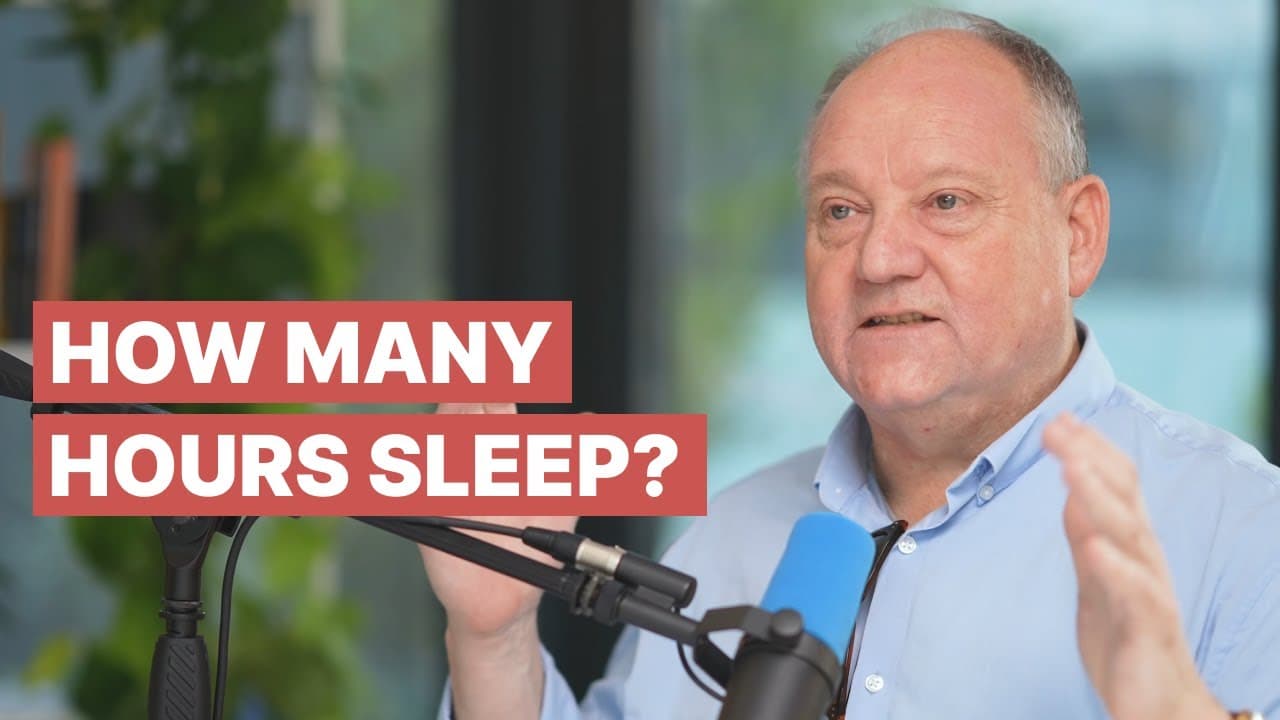
TL;DR
The optimal amount of sleep varies for each individual, and it is important to identify your own sleep needs and patterns.
Transcript
I read while we sleep and I've listened to a bunch of podcast episodes about this but I just love to get your take on a few of these like frequently asked questions about sleep the first one that comes to mind is six hours seven hours eight hours nine hours what what's going on there I think the key thing for me is that one issue size doesn't fit a... Read More
Key Insights
- 😪 Sleep duration ranges from 6 to 11 hours among healthy adults, and individual variations should be considered.
- ⏰ Assessing factors like the need for an alarm clock and reliance on caffeine can indicate if you are not getting enough sleep.
- ⚡ Sleep timing is influenced by genetics, exposure to light, and age, leading to variations in morningness and eveningness.
- 😪 Our sleep patterns change as we age, with a tendency to shift towards a more morning chronotype.
- 😪 There is no fixed optimum sleep duration for everyone, and it is important to define what is optimal for oneself.
- 😪 The belief in an average value as the optimum for all individuals fails to acknowledge the significant individual variation in sleep needs.
- 😪 The book emphasizes the importance of understanding and embracing one's unique sleep patterns.
Install to Summarize YouTube Videos and Get Transcripts
Explore YouTube Video Summarizer or Get YouTube Transcript Extractor
Questions & Answers
Q: How do I know the optimal amount of sleep I need?
It is important to assess factors such as the need for an alarm clock, energy levels, caffeine cravings, and feedback from others. If you find your sleep pattern changing on weekends or holidays, it can indicate the need for a different sleep duration.
Q: What factors contribute to our sleep patterns?
Sleep patterns are influenced by genetics, exposure to light, and age. Morning light advances the internal clock, while evening light delays it. As we age, our sleep patterns tend to shift towards a more morning chronotype, influenced by changing hormone levels.
Q: Is there an optimum sleep duration for everyone?
No, there is no single optimal sleep duration that applies to everyone. It varies greatly among individuals and changes as we age. The belief in a fixed eight-hour sleep requirement is outdated and fails to consider individual differences.
Q: What is the purpose of the book mentioned?
The book aims to empower individuals to define their optimal sleep patterns and understand that there is no one-size-fits-all approach. It encourages people to embrace their unique sleep needs and make lifestyle adjustments accordingly.
Summary & Key Takeaways
-
Sleep duration varies greatly among individuals, and there is no one-size-fits-all approach. Healthy sleep can range from 6 to 11 hours, depending on the person.
-
Identifying your optimal sleep pattern involves assessing factors such as the need for an alarm clock, energy levels throughout the day, and feedback from others on changes in behavior.
-
Sleep timing is influenced by genetics, exposure to light, and age, with individuals experiencing variations in their chronotype (morningness or eveningness) throughout different stages of life.
Read in Other Languages (beta)
Share This Summary 📚
Summarize YouTube Videos and Get Video Transcripts with 1-Click
Try YouTube Summary with ChatGPT & Claude or YouTube Transcript Generator
Explore More Summaries from Deep Dive with Ali Abdaal 📚

Summarize YouTube Videos and Get Video Transcripts with 1-Click
Try YouTube Summary with ChatGPT & Claude or YouTube Transcript Generator