What External Factors Influenced Mexico's Economic Reforms?
TL;DR
External factors, such as shifts in economic thought, the success of East Asian export-led growth, and the collapse of the USSR, significantly influenced Mexico's economic reforms in the 1980s and 1990s. The Economic Commission for Latin America and the Caribbean played a key role in advocating for market-oriented policies, while leaders with Western economic training helped push these changes forward.
Transcript
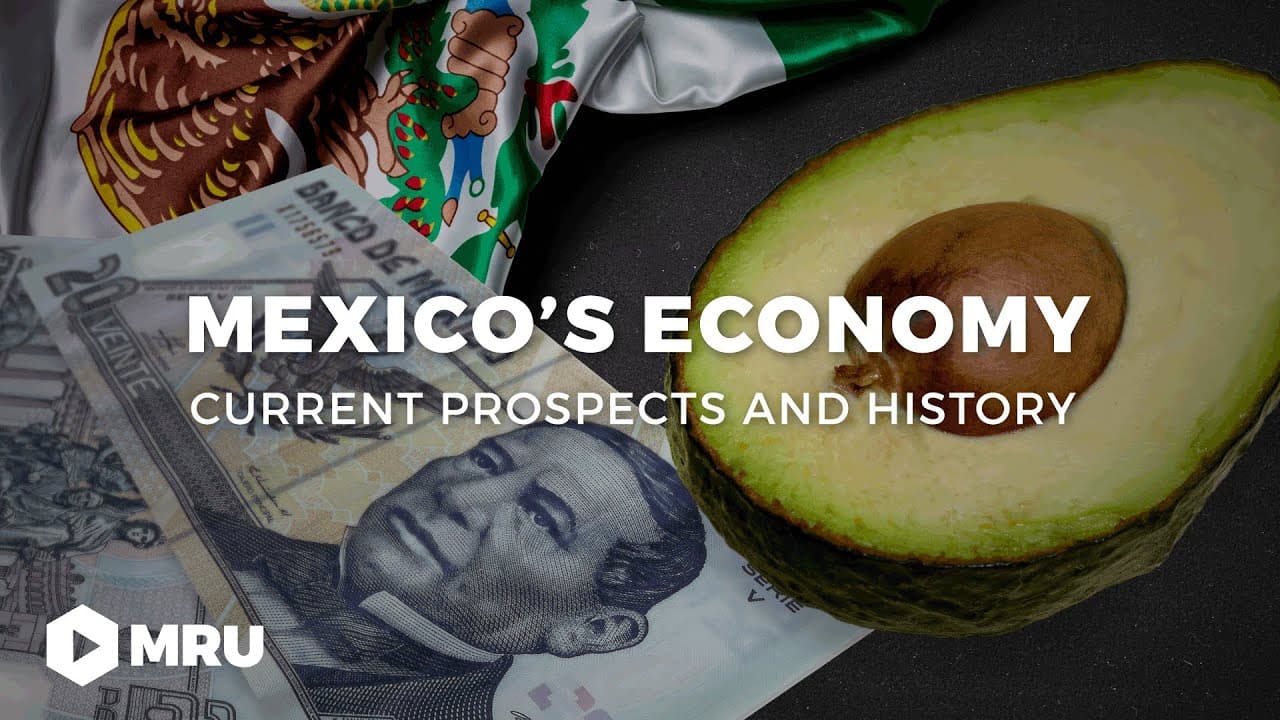
Mexico like much of Latin America moved abruptly away from the inward looking model of import substitution in the 1980s and 1990s there were a lot of domestic reasons for the market-based reforms of this period and we will examine some of those in another video in this video though we're going to look at some of the external factors behind the refo... Read More
Key Insights
- The shift from import substitution in Latin America during the 1980s and 1990s was influenced by both domestic and external factors, with external factors being a major catalyst.
- The Economic Commission for Latin America and the Caribbean (ECLAC) changed its stance from advocating import substitution to supporting trade openness and market forces, influencing regional economic policies.
- The success of East Asian economies, known as the East Asian Tigers, in achieving rapid industrialization through export-led growth, served as a model for Latin American countries.
- Chile's economic growth under Pinochet, despite its poor human rights record, demonstrated the potential benefits of reduced government intervention and free-market policies.
- The collapse of the USSR and the failure of heterodox economic programs in Latin America discredited heavy government intervention as a viable economic strategy.
- In the 1980s and 1990s, Latin American leaders with economic training from prestigious Western institutions played a significant role in shaping market-oriented reforms.
- The new consensus in Latin America emphasized the importance of reducing the role of the state in the economy and allowing markets to operate more freely.
- Sebastian Edwards' book 'Crisis and Reform in Latin America' provides an in-depth analysis of both internal and external factors influencing economic reforms in the region.
Install to Summarize YouTube Videos and Get Transcripts
Explore YouTube Video Summarizer or Get YouTube Transcript Extractor
Questions & Answers
Q: What external factors influenced Mexico's economic reforms in the 1980s and 1990s?
External factors included the shift in economic thinking by the Economic Commission for Latin America and the Caribbean, the success of East Asian economies with export-led growth, and the collapse of the USSR. These factors, combined with the failure of interventionist policies, encouraged Latin American countries to adopt market-oriented reforms.
Q: How did the East Asian Tigers influence Latin American economic policies?
The East Asian Tigers, including South Korea and Taiwan, demonstrated the success of export-led growth and rapid industrialization. Their economic achievements, characterized by reduced government intervention and a focus on building human capital and infrastructure, served as a model for Latin American countries seeking to reform their economies.
Q: Why was the Economic Commission for Latin America and the Caribbean's change in stance significant?
The Economic Commission for Latin America and the Caribbean's shift from supporting import substitution to advocating for trade openness and market forces was significant because it influenced regional economic policies. This change in stance provided legitimacy to market-oriented reforms, challenging the previously dominant inward-looking economic strategies.
Q: What role did Chile play as a model for economic reform in Latin America?
Chile's economic growth under Pinochet, despite its poor human rights record, demonstrated the potential benefits of reduced government intervention and free-market policies. Chile's success in achieving rapid economic growth served as a model for other Latin American countries considering similar market-oriented reforms.
Q: How did the collapse of the USSR impact economic thinking in Latin America?
The collapse of the USSR highlighted the inefficiencies of the communist system and discredited heavy government intervention as a viable economic strategy. This event, combined with the failure of heterodox economic programs in Latin America, encouraged a shift towards market-oriented reforms and reduced state involvement in the economy.
Q: What was the impact of Western-trained economists on Latin American reforms?
Western-trained economists, often educated in prestigious institutions in the US and Europe, played a significant role in shaping market-oriented reforms in Latin America. Their training emphasized the importance of allowing markets to operate freely and reducing the role of the state in the economy, facilitating the transition to new economic policies.
Q: What consensus emerged in Latin America regarding economic reforms?
A new consensus emerged in Latin America that emphasized reducing the role of the state in the economy and allowing markets to operate more freely. This shift was influenced by external factors, including changes in economic thinking and the success of market-oriented policies in other regions, such as East Asia.
Q: What insights does Sebastian Edwards' book provide on Latin American reforms?
Sebastian Edwards' book 'Crisis and Reform in Latin America' provides an in-depth analysis of both internal and external factors influencing economic reforms in the region. The book explores the reasons behind the shift from inward-looking policies to market-oriented reforms, offering valuable insights into the economic transformation of Latin America.
Summary & Key Takeaways
-
Mexico's shift from import substitution in the 1980s and 1990s was influenced by external factors, including changes in economic thinking and global economic trends. The Economic Commission for Latin America and the Caribbean played a significant role by advocating for trade openness and market forces.
-
The success of East Asian economies, such as South Korea and Taiwan, in achieving rapid industrialization through export-led growth, served as a model for Latin American countries. These countries moved away from inward-looking policies and embraced market-oriented reforms.
-
The collapse of the USSR and the failure of government interventionist policies in Latin America highlighted the need for economic reforms. Leaders with Western economic training facilitated the transition to market-oriented policies, reducing the role of the state in the economy.
Read in Other Languages (beta)
Share This Summary 📚
Summarize YouTube Videos and Get Video Transcripts with 1-Click
Try YouTube Summary with ChatGPT & Claude or YouTube Transcript Generator
Explore More Summaries from Marginal Revolution University 📚

Summarize YouTube Videos and Get Video Transcripts with 1-Click
Try YouTube Summary with ChatGPT & Claude or YouTube Transcript Generator