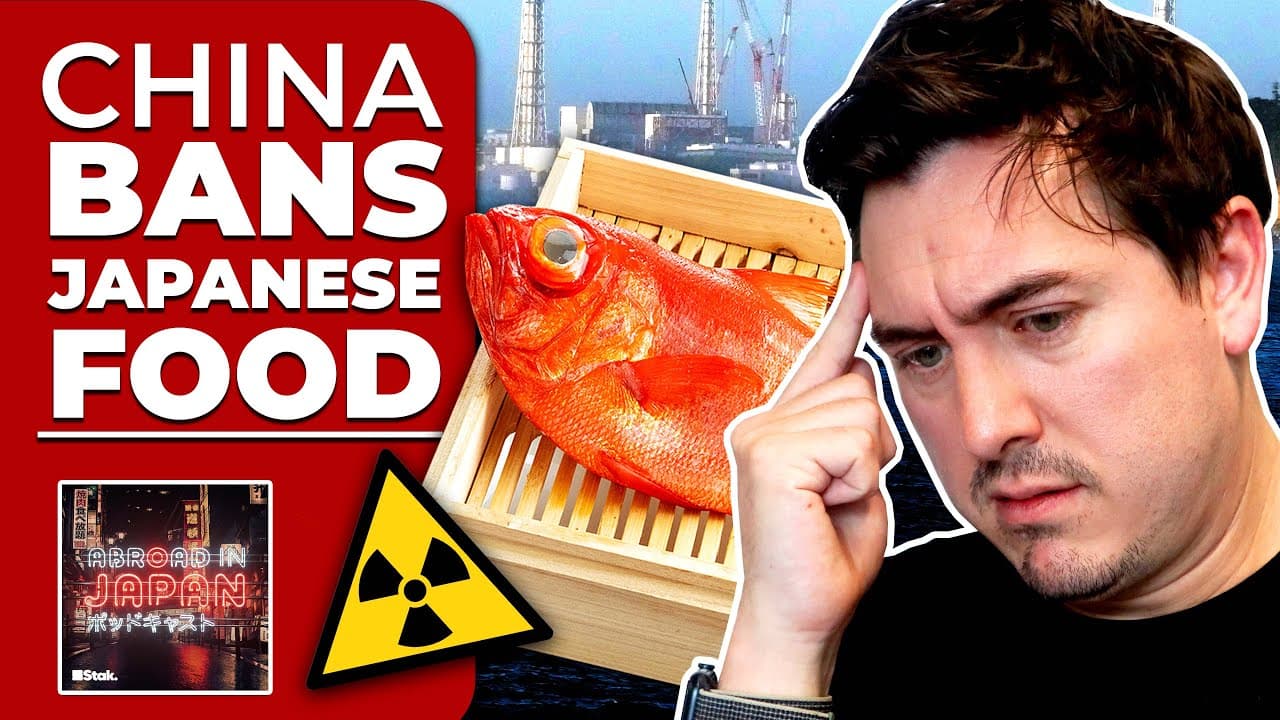
China's Complete BAN on Japanese Seafood over Fukushima Nuclear Plant | @AbroadinJapan Podcast #9
TL;DR
Japan starts releasing treated radioactive water from the Fukushima nuclear plant into the sea, raising concerns about the environment and seafood safety.
Transcript
there was there was literally like eight signs going Bears don't don't go here bears bears will eat your face Bears be theirs and he was like is this okay Chris I was like yeah it'll be unbearable wow hello and welcome to the abroad Japan podcast probably the best way of learning about life in Japan without actually being in Japan I'm your host Chr... Read More
Key Insights
- 🌊 Japan has started releasing treated radioactive water from the Fukushima nuclear plant into the sea, raising concerns about the environment and seafood safety.
- 🤕 The decision has sparked protests and a ban on seafood imports from China, highlighting the international concern over the release.
- 🍉 The long-term effects of the release are uncertain, and it will be crucial to monitor the situation closely to assess any potential consequences for marine life and the fishing industry.
- 💦 The release of radioactive water is part of the decommissioning process, which will take approximately 30 years to complete.
- 🫤 The decision to release the water was made two years ago and has been approved by the Japanese government and UN nuclear watchdogs.
- 💉 The release poses a dilemma for Japan, as the stored water needs to be managed and disposed of, but there are concerns about the potential impact on the environment and public health.
- 🤕 China's ban on seafood imports from Japan signifies the economic and geopolitical implications of the release.
Install to Summarize YouTube Videos and Get Transcripts
Explore YouTube Video Summarizer or Get YouTube Transcript Extractor
Questions & Answers
Q: Why is Japan releasing the radioactive water into the sea?
The release is part of the decommissioning process of the Fukushima nuclear plant. The water has been stored in tanks for years and needs to be gradually released.
Q: Is the water safe for the environment and seafood?
The water is treated and contains traces of tritium, which is difficult to remove. The Japanese government and UN nuclear watchdogs have approved the release, but there are concerns about its potential impact on the environment and seafood safety.
Q: How is the international community responding to Japan's decision?
China has imposed a ban on all seafood imports from Japan in response to the release of radioactive water. There have also been protests within Japan and concerns raised by other countries.
Q: What are the long-term effects of releasing the radioactive water?
The long-term effects are uncertain, and there are fears about the potential impact on marine life and the fishing industry. It will be important to monitor the situation closely and assess any potential consequences.
Summary & Key Takeaways
-
Japan has begun releasing treated radioactive water from the Fukushima nuclear plant into the sea as part of the decommissioning process.
-
The water, containing traces of tritium, has been stored in tanks for years and is being gradually released over a 30-year period.
-
The decision has sparked protests both in Japan and abroad, with China imposing a ban on seafood imports from Japan.
Read in Other Languages (beta)
Share This Summary 📚
Summarize YouTube Videos and Get Video Transcripts with 1-Click
Try YouTube Summary with ChatGPT & Claude or YouTube Transcript Generator
Explore More Summaries from Abroad in Japan Podcast 📚






Summarize YouTube Videos and Get Video Transcripts with 1-Click
Try YouTube Summary with ChatGPT & Claude or YouTube Transcript Generator