Introduction to human anatomy
TL;DR
Introduction to human body structure and anatomy branches.
Transcript
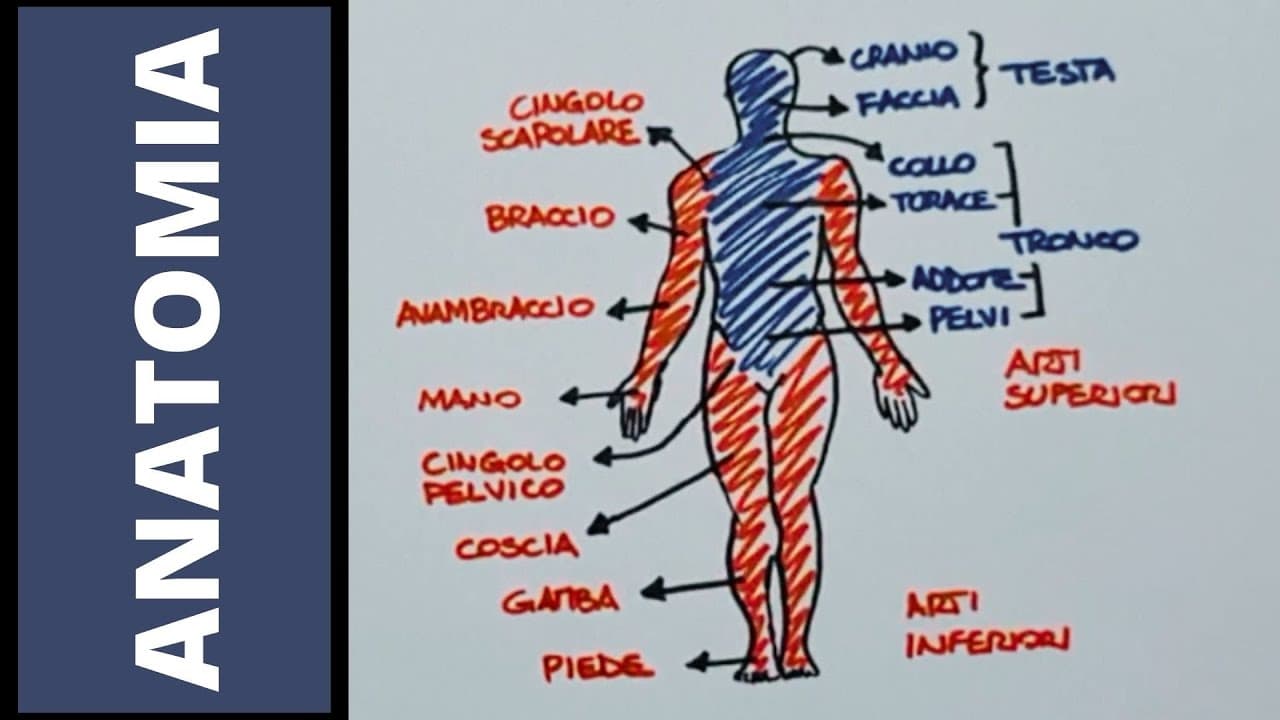
hello and welcome to this first anatomy lesson that is, the science that studies morphology, namely the shape and structure of the human body. We can describe our body in two ways by dividing it into regions or hierarchical levels When it comes to regions, we distinguish two main parts of the body The axial one, which I highlight in blue and the ap... Read More
Key Insights
- Anatomy is the science that studies the morphology, or shape and structure, of the human body, which can be described by regions or hierarchical levels.
- The human body is divided into two main regions: axial, consisting of the head and trunk, and appendicular, consisting of the upper and lower limbs.
- The axial region includes the head, which is made up of the face and skull, and the trunk, composed of the neck, thorax, abdomen, and pelvis.
- The appendicular region consists of the upper limbs (shoulder girdle, arm, forearm, hand) and lower limbs (pelvic girdle, thigh, leg, foot).
- The hierarchical levels of the human body include molecules, cells, tissues, organs, systems, and the complete organism.
- Microscopic anatomy, including cytology and histology, studies cells and tissues, while macroscopic anatomy examines structures visible to the naked eye.
- Macroscopic anatomy is divided into surface anatomy, systemic anatomy, and regional or topographic anatomy, each focusing on different aspects of body structure.
- Surface anatomy is particularly useful in healthcare as it involves inspecting and palpating surface structures to identify body landmarks.
Install to Summarize YouTube Videos and Get Transcripts
Explore YouTube Video Summarizer or Get YouTube Transcript Extractor
Questions & Answers
Q: What are the two main regions of the human body?
The human body is divided into two main regions: the axial region and the appendicular region. The axial region includes the head and trunk, while the appendicular region consists of the upper and lower limbs. This division helps in understanding the body's overall structure and function.
Q: What constitutes the axial region of the body?
The axial region of the body is comprised of the head and the trunk. The head includes the face and skull, while the trunk consists of the neck, thorax, abdomen, and pelvis. This region is fundamental for protecting vital organs and supporting the body's structure.
Q: How is the appendicular region structured?
The appendicular region is structured into the upper and lower limbs. Each upper limb consists of a shoulder girdle, arm, forearm, and hand, while each lower limb includes a pelvic girdle, thigh, leg, and foot. This region is crucial for movement and interaction with the environment.
Q: What are the hierarchical levels of the human body?
The hierarchical levels of the human body include molecules, cells, tissues, organs, systems, and the complete organism. This organization helps in understanding the complexity and functionality of the body, with each level contributing to the body's overall operation and health.
Q: What is the focus of microscopic anatomy?
Microscopic anatomy focuses on the study of structures that are not visible to the naked eye, specifically cells and tissues. It includes disciplines such as cytology, which studies cells, and histology, which examines tissues. These studies are essential for understanding the body's fundamental biological processes.
Q: How is macroscopic anatomy categorized?
Macroscopic anatomy is categorized into surface anatomy, systemic anatomy, and regional or topographic anatomy. Surface anatomy studies the body's surface structures, systemic anatomy organizes the body by systems and organs, and regional anatomy divides the body by location. Each category offers a unique perspective on body structure.
Q: What is the importance of surface anatomy in healthcare?
Surface anatomy is important in healthcare as it involves the inspection and palpation of the body's surface structures to identify landmarks. This practice is crucial for medical professionals to accurately assess and diagnose conditions, as well as to perform procedures with precision and understanding of the body's layout.
Q: How does systemic anatomy differ from regional anatomy?
Systemic anatomy differs from regional anatomy in its approach to studying the body. Systemic anatomy organizes the body by systems and organs, focusing on their functions and interactions. In contrast, regional anatomy divides the body by location, providing insights into how structures relate to each other within specific areas.
Summary & Key Takeaways
-
The introduction to human anatomy covers the science of studying the body's shape and structure through regions and hierarchical levels. The body is divided into axial and appendicular regions, and further into specific parts like the head, trunk, and limbs.
-
Hierarchical levels of the human body range from molecules to the complete organism. Microscopic anatomy studies cells and tissues, while macroscopic anatomy focuses on visible structures, with categories like surface, systemic, and regional anatomy.
-
Surface anatomy is essential in healthcare for identifying body landmarks. Systemic anatomy organizes the body by systems and organs, while regional anatomy divides it by location. These approaches provide comprehensive insights into human body structure.
Read in Other Languages (beta)
Share This Summary 📚
Summarize YouTube Videos and Get Video Transcripts with 1-Click
Try YouTube Summary with ChatGPT & Claude or YouTube Transcript Generator