What Makes 'The Whisperer in Darkness' a Lovecraftian Classic?
TL;DR
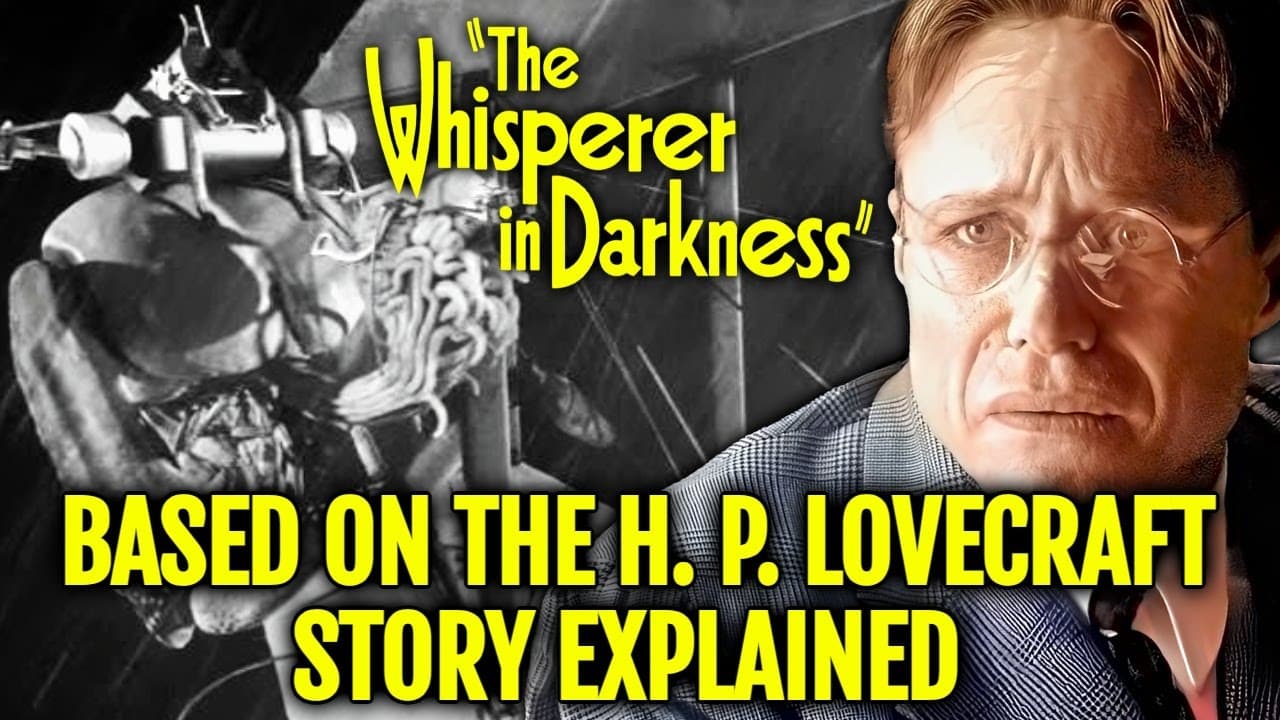
'The Whisperer in Darkness' adapts H.P. Lovecraft's novella to explore cosmic horror through Professor Albert Wilmar's investigation of alien beings in Vermont. The film blends vintage and modern filmmaking techniques to create a 1930s-style horror experience, emphasizing the tension between scientific rationality and folklore, ultimately leading to Wilmar's harrowing confrontation with the incomprehensible.
Transcript
there is no denying that given to easy accessibility of technology and Artistry that one can resort to in film making these days love crafts and tales are becoming extensively popular well this brings us to lovecraft's 26,000 word novela titled the Whisperer in darkness which was made into film adaptation by Shan brainy and Andrew layman in 2011 an... Read More
Key Insights
- 😱 "The Whisperer in Darkness" adapts Lovecraft's novella, utilizing mythoscope to achieve a distinctive retro horror aesthetic that pays homage to classic filmmaking.
- 😨 The film emphasizes the conflict between scientific understanding and the acceptance of folklore, showcasing how myths can drive human curiosity and fear.
- 🫥 Through character development, Wilmar represents the struggle to comprehend the incomprehensible, highlighting the fine line between sanity and madness in the face of alien realities.
- 🛟 The radio debate serves as a narrative device revealing the philosophical tensions regarding knowledge and belief, propelling the story forward by challenging the protagonist's convictions.
- 😨 The portrayal of the Migo offers a powerful commentary on society's reaction to the unknown, symbolizing humanity's fears of alienation and existential insignificance.
- 😱 Isolation plays a critical role in the film, both physically and emotionally, emphasizing the psychological horror of facing otherworldly entities far removed from societal norms.
- 💍 The film investigates the interplay of agency and manipulation, particularly through Wilmar's transformation and the cognitive dissonance experienced by characters engaging with the Migo.
Install to Summarize YouTube Videos and Get Transcripts
Explore YouTube Video Summarizer or Get YouTube Transcript Extractor
Questions & Answers
Q: What is the significance of Albert Wilmar's character in the film?
Albert Wilmar, portrayed as a knowledgeable folklorist, serves as the film's protagonist who embodies the clash between rational thought and folklore. His journey highlights the struggle of reconciling scientific inquiry with the belief in ancient legends, ultimately leading him to confront terrifying truths about alien creatures that blur the lines between reality and mythos.
Q: How does the film utilize filming techniques to enhance its horror elements?
The filmmakers employed mythoscope, a blend of vintage and modern filming methods, to achieve a unique aesthetic reminiscent of 1930s horror cinema. This technique effectively establishes a nostalgic atmosphere while creating unsettling visuals that amplify the film's tension and enhance the portrayal of its alien creatures, making them both compelling and terrifying.
Q: What role does the radio debate play in shaping the narrative?
The radio debate between Wilmar and Charles Fort serves as a pivotal moment that exposes differing worldviews on folklore and unexplained phenomena. Wilmar's commitment to understanding and debunking these legends fuels his investigative passion, while Fort's dismissive attitude fuels the conflict that pushes Wilmar deeper into inexplicable territory, ultimately leading to his fateful encounters with the Migo.
Q: Can you explain what the Migo represents in the context of the story?
The Migo, as depicted in "The Whisperer in Darkness," symbolize the fear of the unknown and humanity's struggle to understand its place in a vast, indifferent universe. They highlight a thematic paradox—while Wilmar seeks answers through logic, the Migo embody a threatening reality that operates beyond human comprehension, challenging his beliefs and ultimately illustrating the futility of resisting the incomprehensible.
Q: What does the transformation of Wilmar at the end signify?
Wilmar's transformation into a creature akin to the brain in the cylinder signifies his complete surrender to the alien influence and the merging of his consciousness with the alien experience. This ending embodies Lovecraft's themes of existential dread and the loss of individuality, suggesting that resistance to such overwhelming forces is ultimately futile, leaving audiences pondering the cost of knowledge and acceptance.
Q: How does the film portray the theme of isolation?
The theme of isolation is prevalent throughout the film as Wilmar is physically and psychologically detached from society while pursuing his scholarly interests. His journey takes him to remote Vermont, where he encounters figures who are either indifferent or antagonistic. This sense of isolation amplifies the psychological horror, emphasizing Wilmar's vulnerability in the face of incomprehensible forces that seek to consume him.
Q: How does the film blend science fiction with horror?
"The Whisperer in Darkness" deftly intertwines science fiction and horror by using cosmic horror elements to frame an alien narrative intertwined with scientific inquiry. The story presents a clash between traditional folklore and scientific rationality, ultimately unraveling the horrifying truth that exists at the intersection of these genres, leaving viewers to contemplate the implications of human understanding in a universe filled with dread.
Q: What impact does the film's atmospheric setting have on its reception?
The film's atmospheric setting is crucial in establishing a mood of dread and suspense, contributing significantly to its positive reception. By invoking the stark landscapes of Vermont and employing stylistic elements reminiscent of early horror cinema, the filmmakers create a palpable tension that immerses viewers in Wilmar's harrowing experiences, eliciting a lasting impression that echoes Lovecraft's legacy.
Summary & Key Takeaways
-
The film adaptation of H.P. Lovecraft's "The Whisperer in Darkness" combines vintage and modern techniques to recreate a 1930s classic horror setting, notably through the use of mythoscope.
-
The narrative follows Professor Albert Wilmar as he investigates strange occurrences in Vermont, leading to a chilling supernatural encounter with alien beings tied to folklore.
-
Central themes include the tension between science and folklore, culminating in Wilmar's desperate struggle against sinister alien creatures while exploring the broader implications of fear and acceptance of the unknown.
Read in Other Languages (beta)
Share This Summary 📚
Summarize YouTube Videos and Get Video Transcripts with 1-Click
Try YouTube Summary with ChatGPT & Claude or YouTube Transcript Generator
Explore More Summaries from Marvelous Videos 📚





Summarize YouTube Videos and Get Video Transcripts with 1-Click
Try YouTube Summary with ChatGPT & Claude or YouTube Transcript Generator