Paul Romer
TL;DR
Paul Romer revolutionized growth theory and development with innovative ideas.
Transcript
Today, we're going to be talking about Paul Romer. Paul Romer taught for a long time at Stanford University. More recently, he moved to New York University. And he's most famous for being one of the architects of new growth theory, though, more recently, he's becoming famous for his work in development economics, in fact, for his entrepreneurship... Read More
Key Insights
- Paul Romer is renowned for his contributions to new growth theory, emphasizing the role of ideas in economic development.
- Romer's groundbreaking paper, 'Endogenous Technical Change,' challenged traditional assumptions about ideas being exogenous and public goods.
- He highlighted the need for monopoly power to fund research and development, as ideas cannot be priced in competitive markets.
- Romer's model placed ideas at the core of growth theory, influencing discussions on patents, intellectual property, and human capital.
- His entrepreneurial venture, Aplia, revolutionized online education and demonstrated the practical application of his theories.
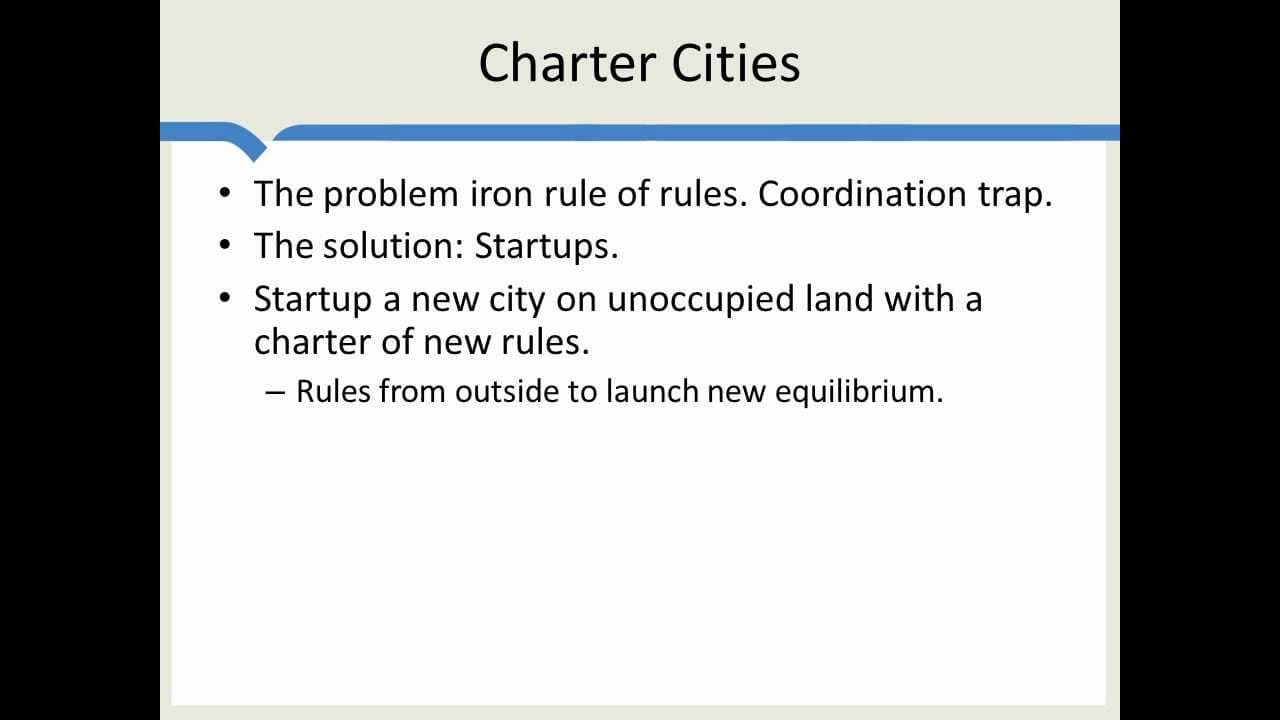
- Romer's concept of 'charter cities' proposes creating new cities with innovative governance to drive development in underdeveloped regions.
- He believes that adopting successful external rules in new cities can overcome coordination traps like corruption and inefficiency.
- Romer's work continues to influence economic thought, particularly in understanding the transmission and impact of ideas globally.
Install to Summarize YouTube Videos and Get Transcripts
Explore YouTube Video Summarizer or Get YouTube Transcript Extractor
Questions & Answers
Q: What is Paul Romer most famous for?
Paul Romer is most famous for being one of the architects of new growth theory. His work, particularly the paper 'Endogenous Technical Change,' has been foundational in understanding the role of ideas in economic growth. Romer challenged traditional assumptions about ideas being exogenous and public goods, highlighting the importance of for-profit firms in generating new ideas.
Q: How does Romer's model differ from the Solow model?
Romer's model differs from the Solow model by placing ideas at the heart of economic growth. While the Solow model assumed ideas as exogenous and public goods, Romer emphasized that ideas are generated by for-profit firms and require some monopoly power to fund research and development. His model accounts for the spillover effects of ideas and their transmission across markets.
Q: What was Aplia, and why was it significant?
Aplia was an online education platform created by Paul Romer that allowed professors to assign quizzes, grade homework, and conduct experiments online. It was significant because it revolutionized the way economics is taught, demonstrating the practical application of Romer's theories on the importance of ideas and innovation in driving productivity and growth.
Q: What is the concept of 'charter cities' proposed by Romer?
The concept of 'charter cities' proposed by Paul Romer involves creating new cities on unoccupied land with innovative governance rules sourced from successful external models. These cities aim to overcome coordination traps, such as corruption, by offering a new set of rules and attracting voluntary participation. Romer envisions these cities as demonstration projects to drive development in underdeveloped regions.
Q: Why are ideas important in Romer's growth theory?
In Romer's growth theory, ideas are crucial because they drive technological advancement and economic growth. Unlike traditional models that treat ideas as exogenous, Romer emphasizes that ideas are generated by for-profit firms and require investment in research and development. The spillover effects of ideas contribute to broader economic benefits, making them central to understanding growth dynamics.
Q: How do Romer's ideas influence economic thought today?
Romer's ideas continue to influence economic thought by reshaping discussions on growth, development, and the role of ideas. His emphasis on the importance of ideas has led to new perspectives on patents, intellectual property, human capital, and the transmission of ideas globally. Romer's work encourages economists to consider the broader impact of innovation and the conditions necessary for fostering new ideas.
Q: What challenges do 'charter cities' aim to address?
Charter cities aim to address challenges related to governance and development in underdeveloped regions. By establishing new cities with innovative rules sourced from successful models, Romer seeks to overcome coordination traps like corruption and inefficiency. These cities offer a fresh start and demonstrate the potential for successful governance, attracting voluntary participation and driving regional development.
Q: How has Romer's work impacted the field of development economics?
Romer's work has significantly impacted development economics by introducing the concept of 'charter cities' and emphasizing the role of ideas in driving growth. His theories challenge traditional assumptions and offer new solutions for fostering development in underdeveloped regions. Romer's innovative approaches continue to shape discussions on governance, innovation, and the conditions necessary for economic progress.
Summary & Key Takeaways
-
Paul Romer, a prominent economist, is celebrated for his new growth theory, which places ideas at the center of economic development. His influential paper, 'Endogenous Technical Change,' challenged traditional assumptions and emphasized the role of for-profit firms in generating growth through innovation.
-
Romer's entrepreneurial spirit led him to create Aplia, an online education platform that revolutionized how economics is taught. This venture demonstrated his ability to apply theoretical insights to practical solutions, furthering his impact beyond academia.
-
His recent focus on 'charter cities' aims to foster development in underdeveloped regions by establishing new cities with innovative governance. Romer's ideas continue to shape economic thought, offering fresh perspectives on growth, development, and the role of ideas in society.
Read in Other Languages (beta)
Share This Summary 📚
Summarize YouTube Videos and Get Video Transcripts with 1-Click
Try YouTube Summary with ChatGPT & Claude or YouTube Transcript Generator
Explore More Summaries from Marginal Revolution University 📚

Summarize YouTube Videos and Get Video Transcripts with 1-Click
Try YouTube Summary with ChatGPT & Claude or YouTube Transcript Generator