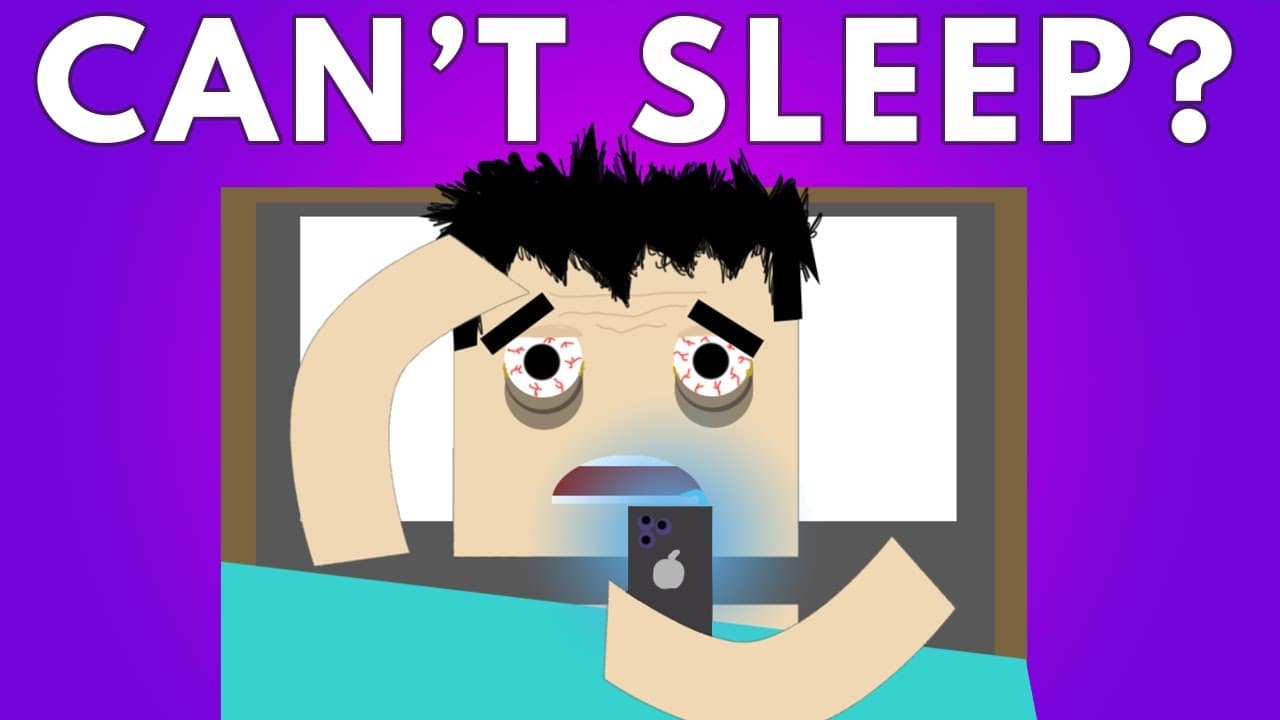
What If You Can't Fall Asleep?
TL;DR
Learn effective relaxation methods to improve sleep quality and tackle insomnia.
Transcript
Hey there! Welcome to Life Noggin! Getting a good night’s rest is important for your physical and mental health. But for many people, falling asleep can be a challenge. There are a lot of different reasons why this could be the case, such as overstimulation from electronics, sound or light disturbances, certain medications, or stress. Identifying a... Read More
Key Insights
- 🍂 Overstimulation, stress, medications, and disturbances can hinder the ability to fall asleep.
- ☺️ Controlled breathing and mindfulness meditation can help relax the body and mind for better sleep.
- 😌 Techniques like body scan meditation and progressive muscle relaxation aid in focusing on the present moment and relieving stress.
- ☺️ Imagery training or visualization can improve sleep quality by creating a calming and relaxing mental space.
- 🤩 Practice and consistency are key to mastering relaxation techniques for improving sleep.
- 🍂 Effective relaxation methods can combat insomnia and reduce the time it takes to fall asleep.
- 😪 Finding a routine that works for you is essential in establishing good sleep habits.
Install to Summarize YouTube Videos and Get Transcripts
Explore YouTube Video Summarizer or Get YouTube Transcript Extractor
Questions & Answers
Q: What are some common reasons why people struggle to fall asleep?
People may struggle with falling asleep due to overstimulation from electronics, stress, certain medications, or disturbances like sound or light interruptions.
Q: How can controlled breathing help in promoting relaxation for better sleep?
Controlled breathing involves slow and deep breaths that can affect the nervous system and melatonin production, helping to relieve stress and promote relaxation.
Q: What is mindfulness meditation, and how can it aid in managing stress and anxiety?
Mindfulness meditation involves slow, steady breathing while focusing on the present moment, which has been found to help manage stress and reduce anxiety effectively.
Q: How does progressive muscle relaxation work, and what benefits does it offer for improving sleep?
Progressive muscle relaxation involves tensing and relaxing different muscle groups while breathing slowly, proving to be an effective method for treating insomnia and reducing the time it takes to fall asleep.
Summary & Key Takeaways
-
Falling asleep can be a challenge due to various factors like overstimulation, stress, medications, or disturbances.
-
Different relaxation methods like controlled breathing, mindfulness meditation, body scan, progressive muscle relaxation, and imagery training can help you relax.
-
Practice these techniques to improve sleep quality and combat insomnia effectively.
Read in Other Languages (beta)
Share This Summary 📚
Summarize YouTube Videos and Get Video Transcripts with 1-Click
Try YouTube Summary with ChatGPT & Claude or YouTube Transcript Generator
Explore More Summaries from Life Noggin 📚





Summarize YouTube Videos and Get Video Transcripts with 1-Click
Try YouTube Summary with ChatGPT & Claude or YouTube Transcript Generator