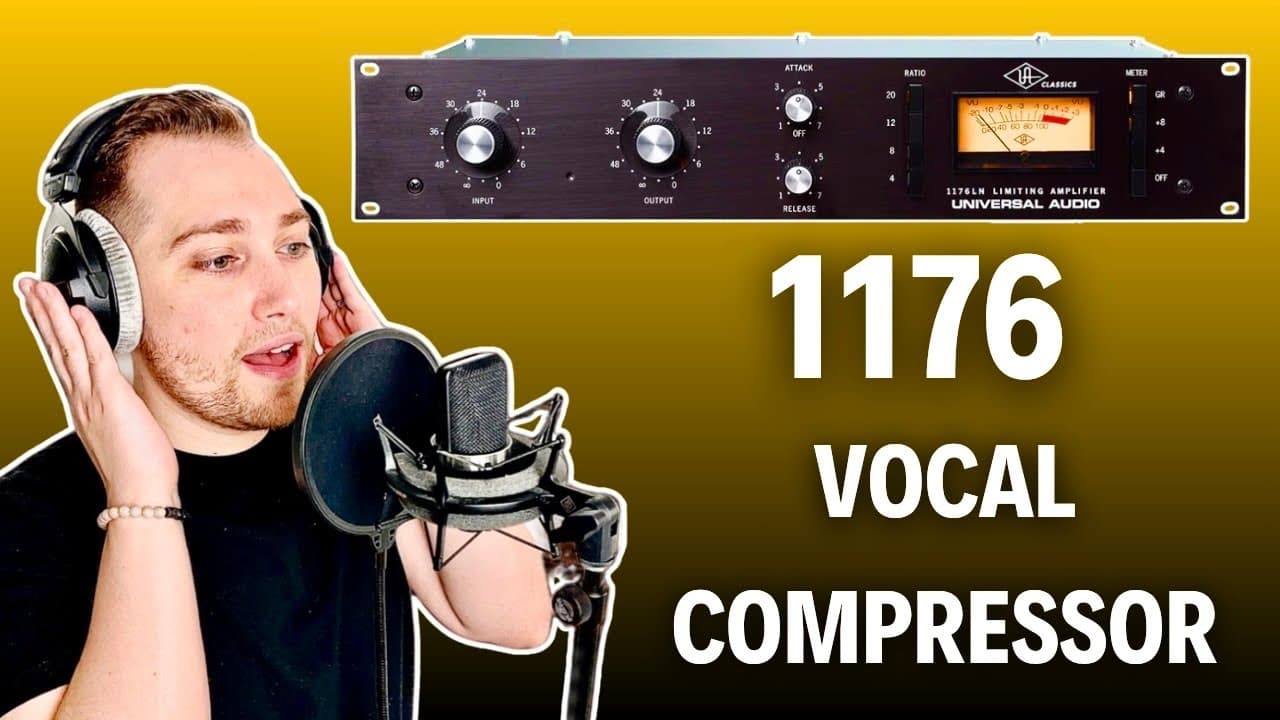
How To Use The 1176 Compressor On VOCALS!
TL;DR
Learn how to effectively use the 1176 vocal compressor to enhance your recordings.
Transcript
the 1176 is one of the most popular vocal compressors of all time used by many award-winning producers and in this video I'm going to show you how it works so you can level up your own vocal Productions first let's talk about what is compression compression is a tool that we use to minimize the Dynamics in audio naturally when people sing you're go... Read More
Key Insights
- 👂 Compression is vital for controlling vocal dynamics and achieving a polished sound in recordings.
- 🐎 The 1176 compressor is known for its speed, aggression, and unique tonal color, making it a favorite among producers.
- 🥳 A typical starting ratio for vocal compression with the 1176 is 4:1, while settings may vary based on individual preferences.
- 👂 Listening comparisons between compressed and uncompressed vocal takes are essential for understanding the effects of compression.
- 👂 Personal experimentation with compressor settings is encouraged to discover optimal sounds for individual projects.
- 💦 Famous producers have documented specific compression settings that work well for popular recordings, serving as a guide for others.
- ❤️🩹 The compressor's attack and release settings can dramatically influence the end result of a vocal track.
Install to Summarize YouTube Videos and Get Transcripts
Explore YouTube Video Summarizer or Get YouTube Transcript Extractor
Questions & Answers
Q: What is the main purpose of using a vocal compressor?
The main purpose of using a vocal compressor is to minimize the dynamic range of audio recordings. This helps to balance out variations in volume in a vocal performance, making quieter parts more noticeable and preventing louder sections from overwhelming the mix. By achieving a more uniform sound, the compressor contributes to a polished overall performance.
Q: What specific characteristics make the 1176 compressor popular among producers?
The 1176 compressor is renowned for its fast and aggressive response time, allowing it to react quickly to changes in volume. This characteristic is especially useful for vocals, where it adds a sense of punch and presence. Its ability to introduce unique tonal qualities further enhances the appeal to producers seeking a distinct sound in their recordings.
Q: How should the input and output knobs be adjusted during the compression process?
To adjust the input and output knobs, first play the vocal track and slowly increase the input until you see about 5 dB of gain reduction on average. Next, adjust the output level to match the track's volume before compression, ensuring that the vocal track sits appropriately in the mix without dramatic volume changes.
Q: What are the recommended attack and release settings for the 1176 compressor?
For the 1176 compressor, a slow attack and fast release are commonly favored settings among producers. Specifically, a slow attack allows the initial transient of the vocal to pass through uncompressed, while a fast release facilitates a more natural vocal sustain. This combination helps maintain clarity and punch in the vocal performance.
Q: Can you explain the "Dr Pepper setting" on the 1176?
The "Dr Pepper setting" refers to a specific configuration of the 1176 compressor, characterized by setting the attack at 10 o'clock, the release at 2 o'clock, and a ratio of 4:1. This combination creates a balanced yet effective compression that enhances the vocal's presence in the mix without overly squashing the dynamic range.
Q: What personal settings did the narrator prefer for the 1176 compressor?
The narrator's personal preferred settings include an attack setting of 3, a release set to 7, and a compression ratio of 4:1. This configuration allows for effective vocal enhancement while retaining the natural dynamics, giving the vocals a well-defined presence and allowing them to sit comfortably within the mix.
Summary & Key Takeaways
-
The video explains vocal compression, focusing on minimizing dynamics to achieve a balanced performance. It highlights the 1176 compressor's speed, aggression, and ability to add punch to vocals.
-
Demonstrations are provided on how to set input, output, attack, release, and ratio controls on the 1176 compressor, offering useful starting points for producers.
-
The narrator shares personal favorites and industry-standard settings for effective vocal compression while encouraging viewers to experiment with their own settings.
Read in Other Languages (beta)
Share This Summary 📚
Summarize YouTube Videos and Get Video Transcripts with 1-Click
Try YouTube Summary with ChatGPT & Claude or YouTube Transcript Generator
Explore More Summaries from Home Studio Academy 📚

Summarize YouTube Videos and Get Video Transcripts with 1-Click
Try YouTube Summary with ChatGPT & Claude or YouTube Transcript Generator