Commodity Driven Growth before the 1930s
TL;DR
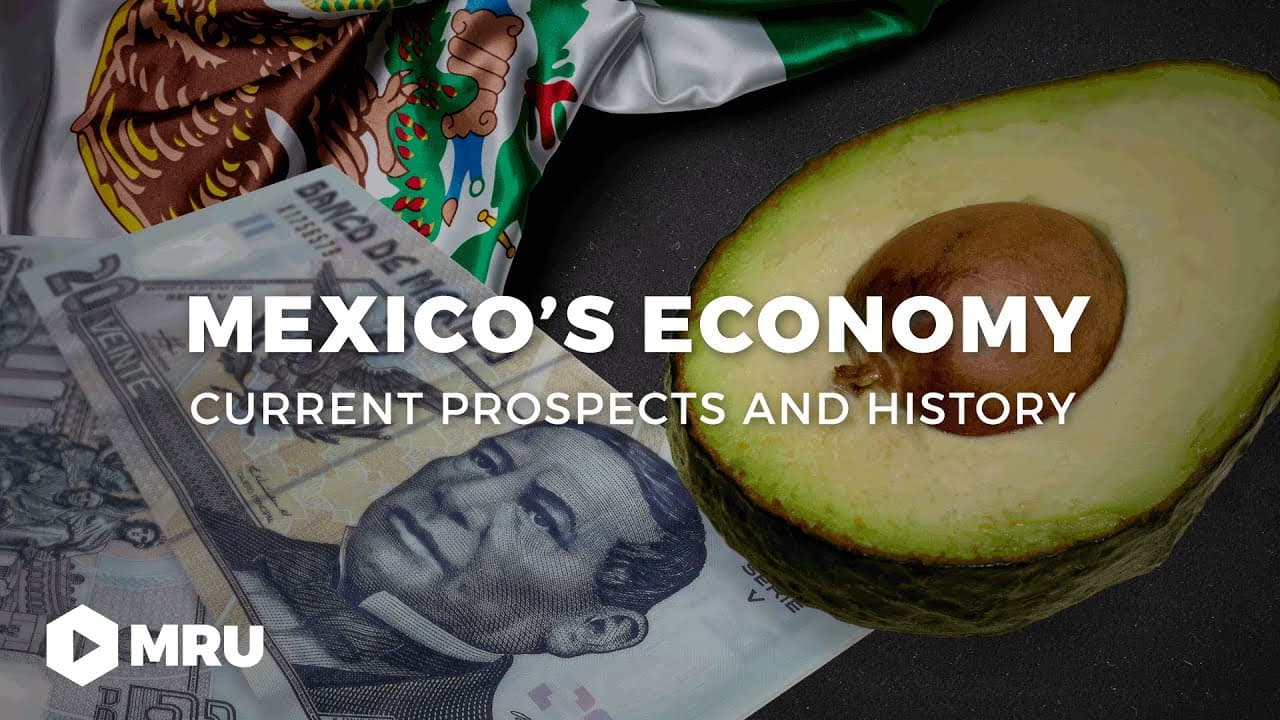
Latin America relied on commodity exports for growth before the 1930s.
Transcript
until the Great Depression Mexico and Latin American countries in general relied on commodity exports to fuel overall economic growth with little support for strong protectionist policies to promote domestic manufacturing most of the controversies in the 19th century tended to be of a political nature questions such as church and state centralism v... Read More
Key Insights
- Latin American countries, including Mexico, relied heavily on commodity exports for economic growth before the Great Depression, with little emphasis on domestic manufacturing.
- The economic policies in the region were inconsistent and lacked coherence, with little thought given to how commodity exports would transform the broader economy.
- Export growth did not necessarily lead to export-led growth, as many countries had dominant market positions, making it difficult to increase export growth through market share expansion.
- A lack of diversification in both commodities and export markets made Latin American countries vulnerable to external shocks, such as the Great Depression.
- By 1913, the US, Great Britain, Germany, and France accounted for over 90% of exports from 10 Latin American countries, highlighting the lack of market diversification.
- The Great Depression severely impacted countries reliant on mineral exports, with Chile's export purchasing power falling by 83% at the start of the 1930s.
- Despite Mexico's relatively quick recovery from the Great Depression, the economic impact prompted many Latin American countries to explore alternative economic models.
- Countries like Brazil, Chile, and Colombia initially embraced import substitution industrialization (ISI) as a response to the vulnerabilities exposed by the Great Depression.
Install to Summarize YouTube Videos and Get Transcripts
Explore YouTube Video Summarizer or Get YouTube Transcript Extractor
Questions & Answers
Q: Why did Latin American countries rely on commodity exports before the 1930s?
Latin American countries relied on commodity exports before the 1930s due to the abundance of natural resources and the global demand for these commodities. The economic strategy focused on exporting raw materials to fuel growth, with little emphasis on developing domestic manufacturing or diversifying the economy. This approach was supported by foreign investment and minimal protectionist policies.
Q: What challenges did Latin American countries face with their export-led growth strategy?
Latin American countries faced several challenges with their export-led growth strategy. A primary issue was the lack of diversification in both commodities and export markets, making them vulnerable to external shocks. Additionally, dominant market positions in commodities limited the potential for increasing market share. The strategy also lacked coherence and consistency, with little focus on transforming the broader economy through export growth.
Q: How did the Great Depression impact Latin American countries reliant on commodity exports?
The Great Depression had a severe impact on Latin American countries reliant on commodity exports. The global economic downturn led to a drastic reduction in demand for commodities, causing prices and export volumes to plummet. Countries heavily dependent on mineral exports, like Chile and Mexico, experienced significant declines in the purchasing power of exports, exacerbating economic hardships and prompting a reevaluation of economic strategies.
Q: What role did market diversification play in the economic vulnerability of Latin American countries?
Market diversification, or the lack thereof, played a significant role in the economic vulnerability of Latin American countries. Many countries were heavily reliant on a few key export markets, such as the US and Europe, which accounted for the majority of their exports. This concentration made them susceptible to economic fluctuations and external shocks, as seen during the Great Depression, when global demand for commodities fell sharply.
Q: Why did some Latin American countries turn to import substitution industrialization (ISI) after the Great Depression?
After the Great Depression, some Latin American countries turned to import substitution industrialization (ISI) as a strategy to reduce their dependence on commodity exports and external markets. The economic hardships exposed the vulnerabilities of the export-led growth model, prompting countries to focus on developing domestic industries and manufacturing capabilities to achieve economic self-sufficiency and stability.
Q: How did Mexico recover from the Great Depression compared to other Latin American countries?
Mexico managed to recover relatively quickly from the Great Depression, regaining its pre-depression GDP levels by 1934. This recovery was faster compared to other Latin American countries, which continued to struggle with the economic fallout. Mexico's ability to rebound was partly due to its diversified economy and the adoption of policies that promoted economic stability and growth, reducing reliance on volatile commodity exports.
Q: What were the main export markets for Latin American countries in the early 20th century?
In the early 20th century, the main export markets for Latin American countries were the United States, Great Britain, Germany, and France. By 1913, these countries accounted for over 90% of exports from 10 Latin American countries. This heavy reliance on a few key markets highlighted the lack of diversification and increased vulnerability to economic changes in these regions.
Q: What is the significance of Victor Bulmer-Thomas's book on Latin American economic history?
Victor Bulmer-Thomas's book, 'Economic History of Latin America Since Independence,' is significant for its comprehensive analysis of Latin America's economic development. It provides valuable insights into the region's reliance on commodity exports, the challenges faced with export-led growth, and the impact of global economic events like the Great Depression. The book serves as a crucial resource for understanding the historical context and evolution of economic policies in Latin America.
Summary & Key Takeaways
-
Before the 1930s, Latin American countries, including Mexico, relied heavily on commodity exports to fuel economic growth. However, economic policies lacked coherence and consistency, with little emphasis on transforming the broader economy through these exports.
-
The region's lack of diversification in commodities and export markets made it vulnerable to external shocks, such as the Great Depression, which severely impacted countries reliant on mineral exports.
-
The economic hardships caused by the Great Depression led many Latin American countries to explore alternative economic models, such as import substitution industrialization, to reduce reliance on commodity-driven growth.
Read in Other Languages (beta)
Share This Summary 📚
Summarize YouTube Videos and Get Video Transcripts with 1-Click
Try YouTube Summary with ChatGPT & Claude or YouTube Transcript Generator
Explore More Summaries from Marginal Revolution University 📚

Summarize YouTube Videos and Get Video Transcripts with 1-Click
Try YouTube Summary with ChatGPT & Claude or YouTube Transcript Generator