5 Powerful Psychological Tricks to Boost Your Sales Instantly
TL;DR
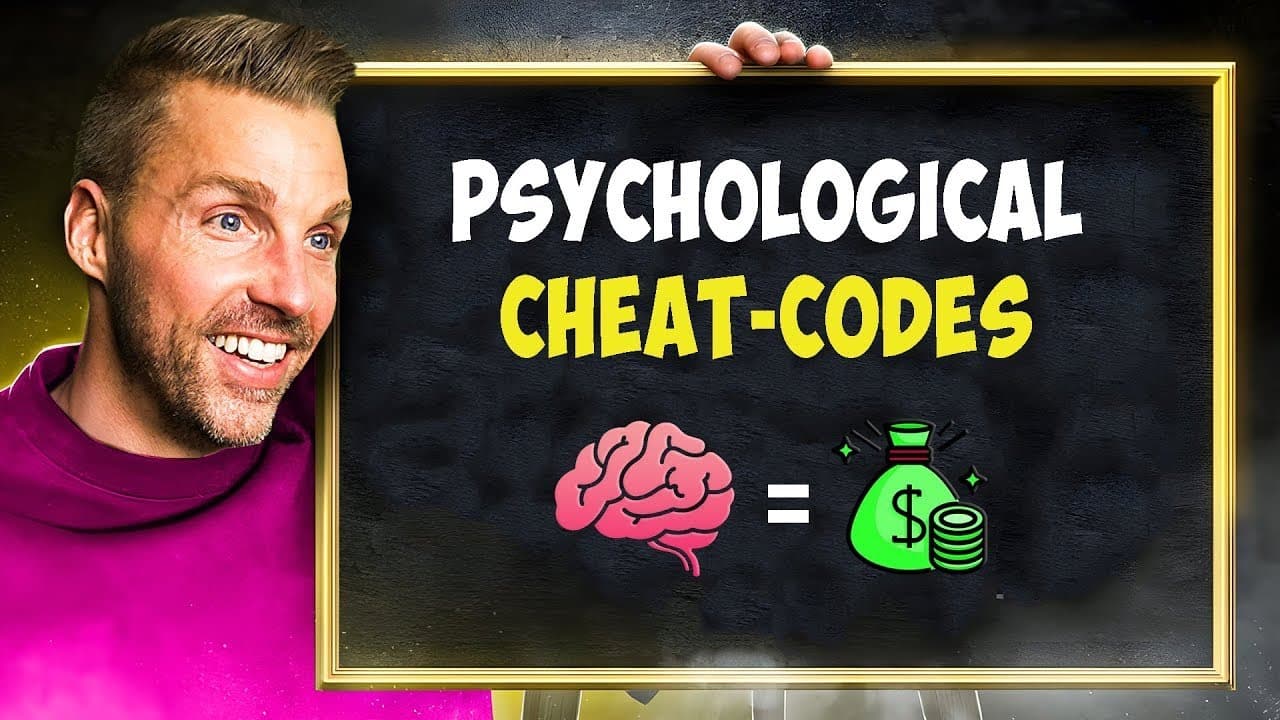
Utilize psychological principles to enhance marketing effectiveness.
Transcript
Hey my friend, Adam here. Have you ever noticed how some businesses attract clients effortlessly while others with amazing offers can't seem to get any traction? It's not that your service isn't valuable. The problem is most people fall into what I call the tactic trap. Chasing the latest marketing tactic without understanding the why and the reaso... Read More
Key Insights
- Businesses often fall into the 'tactic trap,' focusing on superficial marketing tactics without understanding the underlying psychological principles that drive consumer behavior.
- The iceberg analogy highlights the importance of focusing on the deeper psychological triggers rather than just the visible marketing tactics.
- Cognitive biases, like the halo effect, bandwagon effect, and anchoring, play a significant role in influencing consumer decisions and can be leveraged in marketing strategies.
- The halo effect can create a positive first impression that influences subsequent perceptions, emphasizing the importance of polished and professional initial touchpoints.
- The bandwagon effect leverages social proof to build trust and credibility, encouraging marketers to prominently display testimonials and reviews.
- Anchoring involves setting a reference point that influences perception of subsequent information, a strategy that can make offers seem more attractive.
- The mere exposure effect suggests that repeated exposure to a brand builds familiarity and trust, highlighting the importance of consistent visibility and content repurposing.
- FOMO, or fear of missing out, creates urgency and motivates action, but it must be used ethically to maintain trust and credibility.
Install to Summarize YouTube Videos and Get Transcripts
Explore YouTube Video Summarizer or Get YouTube Transcript Extractor
Questions & Answers
Q: What is the 'tactic trap' in marketing?
The 'tactic trap' refers to the tendency of businesses to focus on the latest marketing tactics without understanding the underlying psychological principles that drive consumer behavior. This approach often leads to inconsistent results, as businesses chase superficial trends rather than developing a deep understanding of what truly influences customer decisions.
Q: How does the iceberg analogy relate to marketing?
The iceberg analogy illustrates the idea that businesses often focus on the visible, flashy marketing tactics above the surface, such as social media trends and viral ads, while neglecting the deeper, hidden psychological triggers that truly drive consumer behavior. Success in marketing requires understanding and leveraging these deeper elements rather than just the superficial tactics.
Q: What is the halo effect and how can it be used in marketing?
The halo effect occurs when a positive first impression leads to favorable assumptions about other aspects of a brand or product. In marketing, this means that creating polished and professional initial touchpoints, such as a well-designed website or high-quality visuals, can influence how consumers perceive the overall quality and trustworthiness of a brand.
Q: How does the bandwagon effect influence consumer behavior?
The bandwagon effect is a cognitive bias where people tend to trust and follow what others already trust. In marketing, it can be leveraged by prominently displaying social proof, such as testimonials and reviews, to build credibility and encourage potential customers to join the 'bandwagon' of existing satisfied clients, thus enhancing trust and conversions.
Q: What is anchoring and how can it be applied in marketing?
Anchoring is a cognitive bias where the first piece of information encountered sets a reference point for subsequent information. In marketing, it can be applied by presenting a higher reference point, such as a market average or premium offer, before revealing the actual price, making the offer seem more attractive and affordable by comparison.
Q: What is the mere exposure effect and why is it important in marketing?
The mere exposure effect is a psychological phenomenon where repeated exposure to a stimulus increases familiarity and preference for it. In marketing, this means that consistently showing up in a consumer's feed or inbox builds familiarity and trust over time, making them more likely to choose a brand they recognize when making a purchasing decision.
Q: How can FOMO be used as a marketing strategy?
FOMO, or the fear of missing out, is a powerful motivator because people are more driven by the fear of losing out than by the prospect of gaining. In marketing, creating a sense of urgency through limited-time offers, countdown timers, and highlighting scarcity can prompt consumers to act quickly. However, it is crucial to use this strategy ethically to maintain trust.
Q: What is the marketing hierarchy and how does it guide marketing strategies?
The marketing hierarchy is a framework that encourages businesses to move beyond basic tactics to align their strategies with consumer psychology. It consists of four levels: tricks and hacks, tactics, strategy, and psychology. By operating at the top level, businesses can create marketing plans that resonate with consumers' instincts, leading to more effective and sustainable results.
Summary & Key Takeaways
-
Adam Erhart emphasizes the importance of understanding psychological principles in marketing to create strategies that connect with consumer instincts and drive conversions.
-
The video discusses various cognitive biases and psychological effects, such as the halo effect and bandwagon effect, that can be leveraged to enhance marketing effectiveness.
-
Erhart introduces a marketing hierarchy, encouraging businesses to move beyond tactics to align their strategies with consumer psychology for more sustainable success.
Read in Other Languages (beta)
Share This Summary 📚
Summarize YouTube Videos and Get Video Transcripts with 1-Click
Try YouTube Summary with ChatGPT & Claude or YouTube Transcript Generator
Explore More Summaries from Adam Erhart 📚




Summarize YouTube Videos and Get Video Transcripts with 1-Click
Try YouTube Summary with ChatGPT & Claude or YouTube Transcript Generator