Why Bill Gates is buying up farmland... and you should too
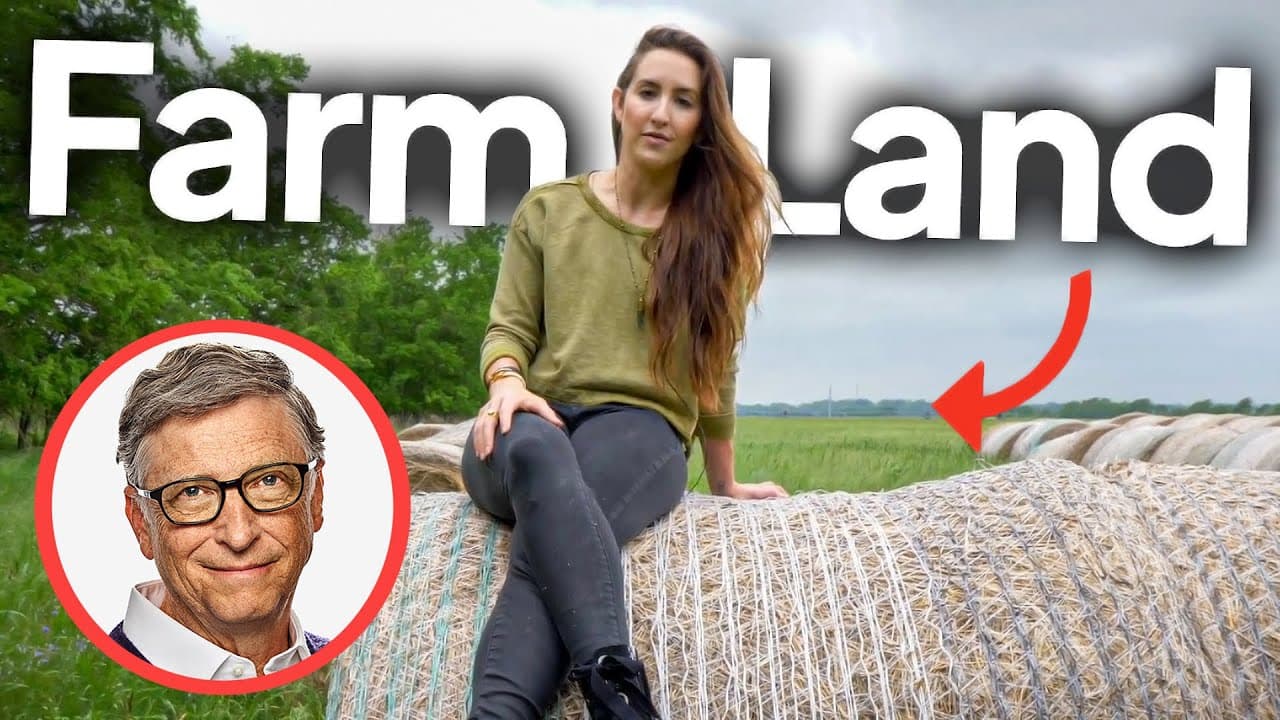
TL;DR
Bill Gates invests in farmland as a profitable asset class.
Transcript
agricultural farm prices food prices are at all-time highs we want to find you guys a way to make money so you don't have to spend it all on food that's why today we're hanging out here this is called callahan this is a farm good store and we're going to talk to them about what's going on with feed prices what's happening with livestock and we're g... Read More
Key Insights
- Bill Gates has been quietly acquiring farmland across 19 states, owning approximately 242,000 acres, making him the largest farm owner in the U.S.
- Farmland has shown an average return of 11.5% over the past 30 years, with recent spikes due to increased demand and limited supply.
- Foreign ownership of U.S. farmland is growing, currently at about 2.5%, but this number has doubled recently.
- Farmland offers various tax deductions, grants, and subsidies, making it an attractive investment option for those seeking tax benefits.
- Food prices, such as eggs, have skyrocketed, reflecting the volatility and profitability potential in the agricultural sector.
- Fractionalized investing in farms and investing in ancillary farming equipment companies are alternative ways to profit without direct farm ownership.
- The geopolitical situation, like the conflict in Ukraine and Russia, affects global food supply, heightening the significance of farmland investments.
- Environmental sustainability and control over agricultural regulations are potential motivations behind Gates' farmland acquisitions.
Install to Summarize YouTube Videos and Get Transcripts
Explore YouTube Video Summarizer or Get YouTube Transcript Extractor
Questions & Answers
Q: Why is Bill Gates buying farmland?
Bill Gates is purchasing farmland as it is a consistently high-performing asset class with low volatility and significant returns. The increasing global demand for food and limited arable land make farmland a strategic investment. Additionally, farmland offers tax benefits and potential control over agricultural regulations.
Q: How does farmland compare to other asset classes?
Farmland has shown consistent returns, averaging 11.5% over 30 years, with lower volatility compared to other asset classes. Its performance is not closely correlated with the stock market, making it a stable investment option. Farmland's value is driven by increasing food demand and limited supply.
Q: What are the tax benefits of investing in farmland?
Investing in farmland offers various tax benefits, including deductions, grants, and subsidies. These benefits vary by location but can significantly reduce the tax burden for farm owners. For example, in Texas, owning six cows can qualify for an agricultural tax credit, making farmland an attractive investment.
Q: What impact does foreign ownership have on U.S. farmland?
Foreign ownership of U.S. farmland is growing, currently making up about 2.5% of total farmland. This trend has doubled recently, raising concerns about foreign influence on domestic agriculture. However, it also highlights the global recognition of U.S. farmland's value and profitability.
Q: How are food prices affecting farmland investment?
Rising food prices, such as a 300% increase in egg prices, highlight the profitability potential of farmland. As food demand increases and supply becomes constrained, farmland's value and returns are expected to rise, making it an attractive investment for those looking to capitalize on these trends.
Q: What are alternative ways to invest in farmland?
Besides direct ownership, investors can engage in fractionalized farm investments or invest in ancillary farming equipment companies. These methods provide exposure to the agricultural sector without the need for hands-on farm management, appealing to those seeking diversification and reduced risk.
Q: How does geopolitical tension affect farmland investment?
Geopolitical tensions, such as the Ukraine-Russia conflict, impact global food supply by disrupting production in key agricultural regions. This situation heightens the importance of stable food sources, increasing the value of farmland investments as countries compete for limited food supplies.
Q: What is the potential environmental motivation behind Gates' farmland acquisitions?
Gates' farmland acquisitions may be driven by a desire to make farming more environmentally sustainable. By controlling large portions of farmland, Gates can influence agricultural practices and regulations. He is involved with Leading Harvest, an environmentally sustainable industry group, indicating a potential focus on eco-friendly farming.
Summary & Key Takeaways
-
Bill Gates has been strategically acquiring farmland, making him the largest private farm owner in the U.S. This move is seen as a way to capitalize on the increasing demand for food and the consistent returns farmland offers.
-
Farmland investment is attractive due to its low volatility and substantial tax benefits. With food prices rising and geopolitical tensions affecting supply, farmland is becoming a more lucrative asset class.
-
Alternative investment strategies in farmland include fractional ownership and investing in farming equipment companies. These methods offer exposure to the sector without the need for direct farm management.
Read in Other Languages (beta)
Share This Summary 📚
Summarize YouTube Videos and Get Video Transcripts with 1-Click
Try YouTube Summary with ChatGPT & Claude or YouTube Transcript Generator