Why It Sucks to Be Born as a Giant Anaconda
TL;DR
Anaconda's journey from birth to adulthood in the Amazon.
Transcript
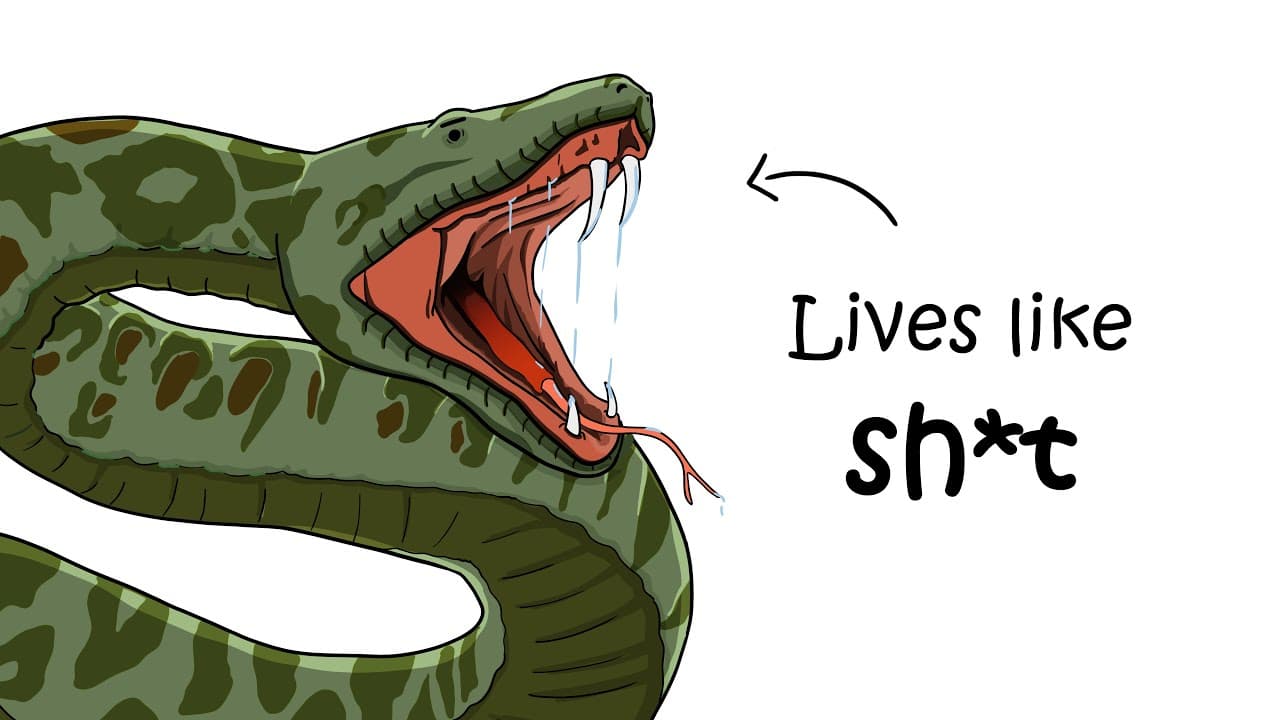
you slip into life from the comfort of your mother's body born live into the dense warm humid air of the Amazon your Mom leaves you the moment she pushes you out not seeing the difference between giving birth and pooping you and your siblings scatter in all directions and the jungle doesn't care that you're new here he was a... Read More
Key Insights
- Anacondas are born live and immediately left by their mothers, requiring them to scatter and survive on their own from birth.
- Camouflage is a key survival strategy for young anacondas, allowing them to blend into their environment to avoid predators and surprise prey.
- As juveniles, anacondas gradually move up the food chain, targeting larger prey as they grow bigger and stronger.
- Anacondas use their keen sense of smell and stealth to hunt, often lying in wait for hours or even days for the perfect opportunity.
- Territory is important for adult anacondas, who seek out areas with abundant prey and fewer predators to establish their home.
- Mating involves a slow, winding dance between male and female anacondas, leading to the birth of live young several months later.
- As they age, anacondas experience a decline in speed and energy, requiring them to be more strategic in their hunting methods.
- The life cycle of an anaconda often ends not in battle but through a gradual decline in physical capabilities, eventually leading to their demise in the jungle.
Install to Summarize YouTube Videos and Get Transcripts
Explore YouTube Video Summarizer or Get YouTube Transcript Extractor
Questions & Answers
Q: What challenges do newborn anacondas face immediately after birth?
Newborn anacondas face the immediate challenge of survival without maternal care. They are left by their mothers to fend for themselves in the dense Amazon jungle. They must quickly learn to avoid predators like jaguars and large birds, and find food on their own, relying heavily on their natural camouflage.
Q: How do young anacondas use camouflage to their advantage?
Young anacondas have skin patterns that blend seamlessly with their environment, providing excellent camouflage. This natural adaptation allows them to hide from predators and ambush prey effectively. By remaining unseen, they can avoid danger and increase their chances of successful hunts, crucial for their growth and survival.
Q: What changes occur as anacondas transition from juvenile to adult?
As anacondas transition from juvenile to adult, they experience significant growth, allowing them to target larger prey such as capybaras and deer. They become faster and stronger, and their hunting skills improve. Additionally, they seek out and establish territories, ensuring a consistent food supply and a safe environment for rest.
Q: What role does territory play in an adult anaconda's life?
Territory is crucial for adult anacondas as it provides a secure area with abundant prey and fewer predators. Establishing and marking a territory ensures they have a reliable hunting ground, reducing competition and increasing their chances of survival and successful reproduction during mating seasons.
Q: Describe the mating process of anacondas.
The mating process of anacondas involves a slow, intricate courtship where the male and female coil around each other in a winding dance. This ritual can last for hours, culminating in the transfer of genetic material. The female then carries the young, giving birth to live offspring several months later.
Q: How do anacondas adapt their hunting strategies as they age?
As anacondas age, they experience a decline in speed and energy, necessitating more strategic hunting methods. They rely on their experience and knowledge of the jungle, using stealth and patience to ambush prey. Their ability to camouflage and remain motionless for extended periods becomes increasingly important for successful hunts.
Q: What ultimately leads to the decline of anacondas in the wild?
The decline of anacondas in the wild is typically due to the gradual wear and tear of years spent hunting and surviving. As they age, they become slower and less energetic, making it difficult to catch prey. This physical decline eventually leads to their inability to sustain themselves, resulting in their demise.
Q: How does the life cycle of an anaconda reflect the challenges of survival in the jungle?
The life cycle of an anaconda reflects the harsh realities of jungle survival, beginning with immediate independence and the constant threat of predators. Throughout their lives, they must adapt to changing conditions, mastering hunting and camouflage. Their journey from birth to adulthood highlights the balance between growth, reproduction, and eventual decline in the wild.
Summary & Key Takeaways
-
The life of a giant anaconda begins with a challenging birth in the Amazon, where survival depends on immediate independence and the ability to blend into the environment. Young anacondas must avoid predators while learning to hunt small prey.
-
As they grow, anacondas become more adept hunters, targeting larger animals and using their camouflage to their advantage. Establishing a territory becomes crucial as they mature, providing a safe space to hunt and rest.
-
In adulthood, anacondas engage in mating rituals, leading to the birth of new generations. Over time, their physical abilities decline, and they must rely on experience and strategy to continue surviving in the jungle.
Read in Other Languages (beta)
Share This Summary 📚
Summarize YouTube Videos and Get Video Transcripts with 1-Click
Try YouTube Summary with ChatGPT & Claude or YouTube Transcript Generator
Explore More Summaries from Dinzo 📚


Summarize YouTube Videos and Get Video Transcripts with 1-Click
Try YouTube Summary with ChatGPT & Claude or YouTube Transcript Generator