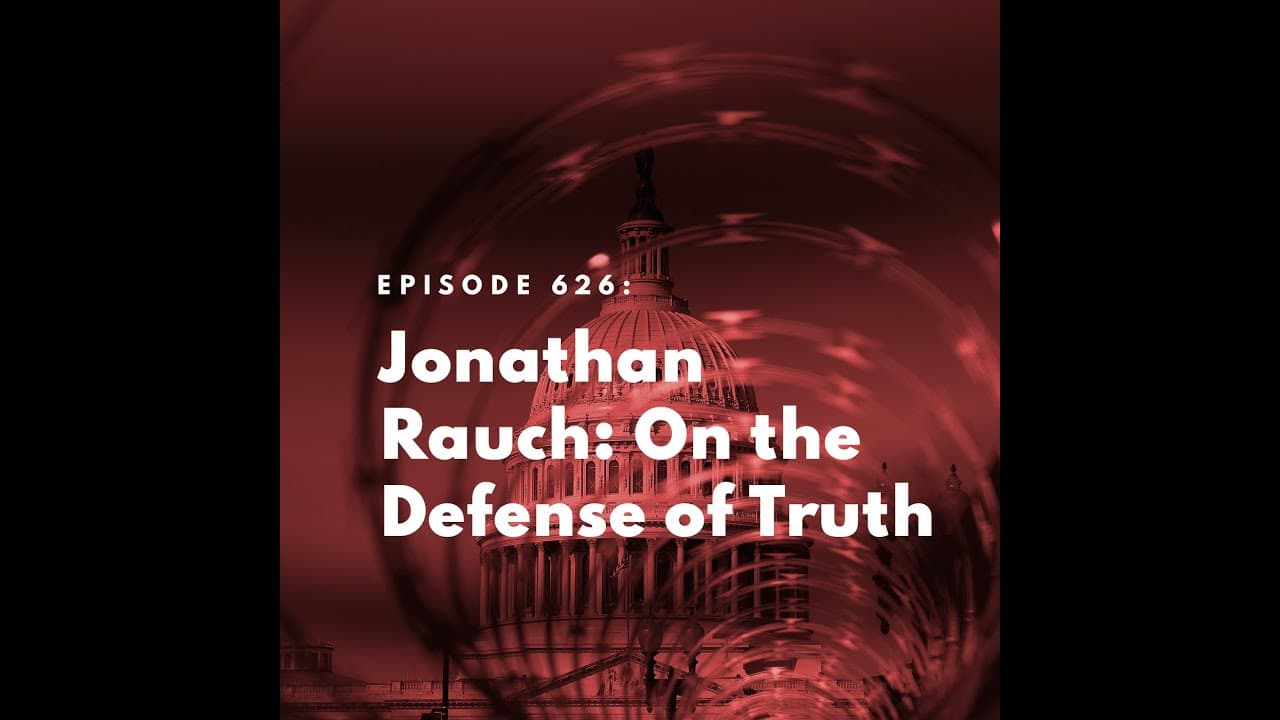
Jonathan Rauch: On the Defense of Truth
TL;DR
The podcast discusses the importance of defending truth in the face of disinformation and explores the concept of the "Constitution of Knowledge."
Transcript
welcome to the bulwark podcast i'm charlie sykes uh we are doing this the morning after the new york city mayoral primary where it turns out that maybe defund the police is not the most popular idea even in the progressive bastion of new york city and the united states senate to absolutely no one's surprise uh kills the the the election reform bill... Read More
Key Insights
- ⚖️ "Constitution of Knowledge" and the U.S. Constitution are intertwined, both relying on norms, institutions, checks and balances, and a commitment to truth.
- 💄 Disinformation is a threat to democracy, as it divides and demoralizes the population, making it harder for a democratic system to function effectively.
- 🤗 Critical race theory and similar theories challenge the basis of truth, which can be healthy when introduced in an environment of open debate, but dangerous when used to shut down dissenting voices.
- 😵 The struggle to defend truth is ongoing and requires a multi-institutional, cross-society response, including better media practices, improved education, and organized resistance against censorship and disinformation.
- 😌 The resilience of the "Constitution of Knowledge" lies in the ability to adapt and correct mistakes, valuing diversity of opinions and vigorously engaging in debate to arrive at a better understanding of truth.
- 🫷 The positive aspect of critical race theory is the push for rethinking and correcting historical narratives, but overshooting in theories can hinder knowledge progress.
Install to Summarize YouTube Videos and Get Transcripts
Explore YouTube Video Summarizer or Get YouTube Transcript Extractor
Questions & Answers
Q: What is the "Constitution of Knowledge"?
The "Constitution of Knowledge" refers to the system of rules and institutions that determine and discover truth. It resembles the U.S. Constitution and fosters freedom, wellbeing, and social peace by using checks and balances to channel ambition and force compromise.
Q: How does disinformation impact society?
Disinformation, such as the spread of false narratives and conspiracy theories, undermines trust in institutions, confuses the public, and creates division. It is a tactic used in information warfare to dominate and disorient target populations.
Q: What role do the media play in combating disinformation?
The media need to become more savvy in recognizing and countering disinformation. Fact-based journalism, which involves checking facts and holding each other accountable, is crucial in the fight against disinformation.
Q: Can the "Constitution of Knowledge" withstand attacks on truth?
The "Constitution of Knowledge" is not self-sustaining and requires effort to defend truth. This involves building a better-informed public, strengthening media literacy, countering cancel culture, and promoting critical thinking and civics education.
Summary & Key Takeaways
-
The podcast highlights the recent New York City mayoral primary, where the progressive defund the police movement lost support, indicating that the idea is not universally popular.
-
The passing of the election reform bill, HR1, in the United States Senate is deemed predictable, as the outcome was widely anticipated, raising questions about the potential for compromise.
-
The discussion moves to Mike Lindell, the My Pillow guy, and his claims of election fraud, leading to the broader topic of defending truth in the face of disinformation.
Read in Other Languages (beta)
Share This Summary 📚
Summarize YouTube Videos and Get Video Transcripts with 1-Click
Try YouTube Summary with ChatGPT & Claude or YouTube Transcript Generator
Explore More Summaries from The Bulwark 📚
Summarize YouTube Videos and Get Video Transcripts with 1-Click
Try YouTube Summary with ChatGPT & Claude or YouTube Transcript Generator