The Satellite Helping Slow Climate Change — Right Now | Millie Chu Baird | TED
TL;DR
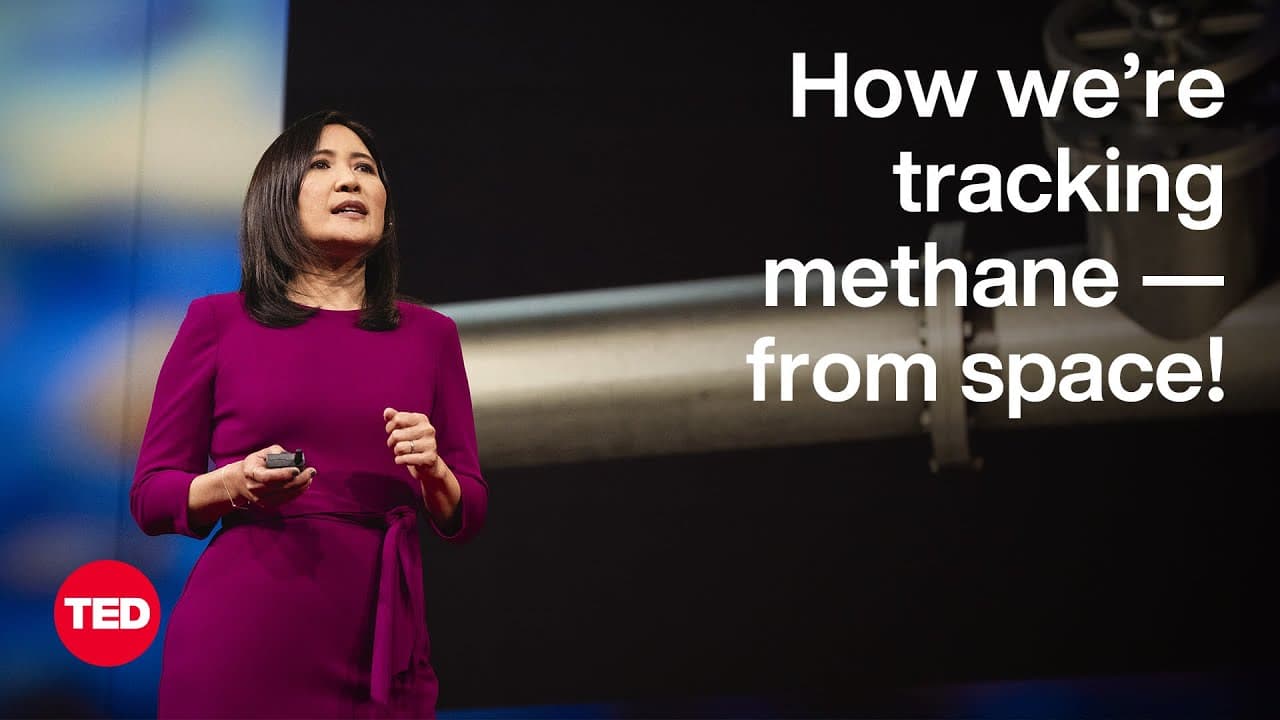
A satellite called MethaneSAT is designed to track methane emissions from various sources, providing actionable data to reduce greenhouse gas emissions and combat climate change.
Transcript
Lots of people are really enthusiastic about space. My husband, my daughters and a lot of my colleagues love rockets and pretty much anything that has to do with space. It's never really been my thing. However, I recently went to a rocket launch, and I can honestly say that I got emotional. And the emotion that I felt wasn't just thrill or awe. It ... Read More
Key Insights
- 😘 Methane is a significant contributor to climate change due to its high potency despite lower overall concentrations.
- 👾 MethaneSAT, equipped with spectrometers, will track methane emissions from space, providing comprehensive and actionable data.
- 🫢 Sharing the data with relevant stakeholders can lead to significant reductions in methane emissions from oil and gas facilities.
- 🇪🇺 The European Union is taking steps to extend methane emission rules to imports, influencing suppliers to reduce emissions.
- 🛄 MethaneSAT aims to reduce methane emissions by 75% in the next six years.
- 💱 Transparency in methane emissions and knowledge-sharing empower individuals, companies, and countries to fulfill their climate change commitments.
- 👾 MethaneSAT is a result of collaboration between environmental nonprofits, generous donors, and government entities investing in space capacity.
Install to Summarize YouTube Videos and Get Transcripts
Explore YouTube Video Summarizer or Get YouTube Transcript Extractor
Questions & Answers
Q: What makes methane a significant contributor to climate change?
Methane is a short-term greenhouse gas that is over 80 times more potent at trapping heat than carbon dioxide. Despite lower overall concentrations, methane causes equal warming due to its potency.
Q: How will MethaneSAT help in identifying methane sources?
MethaneSAT will orbit the Earth and collect data using spectrometers that can pinpoint methane emissions from 590 kilometers away. This will allow identification of large leaks, point sources, and even spread-out sources of methane.
Q: Who will have access to the data collected by MethaneSAT?
The data will be available to government regulators, the companies themselves, and nonprofits involved in reducing methane emissions. This will enable them to take immediate action in fixing leaks and reducing methane emissions.
Q: What are the implications of reducing methane emissions?
Fifty companies, representing 40% of global oil and gas production, have pledged to cut methane emissions by 90% by 2030. Additionally, over 150 countries have signed the Global Methane Pledge to address methane emissions.
Summary & Key Takeaways
-
Methane is a potent greenhouse gas with short-term effects, and reducing its emissions can have an immediate impact on climate change.
-
MethaneSAT, a satellite equipped with spectrometers, will provide comprehensive data on methane emissions from oil and gas facilities, landfills, coal mines, and other sources.
-
By sharing the analysis and data with governments, companies, and nonprofits, MethaneSAT aims to reduce methane emissions by 75% in the next six years.
Read in Other Languages (beta)
Share This Summary 📚
Summarize YouTube Videos and Get Video Transcripts with 1-Click
Try YouTube Summary with ChatGPT & Claude or YouTube Transcript Generator
Explore More Summaries from TED 📚





Summarize YouTube Videos and Get Video Transcripts with 1-Click
Try YouTube Summary with ChatGPT & Claude or YouTube Transcript Generator