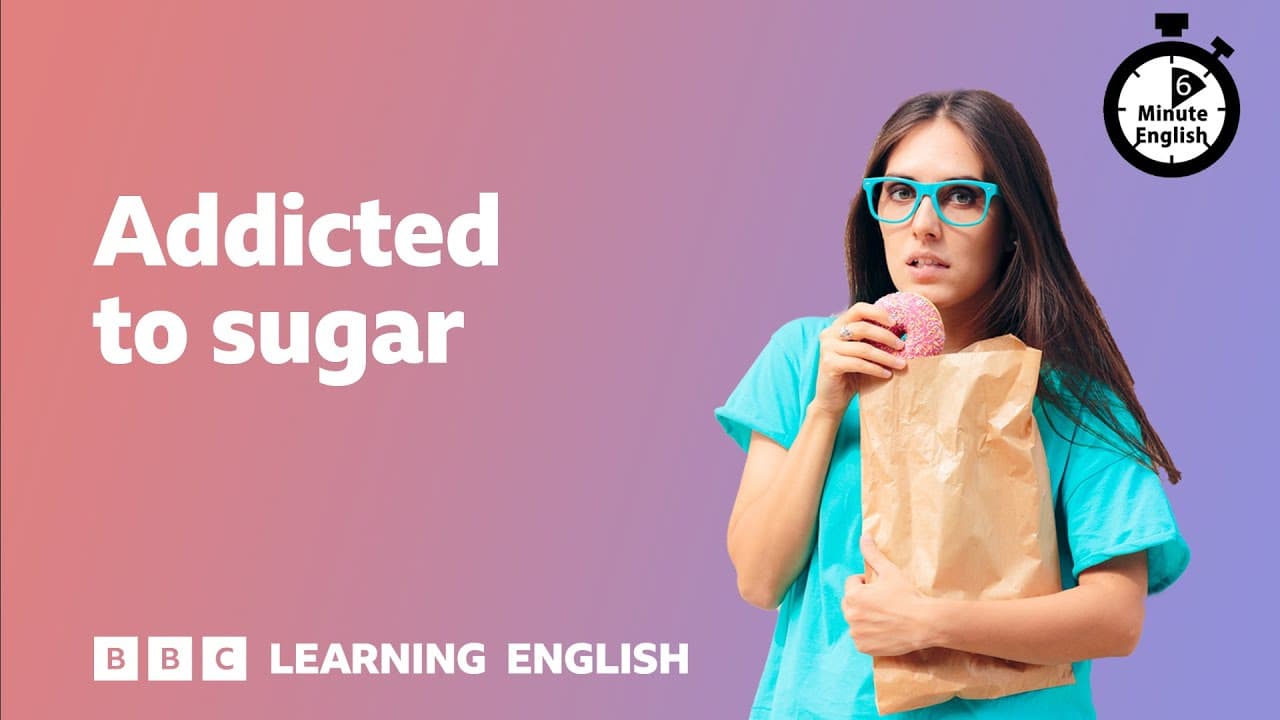
Addicted to sugar ⏲️ 6 Minute English
TL;DR
Sugar addiction is a growing health crisis.
Transcript
Hello. This is 6 Minute English from BBC Learning English. I'm Neil and I'm Georgie. Would you like a cup of tea, Neil? Oh, yes thanks Georgie, with milk and three sugars, please. Three sugars, wow! You really have a sweet tooth - you like eating sweet things. Aren't you worried about your weight? Yes, but I can't say no to sugar. Just as our addic... Read More
Key Insights
- Sugar addiction is comparable to oil addiction, causing significant health issues like obesity and diabetes due to its dopamine-inducing effects.
- Historically, sugar was a luxury item in England, affordable only to the wealthy, but its consumption has skyrocketed over the centuries.
- Sugar, like oil, became a crucial commodity, with economies and wars influenced by its trade, especially during the era of slavery.
- The end of slavery coincided with a massive increase in sugar demand, leading to its widespread use as a body fuel, much like oil for machines.
- In the 20th century, sugar companies began adding sugar to foods that traditionally contained none, altering global eating habits.
- The market was flooded with sugar, making it cheap and accessible, thus changing consumer habits and increasing sugar consumption dramatically.
- The rise in sugar consumption has led to a tripling of obesity and heart disease worldwide over the last 50 years.
- Cheaper sugary foods disproportionately affect the poorest in society, exacerbating health disparities.
Install to Summarize YouTube Videos and Get Transcripts
Explore YouTube Video Summarizer or Get YouTube Transcript Extractor
Questions & Answers
Q: Why is sugar compared to oil in the content?
Sugar is compared to oil because both are considered crucial commodities that have shaped economies and societies. While oil fuels machines, sugar has become a fuel for the human body. Both have significant impacts on global trade and health, with sugar contributing to widespread health issues like obesity and diabetes.
Q: How did sugar consumption change after the end of slavery?
After the end of slavery, sugar consumption increased dramatically. The demand for sugar in Europe and the United States reached record highs, and sugar became a staple in diets, serving as a primary energy source. This shift was facilitated by sugar companies who began adding sugar to a variety of foods, altering eating habits globally.
Q: What role did sugar companies play in changing eating habits?
Sugar companies played a significant role in changing eating habits by flooding the market with sugar, making it widely available and affordable. They added sugar to foods that previously contained none, such as bread and yogurt, which increased sugar consumption. This strategy altered global eating patterns, contributing to increased sugar intake and associated health problems.
Q: What were the health effects of increased sugar consumption?
Increased sugar consumption has led to a significant rise in health issues such as obesity, tooth decay, and diseases like diabetes. Over the last 50 years, obesity and heart disease have tripled worldwide, largely due to the high sugar content in diets. The widespread availability and low cost of sugary foods have exacerbated these health problems, particularly among the poorest in society.
Q: How did sugar become a luxury item in England?
Sugar became a luxury item in England when it was first introduced in the 11th century. It was an expensive commodity, affordable only to the wealthy, including kings and queens. Its high cost and limited availability made it a symbol of wealth and status, consumed primarily by the elite.
Q: What historical role did sugar play in global trade?
Historically, sugar played a pivotal role in global trade, similar to oil today. It was a major commodity traded across continents, significantly influencing economies and political relations. Sugar plantations, often reliant on slave labor, were central to this trade, and the demand for sugar drove economic and social changes worldwide.
Q: What is the significance of the term 'flood the market' in the context of sugar?
In the context of sugar, 'flood the market' refers to the strategy used by sugar companies to make large quantities of sugar available at low prices. This approach aimed to increase consumption by making sugar accessible to a broader population, thus altering eating habits and increasing sugar intake on a global scale.
Q: Who was the English monarch known for their love of sugar?
Queen Elizabeth I was the English monarch known for her love of sugar, which was so extensive that it turned her teeth black. This fact highlights the historical context of sugar as a luxury item and its impact on health, even among the elite. Her consumption habits reflect the broader societal fascination with sugar at the time.
Summary & Key Takeaways
-
Sugar addiction parallels oil addiction, posing a significant health crisis due to its dopamine-inducing properties, leading to obesity and diabetes.
-
Historically, sugar was a luxury item, but its consumption escalated alongside its role as a crucial global commodity, particularly during the slavery era.
-
Sugar companies flooded markets in the 20th century, altering eating habits and increasing sugar consumption, contributing to global obesity and health issues.
Read in Other Languages (beta)
Share This Summary 📚
Summarize YouTube Videos and Get Video Transcripts with 1-Click
Try YouTube Summary with ChatGPT & Claude or YouTube Transcript Generator
Explore More Summaries from BBC Learning English 📚

Summarize YouTube Videos and Get Video Transcripts with 1-Click
Try YouTube Summary with ChatGPT & Claude or YouTube Transcript Generator