Problem 2 Gunn Diode - Transferred Electron Devices - Microwave Engineering
TL;DR
This video discusses the computation of electron drift velocity, current density, and negative electron mobility in a Gunn diode.
Transcript
click the bell icon to get latest videos from akira hello Prince I welcome you all to this video we are with chapter 4 of microwave engineering transferred electron devices family we are going to learn so now we have shifted to the semiconductor platform for generation of microwave energy and in this family the very popular current operation we hav... Read More
Key Insights
- 😒 Gunn diodes use the Gunn effect for the generation of microwave energy.
- 🏑 The threshold field and applied electric field are important parameters for gunn diode operation.
- 🧑🏭 Doping concentration and device length are factors that affect the behavior of a Gunn diode.
- ❓ The electron drift velocity is determined by the operating frequency and device length.
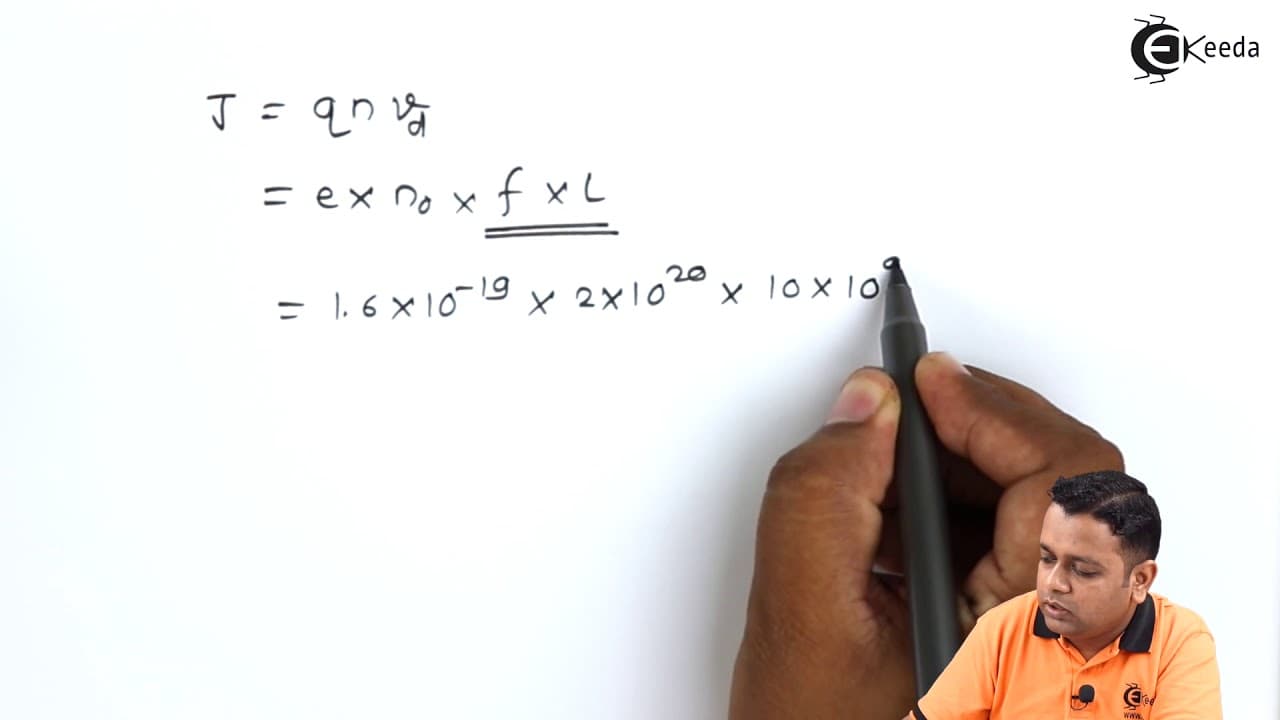
- 🔌 The current density depends on the electric charge, electron concentration, and velocity.
- 🏑 The negative electron mobility is influenced by the drift velocity and applied electric field.
- 🤒 Conversion between different units, such as volts per centimeter to meters and centimeters, is necessary in the calculations.
Install to Summarize YouTube Videos and Get Transcripts
Explore YouTube Video Summarizer or Get YouTube Transcript Extractor
Questions & Answers
Q: What are the three parameters that need to be calculated in this problem?
The three parameters that need to be calculated are the electron drift velocity, current density, and negative electron mobility.
Q: How is the electron drift velocity calculated?
The electron drift velocity can be calculated by multiplying the operating frequency and device length. In this case, it is equal to 10^5 m/s or 10^7 cm/s.
Q: What is the formula for calculating the current density?
The current density is calculated by multiplying the electric charge, electron concentration, and velocity. In this case, it results in 3.2 x 10^6 A/m^2 or 320 A/cm^2.
Q: How is the negative electron mobility estimated?
The negative electron mobility is estimated by dividing the drift velocity by the applied electric field. In this case, it is equal to -3100 cm^2/Vs.
Summary & Key Takeaways
-
The video focuses on the calculations of electron drift velocity, current density, and negative electron mobility in a Gunn diode using given parameters and formulas.
-
The parameters include threshold field, applied electric field, device length, doping concentration, and operating frequency.
-
The answers for each part are as follows: electron drift velocity is 10^5 m/s or 10^7 cm/s, current density is 3.2 x 10^6 A/m^2 or 320 A/cm^2, and negative electron mobility is -3100 cm^2/Vs.
Read in Other Languages (beta)
Share This Summary 📚
Summarize YouTube Videos and Get Video Transcripts with 1-Click
Try YouTube Summary with ChatGPT & Claude or YouTube Transcript Generator
Explore More Summaries from Ekeeda 📚





Summarize YouTube Videos and Get Video Transcripts with 1-Click
Try YouTube Summary with ChatGPT & Claude or YouTube Transcript Generator