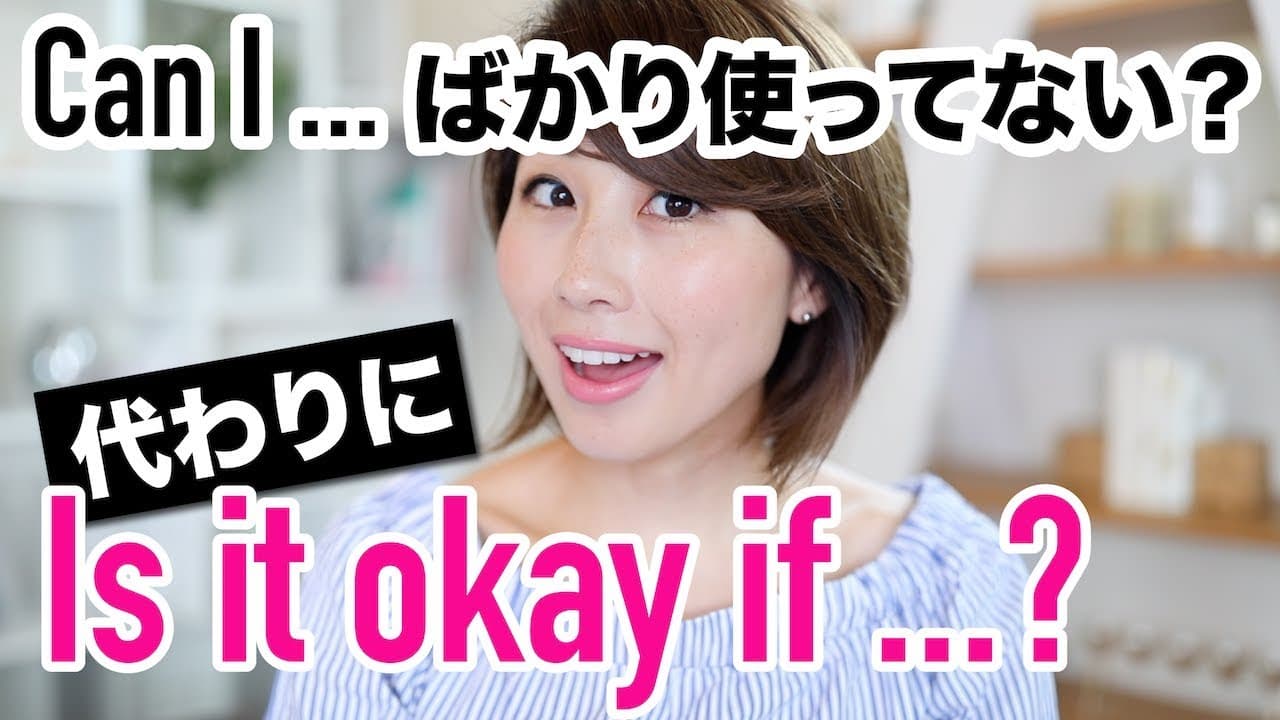
英語のバリエーションを増やそう☆ 使えるワンフレーズ「Is it okay if ___?」〔#588〕
TL;DR
Learn polite English requests using 'Is it okay if?'
Transcript
Can/Could I have the cheeseburger. チーズバーガーをお願いします。 Can/Could I get the cheeseburger? チーズバーガーでお願いします。 Can/Could I try this on? 試着してもいいですか? CanとCouldの使い分けは動画#580で説明! Is it okay if I close the window? 窓を閉めても大丈夫ですか? Can I close the window? 窓を閉めてもいい? Is it okay if I close the window? 窓を閉めても大丈夫ですか? Is it okay if I'm a little late? Maybe like an hour? Is ... Read More
Key Insights
- The phrase 'Is it okay if?' is a polite way to make requests, showing consideration for the listener's feelings.
- Using 'Is it okay if?' can be more formal and considerate than simply using 'Can I?' for requests.
- The video provides examples of how to use 'Is it okay if?' in various everyday situations, like being late or visiting a store.
- Alternatives such as 'Would it be okay if?' and 'Is it alright if?' are introduced for varying levels of politeness.
- The content emphasizes the importance of tone and context in choosing the right phrase for making requests.
- The video encourages viewers to expand their English vocabulary by incorporating different phrases for making polite requests.
- The speaker suggests that using 'Is it okay if?' can enhance communication, especially in formal or unfamiliar settings.
- The video is part of a series aimed at improving English conversational skills, with links to playlists and social media for further learning.
Install to Summarize YouTube Videos and Get Transcripts
Explore YouTube Video Summarizer or Get YouTube Transcript Extractor
Questions & Answers
Q: What is the main focus of the video content?
The main focus of the video is to teach viewers how to use the phrase 'Is it okay if?' as a polite way to make requests in English. It contrasts this phrase with 'Can I?' and provides examples of its application in various everyday situations, emphasizing politeness and consideration in communication.
Q: How does 'Is it okay if?' differ from 'Can I?'?
'Is it okay if?' is generally more polite and considerate than 'Can I?' It shows that the speaker is taking the listener's feelings and preferences into account. The video suggests using this phrase in situations where a more formal or respectful tone is appropriate, enhancing the overall communication.
Q: What are some alternative phrases to 'Is it okay if?' mentioned in the video?
The video introduces alternatives such as 'Would it be okay if?' and 'Is it alright if?' These phrases offer varying levels of politeness and formality, allowing speakers to choose the most appropriate expression based on the context and the relationship with the listener.
Q: What examples are provided in the video for using 'Is it okay if?'
Examples include asking if it's okay to close a window, be a little late, stop by a store, or bring a friend. These scenarios illustrate how 'Is it okay if?' can be used in everyday situations to make polite requests, showing respect and consideration for the listener's preferences.
Q: Why is it important to choose the right phrase for making requests?
Choosing the right phrase for making requests is important because it affects how the message is received by the listener. The video emphasizes that using a polite phrase like 'Is it okay if?' can enhance communication, especially in formal or unfamiliar settings, by showing respect and consideration.
Q: How does the video fit into the larger series on English conversation?
The video is part of a series aimed at improving English conversational skills. It provides practical language tips and encourages viewers to expand their vocabulary. The series includes playlists and social media links for further learning, helping viewers become more confident in their English communication.
Q: What resources are offered for further learning?
The video offers links to various playlists that cover topics like English conversation from the beginning, popular phrases, and English useful for overseas travel. Additionally, it provides social media links to Instagram, Facebook, Twitter, and a blog for more language learning resources and community interaction.
Q: What is the overall message of the video?
The overall message of the video is to encourage viewers to use 'Is it okay if?' and similar phrases to make polite requests in English. By doing so, speakers can show greater consideration and respect in their communication, which is especially important in formal or new situations. The video is part of a broader effort to enhance English conversational skills.
Summary & Key Takeaways
-
The video discusses the use of 'Is it okay if?' as a polite way to make requests in English. It contrasts this phrase with 'Can I?' and provides examples of its application in various situations. The content encourages viewers to use this phrase to show consideration and politeness in their communication.
-
Alternatives to 'Is it okay if?' such as 'Would it be okay if?' and 'Is it alright if?' are explored, highlighting the nuances in politeness and formality. The video is part of a larger series designed to improve English conversational skills, with additional resources available through playlists and social media.
-
The speaker emphasizes the importance of choosing the right phrase for requests based on context and tone. The video includes practical examples and encourages viewers to expand their English vocabulary by using different polite request phrases. It also provides information on related playlists and social media channels for further learning.
Read in Other Languages (beta)
Share This Summary 📚
Summarize YouTube Videos and Get Video Transcripts with 1-Click
Try YouTube Summary with ChatGPT & Claude or YouTube Transcript Generator
Explore More Summaries from バイリンガール英会話 | Bilingirl Chika 📚




Summarize YouTube Videos and Get Video Transcripts with 1-Click
Try YouTube Summary with ChatGPT & Claude or YouTube Transcript Generator