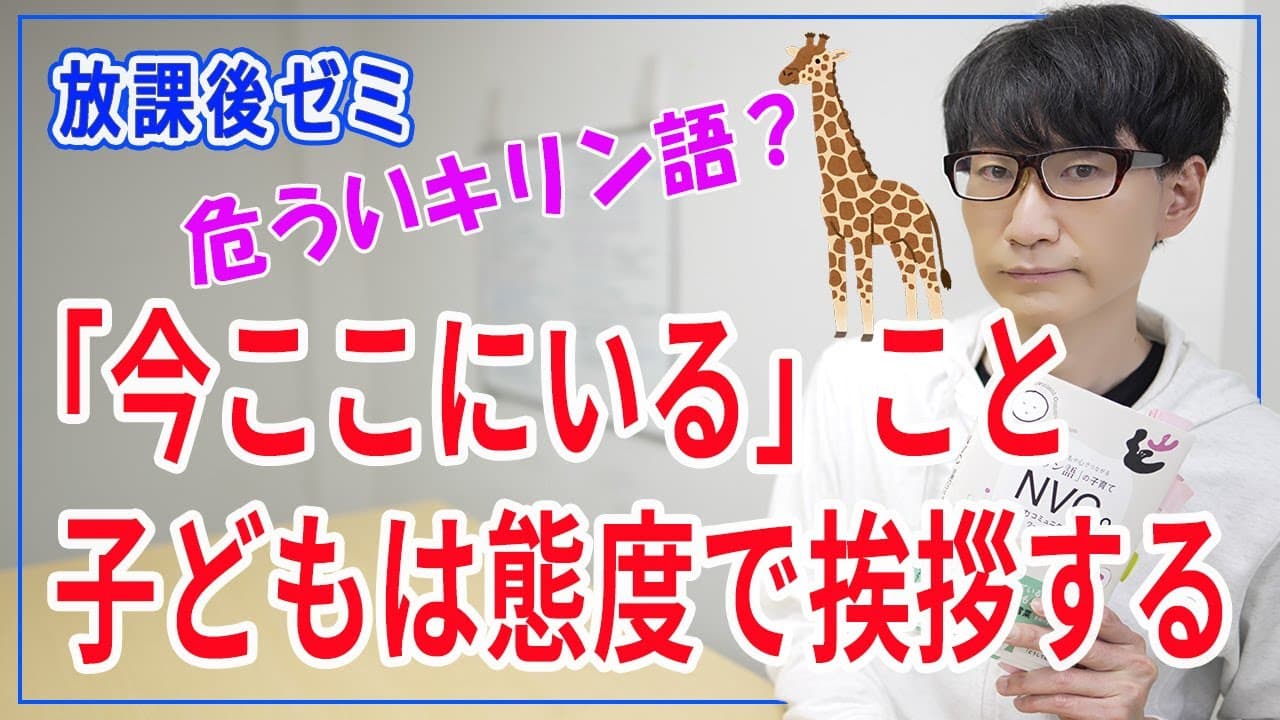
【NVC ジャッカル語とキリン語】放課後ゼミ
TL;DR
This seminar explores Junko Niwa's book on fostering empathy in parent-child relationships through nonviolent communication.
Transcript
Yes, this is the after-school seminar. This time, we have a book written by Junko Niwa. It's called 'Parent and Child Connecting Through Giraffe Language.' It's an NVC Nonviolent Communication Workbook. This is the kind of book we have. Yes. So, this time, I would like to talk about this book. After reading this, the first thing I thought about was... Read More
Key Insights
- 🥰 The seminar emphasizes how quickly we create adversaries in our hearts, contributing to a pattern of loneliness and isolation in interpersonal relationships.
- 😑 Individuals commonly operate in a "jackal mode," characterized by anxiety and fear, which obstructs authentic emotional expression and connection.
- 👪 The discussion highlights the importance of empathy in parent-child relationships, noting a generational gap in sharing values and feelings between parents and children.
- 🅰️ Nonviolent Communication is reshaped from just being a technique into a broader mindset emphasizing compassion and understanding in all types of relationships.
- 😑 The significance of facial expressions, tone, and body language is underlined, indicating that real communication involves much more than spoken words.
- ✊ The seminar suggests that society's reliance on violent communication prevents the passing of wisdom and power, comparing it to a cancer that deteriorates connections.
- ❓ Practicing connection requests rather than action requests is proposed as a method to deepen understanding and foster emotional closeness in relationships.
Install to Summarize YouTube Videos and Get Transcripts
Explore YouTube Video Summarizer or Get YouTube Transcript Extractor
Questions & Answers
Q: What does the term "jackal language" refer to in the context of communication?
"Jackal language" signifies a mode of communication that is critical, judgmental, and aggressive, often leading to misunderstandings and emotional barriers. This terminology is rooted in the concept that such communication creates enemies in interpersonal relationships. Understanding and avoiding jackal language can promote healthier and kinder interactions, fostering empathy and reducing conflict.
Q: How does the book emphasize the importance of expressing true emotions and needs?
The book argues that many people struggle to express their true emotions and needs due to fear of vulnerability. By recognizing and articulating underlying feelings, like loneliness or disappointment, individuals can bridge emotional distances and foster deeper connections. The emphasis is on transitioning from superficial emotions to genuine communication through the practice of Nonviolent Communication (NVC).
Q: What are the main features of "Parent and Child Connecting Through Giraffe Language"?
Key features include a format that incorporates Q&A for various scenarios, practical exercises for transforming harmful communication habits, and tools for engaging children in NVC through games. The book not only addresses parenting but also illustrates how violent communication manifests across all relationships, providing a comprehensive resource for improving interpersonal dynamics.
Q: Why is learning Nonviolent Communication considered important according to the seminar?
Learning NVC is essential for breaking the cycle of violent communication that pervades society. By nurturing an understanding mindset that values genuine emotional connections, individuals can heal relationships both within families and in broader social contexts. This approach encourages empathy, leading to healthier interactions and a more compassionate society.
Summary & Key Takeaways
-
The seminar discusses "Parent and Child Connecting Through Giraffe Language", focusing on understanding and overcoming the tendency to create enemies in relationships, often leading to feelings of isolation.
-
It emphasizes the importance of expressing emotions and needs authentically rather than reverting to "jackal language," which is often rooted in fear and anxiety.
-
Practical exercises are highlighted to help shift from violent communication patterns to nonviolent interactions, encouraging mutual understanding and emotional connections.
Read in Other Languages (beta)
Share This Summary 📚
Summarize YouTube Videos and Get Video Transcripts with 1-Click
Try YouTube Summary with ChatGPT & Claude or YouTube Transcript Generator
Explore More Summaries from 井上一樹のゼミチャンネル 📚
Summarize YouTube Videos and Get Video Transcripts with 1-Click
Try YouTube Summary with ChatGPT & Claude or YouTube Transcript Generator