How to Create a 3D Ken Burns Effect with Depth Estimation
TL;DR
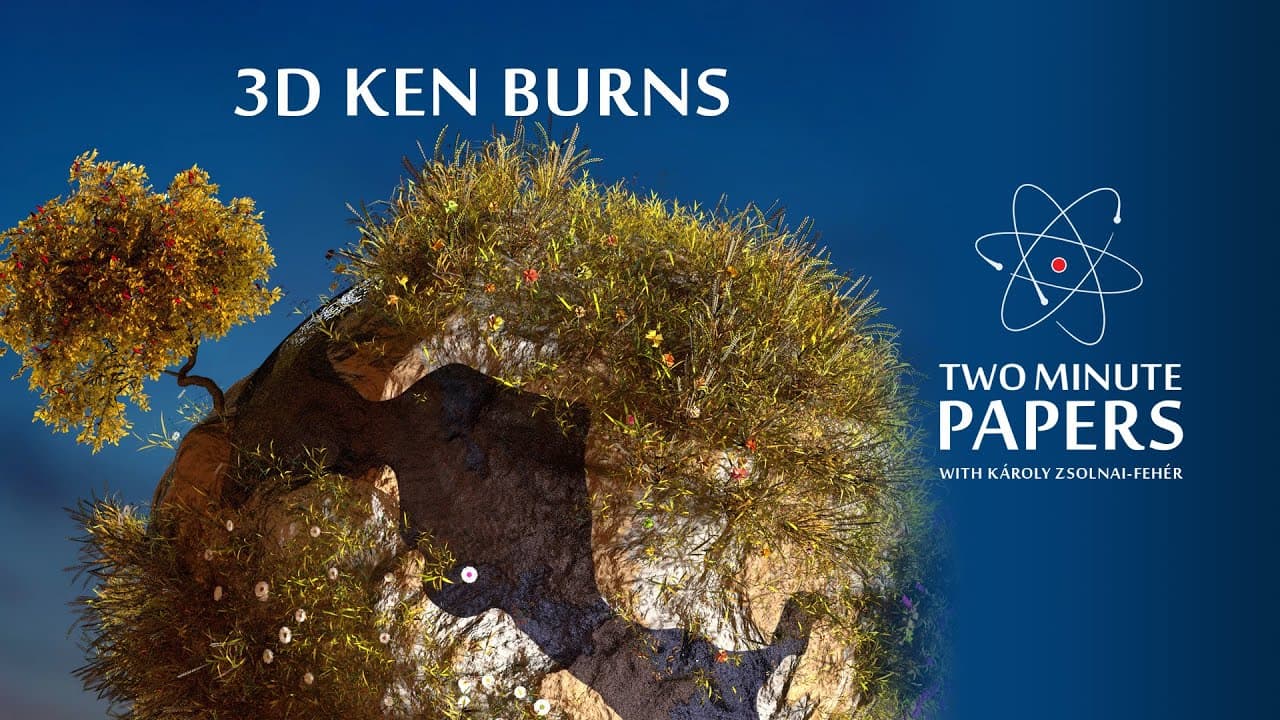
To achieve a 3D Ken Burns effect, utilize depth estimation and image inpainting techniques to enhance traditional panning and zooming on still images. This approach addresses geometric and semantic distortions, resulting in visually stunning animations that retain temporal coherence. While limitations exist, such as difficulties with thin objects, the method opens new possibilities for dynamic visual storytelling.
Transcript
Dear Fellow Scholars, this is Two Minute Papers with Károly Zsolnai-Fehér. Have you heard of the Ken Burns effect? If you have been watching this channel, you have probably seen examples where a still image is shown, and a zooming and panning effect is added to it. It looks something like this. Familiar, right? The fact that there is some motion is... Read More
Key Insights
- 🙈 The traditional 2D Ken Burns effect lacks the depth information seen in real-life camera movements.
- 👨🔬 Depth estimation from 2D images without specialized hardware is a research field that requires neural networks.
- 📰 The new paper addresses geometric and semantic distortions in depth estimation to improve the 3D Ken Burns effect.
- 💁 Image inpainting techniques are used to fill in missing information and ensure temporal coherence in synthesized videos.
- 🧑🎨 The results obtained from the paper are visually stunning and compare favorably to handcrafted results by artists.
- 🤔 Limitations still exist, such as missing thin objects and cases where the image inpainter cannot fill in useful information.
- 💦 The evolving nature of this work presents exciting possibilities for future advancements.
Install to Summarize YouTube Videos and Get Transcripts
Explore YouTube Video Summarizer or Get YouTube Transcript Extractor
Questions & Answers
Q: What is the Ken Burns effect?
The Ken Burns effect is a technique that involves adding zooming and panning motions to still images, creating a sense of movement and visual interest.
Q: How does depth estimation from 2D images without specialized hardware work?
Depth estimation is performed using neural networks that predict the depth of each pixel based on training data. However, there are limitations such as geometric distortions and missing data.
Q: How does the new paper address the issues in depth estimation?
The paper first creates a coarse depth map and then employs techniques to alleviate geometric and semantic distortions. The depth information is then upsampled to add fine details for the 3D Ken Burns effect.
Q: What is image inpainting and how is it used in this context?
Image inpainting is the process of filling in missing information in an image by analyzing the surrounding areas. In this case, image inpainting is used to fill in the gaps in the depth map and ensure temporal coherence for video synthesis.
Summary & Key Takeaways
-
The Ken Burns effect, which involves zooming and panning on still images, lacks the depth information seen in real-life camera movements.
-
Depth estimation from 2D images without specialized hardware like an RGBD camera is a research field on its own.
-
A new paper addresses the geometric and semantic distortions in depth estimation and utilizes image inpainting to fill in missing information, resulting in visually stunning results.
Read in Other Languages (beta)
Share This Summary 📚
Summarize YouTube Videos and Get Video Transcripts with 1-Click
Try YouTube Summary with ChatGPT & Claude or YouTube Transcript Generator
Explore More Summaries from Two Minute Papers 📚


Summarize YouTube Videos and Get Video Transcripts with 1-Click
Try YouTube Summary with ChatGPT & Claude or YouTube Transcript Generator