What Is the LATE Theorem and Its Impact on Econometrics?
TL;DR
The LATE theorem posits that each instrument yields a distinct causal effect, challenging traditional econometric views. Despite initial skepticism, it gained recognition among influential figures, emphasizing the need for effective interdisciplinary communication and adaptability in academia. Angrist and Imbens illustrate that persistence in conveying innovative ideas is crucial for acceptance and understanding.
Transcript
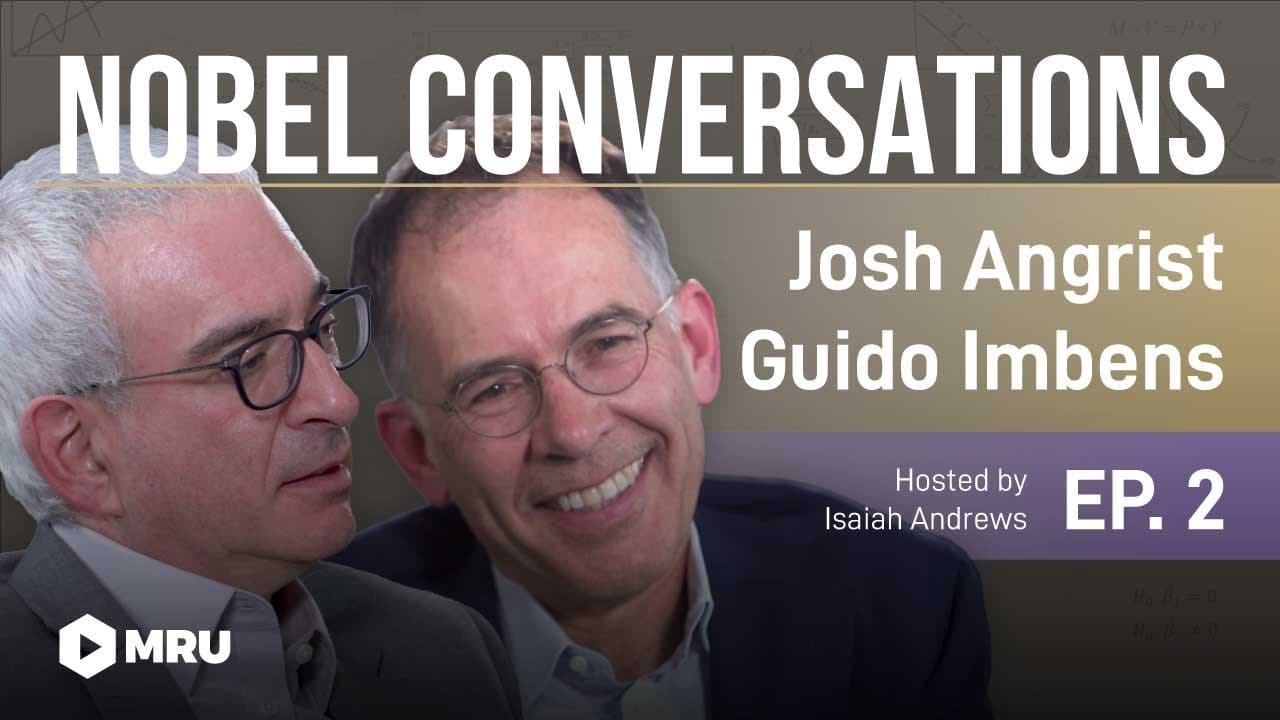
♪ [music] ♪ - [Narrator] Welcome to Nobel Conversations. In this episode, Josh Angrist and Guido Imbens sit down with Isaiah Andrews to discuss how their research was initially received and how they responded to criticism. - [Isaiah] At the time, did you feel like you were on to something, you felt this was the beginning of a whole line of work ... Read More
Key Insights
- Josh Angrist and Guido Imbens initially faced mixed reactions to their LATE theorem, requiring them to convince others of its significance.
- The LATE theorem challenged existing econometric views by suggesting that each instrument produces its own causal effect, creating tension with traditional structural approaches.
- Despite initial skepticism, a small group of influential figures, including Gary and Don Rubin, recognized the theorem's value early on.
- Criticism included concerns about identifying 'compliers,' highlighting challenges in applying the theorem practically.
- The process of gaining acceptance for the LATE theorem involved significant interdisciplinary communication, notably with statistician Don Rubin.
- Angrist and Imbens had to adapt their communication to align with the perspectives of others to effectively convey their ideas.
- Their collaboration with Don Rubin underscored the importance of understanding and speaking the 'language' of other disciplines.
- The experience taught them the value of persistence and adaptability in promoting new ideas within academic circles.
Install to Summarize YouTube Videos and Get Transcripts
Explore YouTube Video Summarizer or Get YouTube Transcript Extractor
Questions & Answers
Q: What was the initial reception of the LATE theorem?
The initial reception of the LATE theorem was mixed. While some influential figures recognized its significance early on, many others were skeptical. Angrist and Imbens had to work hard to convince the broader academic community of its value, as it challenged existing econometric paradigms.
Q: How did the LATE theorem challenge traditional econometric views?
The LATE theorem challenged traditional econometric views by suggesting that each instrument produces its own causal effect. This contradicted the prevailing belief in a fixed structure within the economy, creating tension as it implied variability in causal effects depending on the instrument used.
Q: What role did Don Rubin play in the acceptance of the LATE theorem?
Don Rubin played a crucial role in the acceptance of the LATE theorem by engaging with Angrist and Imbens and eventually recognizing its value. His initial skepticism required them to adapt their communication and present their ideas in a way that aligned with his statistical perspective, which helped validate their work.
Q: What was a significant criticism of the LATE theorem?
A significant criticism of the LATE theorem was the difficulty in identifying 'compliers,' or individuals for whom the instrument would produce a causal effect. Critics argued that without being able to identify these individuals, the practical application of the theorem was limited, posing a legitimate challenge to its acceptance.
Q: How did Angrist and Imbens adapt their communication to promote the LATE theorem?
Angrist and Imbens adapted their communication by learning to speak the 'language' of other disciplines, particularly statistics. They worked to present their ideas in ways that resonated with statisticians like Don Rubin, which involved clarifying concepts such as the exclusion restriction within the potential outcomes framework.
Q: What was a key factor in the eventual acceptance of the LATE theorem?
A key factor in the eventual acceptance of the LATE theorem was the persistence of Angrist and Imbens in advocating for their work. They engaged in extensive communication and correspondence, particularly with influential figures, to demonstrate the theorem's value and address criticisms constructively.
Q: What lesson did Angrist and Imbens learn from their experience with the LATE theorem?
Angrist and Imbens learned the importance of persistence, adaptability, and effective communication in promoting new academic ideas. Their experience with the LATE theorem highlighted the need to understand and engage with different academic perspectives to gain broader acceptance for innovative concepts.
Q: How did interdisciplinary collaboration impact the development of the LATE theorem?
Interdisciplinary collaboration was crucial in the development of the LATE theorem. Working with statisticians like Don Rubin required Angrist and Imbens to bridge gaps between econometrics and statistics, leading them to refine their ideas and communicate them more effectively to a diverse academic audience.
Summary & Key Takeaways
-
Josh Angrist and Guido Imbens discuss the initial reception of their LATE theorem, which faced skepticism but eventually gained recognition for its innovative approach to econometrics.
-
The LATE theorem proposed that each instrument produces its own causal effect, contrasting with traditional econometric views, leading to debate and requiring significant advocacy from its creators.
-
Angrist and Imbens highlight the importance of interdisciplinary communication and adaptability in promoting new academic ideas, as demonstrated in their interactions with statistician Don Rubin.
Read in Other Languages (beta)
Share This Summary 📚
Summarize YouTube Videos and Get Video Transcripts with 1-Click
Try YouTube Summary with ChatGPT & Claude or YouTube Transcript Generator
Explore More Summaries from Marginal Revolution University 📚

Summarize YouTube Videos and Get Video Transcripts with 1-Click
Try YouTube Summary with ChatGPT & Claude or YouTube Transcript Generator