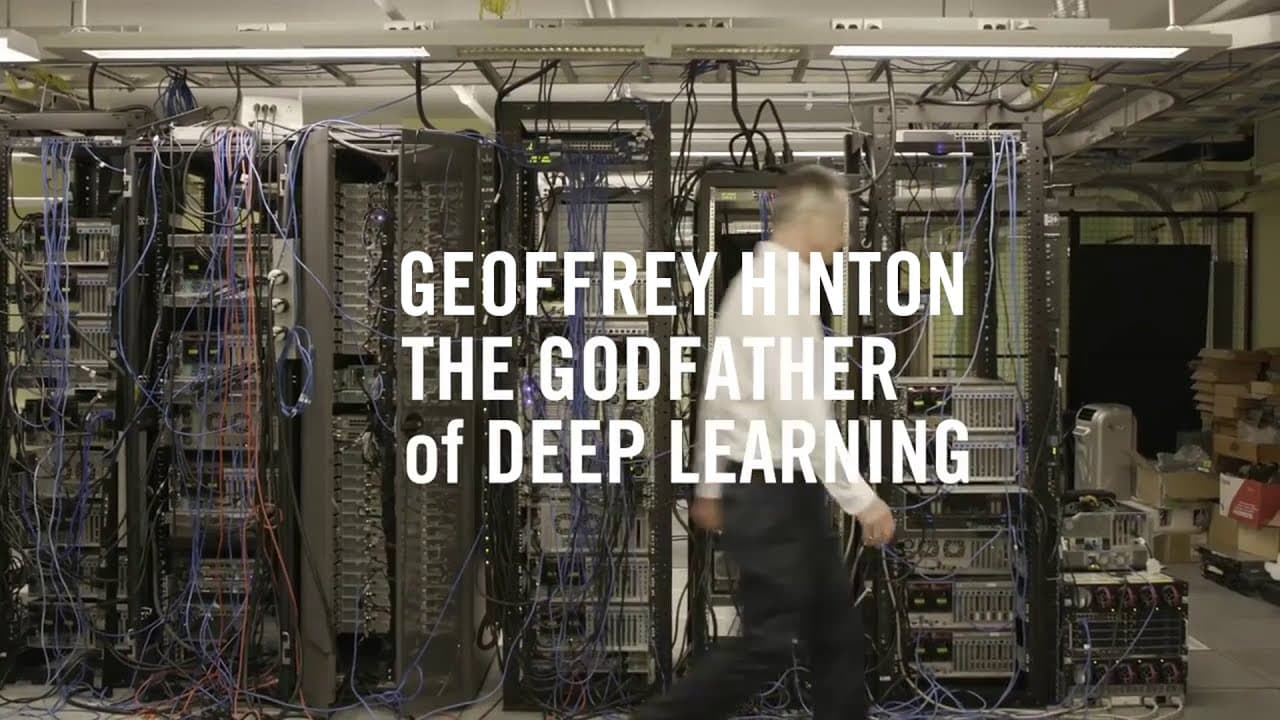
Meet Geoffrey Hinton, U of T's Godfather of Deep Learning
TL;DR
Geoff Hinton, a self-taught AI expert, explains his path into the field and the importance of curiosity-driven science.
Transcript
That's right, I've never taken a computer science course. So, here's a very good trick that everybody needs to know: If you know nothing about a topic, get yourself made a professor of it, and nobody will ever ask you again if you actually know anything about it. So actually I got involved in the field when I was in high school. I got interested in... Read More
Key Insights
- 🤳 Being self-taught shouldn't prevent someone from excelling in a field if they have a passion for learning and a curious mindset.
- 🧠 Hinton's exploration of holograms and distributed representations in the brain inspired his journey into AI.
- 😯 Neural nets developed by Hinton and his team revolutionized speech recognition technology.
- 🥹 The brain's neural network holds vast amounts of knowledge, making it impractical to program manually.
- 🪛 Funding curiosity-driven science is essential for major breakthroughs, but successful technologies should also be applied when appropriate.
- ✊ The Vector Institute aims to exploit the power of deep learning through a combination of existing technologies and ongoing research.
- 💦 Scientists perform their best work when pursuing topics they are genuinely interested in.
Install to Summarize YouTube Videos and Get Transcripts
Explore YouTube Video Summarizer or Get YouTube Transcript Extractor
Questions & Answers
Q: How did Geoff Hinton initially become interested in AI?
Hinton became interested in AI through his fascination with holograms and the idea of distributed representations in the brain.
Q: Why did Hinton start studying the brain and physiology?
Hinton realized that understanding the brain was crucial to comprehending psychology and intelligence.
Q: How did Hinton's work on speech recognition revolutionize the field?
Two graduate students applied Hinton's learning algorithm to speech recognition and surpassed existing technology, leading to widespread adoption of neural nets.
Q: What is the main difference between traditional AI and Hinton's approach with neural networks?
Traditional AI focused on reasoning and logic, while Hinton's approach imitates the brain's neural network and its ability to learn through connections.
Summary & Key Takeaways
-
Geoff Hinton's interest in how the brain might work, sparked by hologram technology, led him to study physiology, philosophy, psychology, and ultimately AI.
-
In 2009, two graduate students applied Hinton's learning algorithm to speech recognition, leading to significant advancements in the technology.
-
Hinton advocates for the exploration of biology and the imitation of the brain's neural network to develop AI systems.
Read in Other Languages (beta)
Share This Summary 📚
Summarize YouTube Videos and Get Video Transcripts with 1-Click
Try YouTube Summary with ChatGPT & Claude or YouTube Transcript Generator
Explore More Summaries from University of Toronto 📚

Summarize YouTube Videos and Get Video Transcripts with 1-Click
Try YouTube Summary with ChatGPT & Claude or YouTube Transcript Generator