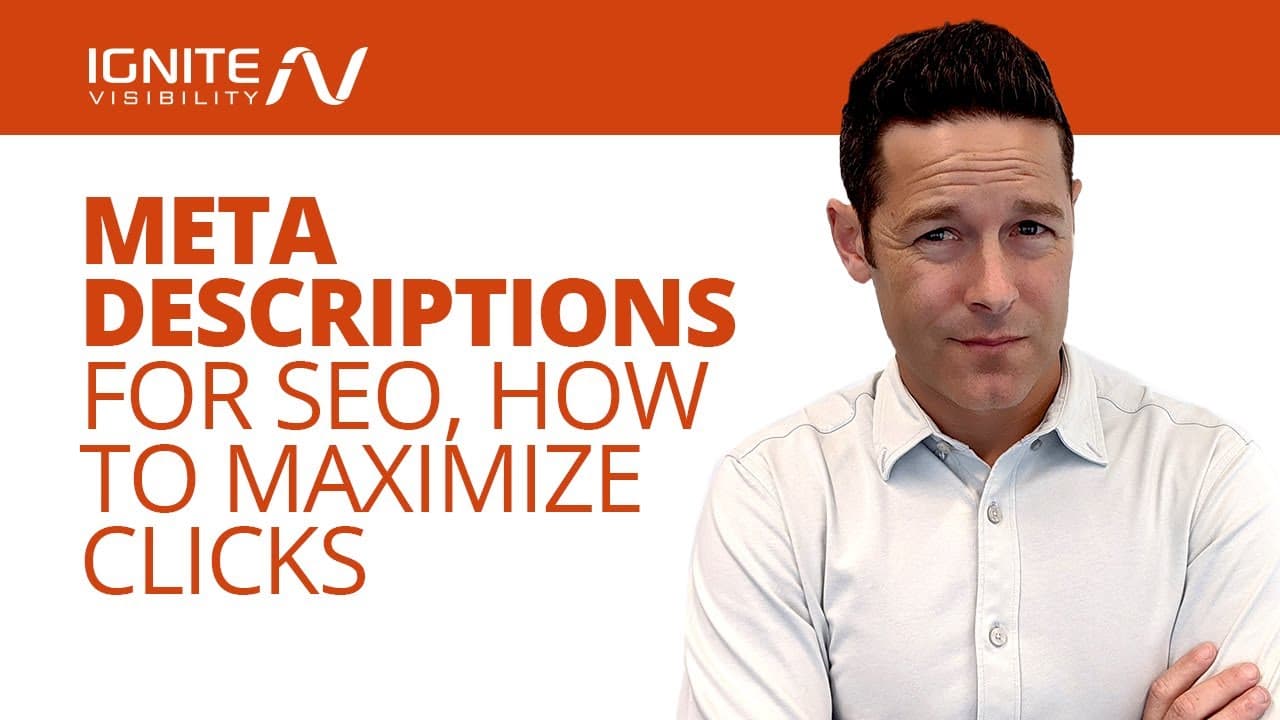
Meta Descriptions for SEO, How to Maximize Clicks by @johnelincoln
TL;DR
Meta descriptions boost click-through rates despite not affecting SEO rankings.
Transcript
hi there welcome back ignite visibility fans this is John Lincoln CEO of ignite visibility and today I'm going to talk to you about meta descriptions metad descriptions have been around for a long time but if you use them correctly you can do a lot of great things like maximize your click-through rate which will drive more traffic and get more out ... Read More
Key Insights
- Meta descriptions are snippets of code in the HTML head section that describe a webpage in search results, crucial for enhancing click-through rates.
- Optimal length for meta descriptions is between 150 to 160 characters, ensuring they are concise yet compelling to encourage clicks.
- Unique meta descriptions are vital to avoid duplication; employing a skilled copywriter or dynamic templates can help achieve this.
- Despite not being a Google ranking factor, meta descriptions should include one to three important keywords for visibility.
- Google Search Console's click-through rate report helps identify effective meta descriptions, allowing for optimization based on successful examples.
- Ad text from high-performing pay-per-click ads can be adapted for meta descriptions to enhance their effectiveness.
- Keyword stuffing in meta descriptions is discouraged; focus should be on creating an engaging advertisement-like snippet.
- Meta descriptions play a significant role in social media sharing, especially when open graph or Twitter cards are not installed.
Install to Summarize YouTube Videos and Get Transcripts
Explore YouTube Video Summarizer or Get YouTube Transcript Extractor
Questions & Answers
Q: What is a meta description?
A meta description is a snippet of code placed in the HTML head section of a webpage. It provides a brief summary of the page's content, which is displayed in search engine results and social media shares. Its primary purpose is to attract clicks by acting as a mini advertisement.
Q: Why are meta descriptions important for SEO?
While meta descriptions do not directly influence SEO rankings, they significantly impact click-through rates. A well-crafted meta description can entice users to click on a link, increasing traffic to a website. This, in turn, can indirectly influence a site's performance and visibility in search results.
Q: What is the optimal length for a meta description?
The optimal length for a meta description is between 150 to 160 characters. This range ensures that the description is concise enough to fit within search engine result displays while providing enough information to engage and attract potential visitors to the website.
Q: How can you create unique meta descriptions?
To create unique meta descriptions, avoid duplication by writing each one specifically for its page. Employing a skilled copywriter can help craft compelling descriptions. Alternatively, use dynamic templates that fill in specific fields with unique information, ensuring each description is tailored to the page's content.
Q: Do keywords in meta descriptions affect SEO rankings?
Keywords in meta descriptions do not affect SEO rankings directly, as Google does not use them as a ranking factor. However, including one to three important keywords can enhance visibility by making the description more relevant to user searches, potentially increasing click-through rates.
Q: How can Google Search Console help with meta descriptions?
Google Search Console provides a click-through rate report that identifies URLs with high click-through rates. By analyzing the meta descriptions of these URLs, you can understand what makes them effective and apply similar principles to optimize other meta descriptions on your website.
Q: What role do meta descriptions play on social media?
Meta descriptions play a crucial role in social media sharing, especially when open graph or Twitter cards are not installed. They serve as the text snippet that accompanies shared links, making it essential for the description to be engaging and informative to encourage clicks and shares.
Q: Why should keyword stuffing be avoided in meta descriptions?
Keyword stuffing should be avoided in meta descriptions because it detracts from their primary purpose of acting as a compelling advertisement. Overloading a description with keywords can make it less engaging and reduce its effectiveness in attracting clicks, ultimately harming click-through rates.
Summary & Key Takeaways
-
Meta descriptions are essential for maximizing click-through rates in search results, acting as brief advertisements for web pages. Despite not influencing SEO rankings, they should include relevant keywords for visibility.
-
Crafting unique and compelling meta descriptions is crucial, avoiding duplication and keyword stuffing. Utilizing successful ad text and insights from Google Search Console can enhance their effectiveness.
-
Meta descriptions also impact social media sharing, highlighting the importance of concise, engaging content. They serve as a vital tool in driving traffic and improving the visibility of web pages.
Read in Other Languages (beta)
Share This Summary 📚
Summarize YouTube Videos and Get Video Transcripts with 1-Click
Try YouTube Summary with ChatGPT & Claude or YouTube Transcript Generator
Explore More Summaries from IgniteVisibility 📚

Summarize YouTube Videos and Get Video Transcripts with 1-Click
Try YouTube Summary with ChatGPT & Claude or YouTube Transcript Generator