How to Manage Stress and Prevent Burnout Effectively
TL;DR
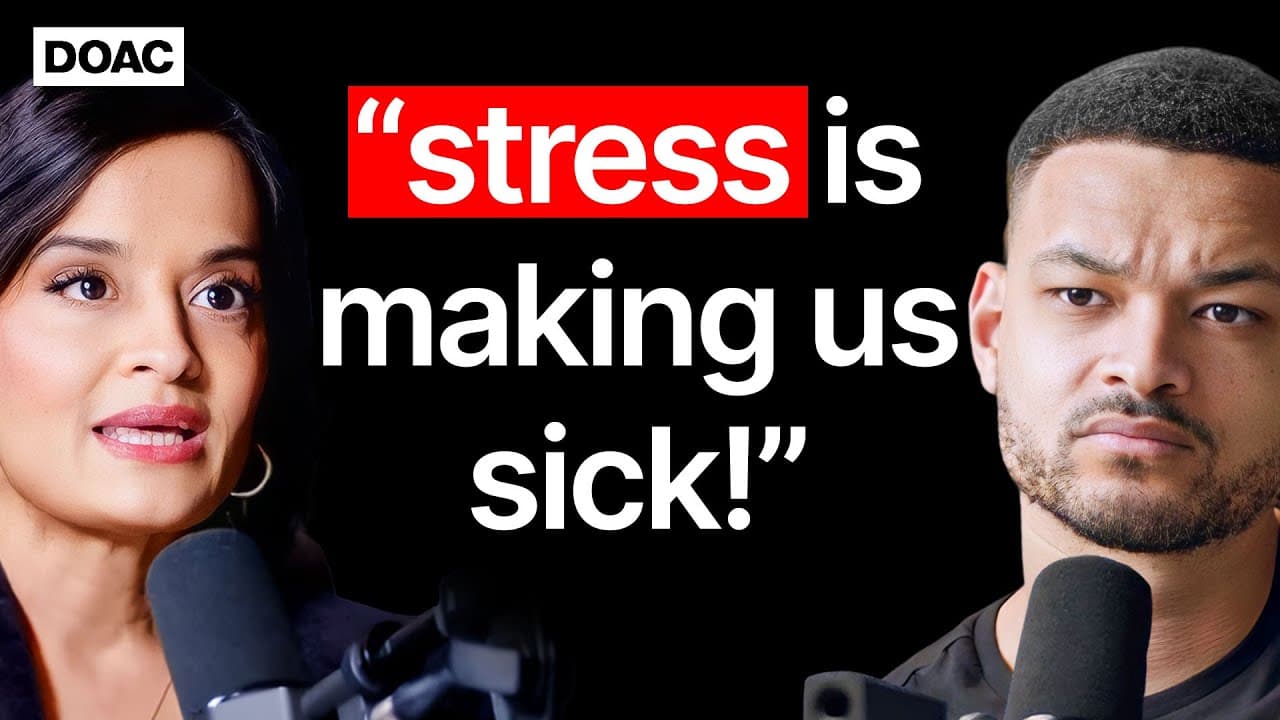
To effectively manage stress and prevent burnout, adopt five key strategies: identify what matters most, set clear goals, incorporate regular physical activity, establish healthy boundaries with technology, and prioritize self-care. This approach helps combat the rising rates of stress-related issues, with 72% of people currently struggling with stress.
Transcript
you need to hear about this 72% of people are struggling with stress 70% have at least one feature of burnout and we are seeing a rise in mental health problems like we've never seen before what's happening so as a doctor I can tell you that doctor a did Nar is a Harvard physician nationally recognized stress expert who is understanding and combati... Read More
Key Insights
- 72% of people are struggling with stress, 70% have features of burnout, and mental health problems are on the rise.
- Dr. Aditi Nerurkar became a stress expert and doctor because she couldn't find a doctor to help her with her own stress struggles.
- Increased rates of depression, sleep disorders, fatigue, and burnout can be linked to high levels of stress.
- Studies have shown that 60-80% of patient visits have a stress-related component.
- 60% of people with burnout have an inability to disconnect from work, indicating work addiction and reliance on technology.
- 2/3 of parents experience burnout, which can be isolating despite being a widespread issue.
- The five resets presented by Dr. Nerurkar aim to help people survive and thrive in the face of stress and burnout.
- The first reset focuses on getting clear on what matters most to an individual and setting motivating, objective, small, and timely (MOST) goals to guide them in managing stress.
Install to Summarize YouTube Videos and Get Transcripts
Explore YouTube Video Summarizer or Get YouTube Transcript Extractor
Questions & Answers
Q: How can the concept of toxic resilience negatively impact individuals' mental health and well-being?
Toxic resilience, which prioritizes productivity at the expense of self-care, can lead to chronic stress and burnout. By constantly pushing oneself without taking breaks or setting boundaries, individuals become more vulnerable to physical and mental health issues. Neglecting self-care can result in decreased motivation, exhaustion, and a higher risk of anxiety and depression.
Q: How does exercise, even in small increments, contribute to stress management and resilience?
Exercise has been proven to have numerous benefits on mental health and stress reduction. Engaging in physical activity, such as a daily walk, releases endorphins that elevate mood and reduce anxiety and depression. Additionally, exercise improves sleep quality and boosts self-confidence. These positive effects of exercise contribute to increased resilience against stressors and the ability to better cope with daily challenges.
Q: How does the resilience rule of two help individuals effectively manage stress and prevent burnout?
The resilience rule of two follows the principle of making two small, manageable changes at a time. This approach allows individuals to set achievable goals, build self-efficacy, and establish new habits. By focusing on two specific changes, individuals can avoid feeling overwhelmed and experience a sense of progress and improvement. Over time, these small changes accumulate, leading to more effective stress management and a reduced risk of burnout.
Q: What is popcorn brain, and how does excessive time spent on social media contribute to stress and burnout?
Popcorn brain refers to the overstimulation and difficulty disconnecting caused by spending excessive time on social media. Constant exposure to social media content, notifications, and the need to stay connected can overload the brain and make it challenging to relax and focus. This constant stimulus contributes to chronic stress and burnout by disrupting sleep patterns, increasing anxiety, and impairing cognitive functioning.
Summary & Key Takeaways
-
Chronic stress and burnout have become increasingly prevalent in society, affecting individuals across all age groups and industries.
-
Dr. Aditi Narayan, a Harvard physician and stress expert, shares her personal journey of overcoming stress and developing strategies for managing burnout.
-
Stress-related symptoms vary from person to person but can include physical manifestations, such as palpitations and headaches, as well as mental health issues like depression and anxiety.
-
The concept of toxic resilience, productivity at all costs without considering self-care, has contributed to the rise of stress and burnout in modern society.
-
The resilience rule of two suggests focusing on making two small changes at a time, allowing for sustainable progress towards stress management and overall well-being.
-
Exercise, even in small increments like a daily walk, has been shown to significantly reduce stress levels and increase resilience.
-
Popcorn brain, a term coined to describe the overstimulation and difficulty disconnecting caused by excessive time spent on social media, is a common issue that contributes to stress and burnout.
Read in Other Languages (beta)
Share This Summary 📚
Summarize YouTube Videos and Get Video Transcripts with 1-Click
Try YouTube Summary with ChatGPT & Claude or YouTube Transcript Generator
Explore More Summaries from The Diary Of A CEO 📚





Summarize YouTube Videos and Get Video Transcripts with 1-Click
Try YouTube Summary with ChatGPT & Claude or YouTube Transcript Generator