Does Heckscher-Ohlin Explain Trade Patterns?
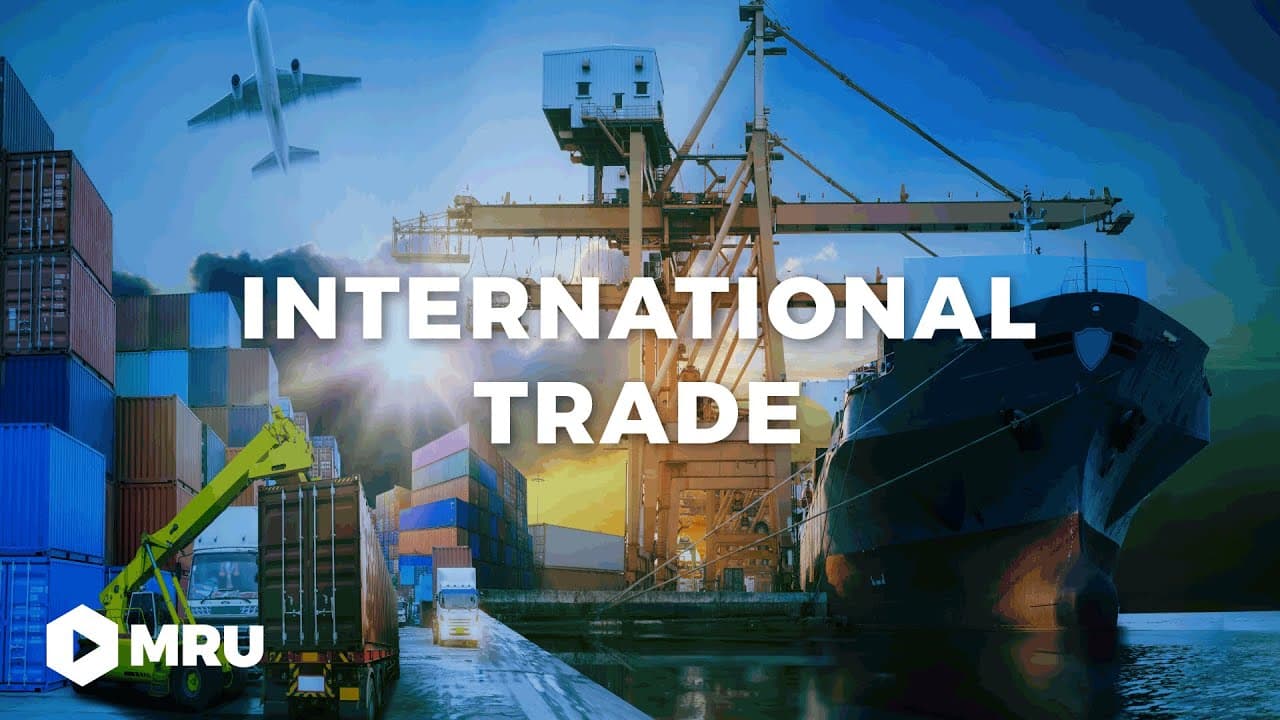
TL;DR
The Heckscher-Ohlin theorem suggests that countries export goods that use their abundant factors intensively. However, empirical evidence, such as Leontief's paradox, challenges this view, indicating that the U.S., a capital-rich country, exports labor-intensive goods. Adjustments considering technology differences offer a modified perspective, keeping the theorem relevant in explaining global trade patterns.
Transcript
Now let's take a look at what the evidence says about the Heckscher-Ohlin theorem. But, of course, you should be watching this in conjunction with our video on the Heckscher-Ohlin theorem itself. We're going back to the key question of what explains trade, and here we're talking about the quantity, the direction, and also the composition of that... Read More
Key Insights
- The Heckscher-Ohlin theorem posits that countries export goods using their abundant factors intensively.
- Wassily Leontief's study contradicted the theorem, showing the U.S. exports labor-intensive goods despite being capital-rich.
- Empirical tests, like the sign and rank tests, often fail to support the theorem's predictions.
- The 'missing trade' puzzle highlights discrepancies between expected and observed trade volumes based on factor endowments.
- Technological differences between countries can explain deviations from the Heckscher-Ohlin predictions.
- Factor price equalization does not occur due to technological and cultural differences across countries.
- In homogeneous regions like Japan, Heckscher-Ohlin predictions align more closely with observed trade patterns.
- Ongoing research explores firm-level data and disaggregated measures to refine Heckscher-Ohlin applications.
Install to Summarize YouTube Videos and Get Transcripts
Explore YouTube Video Summarizer or Get YouTube Transcript Extractor
Questions & Answers
Q: What is the Heckscher-Ohlin theorem?
The Heckscher-Ohlin theorem is an economic theory suggesting that countries will export goods that utilize their abundant factors of production intensively. For example, a capital-rich country would export capital-intensive goods, while a labor-rich country would export labor-intensive goods. This theory builds on the concept of comparative advantage by linking it to a country's factor endowments.
Q: How did Leontief's paradox challenge the Heckscher-Ohlin theorem?
Leontief's paradox challenged the Heckscher-Ohlin theorem by showing that the United States, a country with abundant capital, exported labor-intensive goods and imported capital-intensive goods. This finding was contrary to the theorem's predictions, suggesting that other factors, such as technology or measurement issues, might influence trade patterns more than factor endowments alone.
Q: What is the 'missing trade' puzzle in international trade?
The 'missing trade' puzzle refers to the discrepancy between the expected and actual volumes of trade based on countries' factor endowments. According to the Heckscher-Ohlin theorem, significant differences in factor endowments should lead to more trade than observed. The puzzle suggests that other factors, like high transaction costs or technological differences, might inhibit trade, challenging the theorem's assumptions.
Q: Why do technological differences matter in the Heckscher-Ohlin model?
Technological differences matter in the Heckscher-Ohlin model because they can alter the effective use of factors like labor and capital. If countries have different technologies, the productivity of their factors can vary, affecting trade patterns. Recognizing these differences can explain why countries might not export goods as predicted by their factor endowments alone, thus refining the model's applicability.
Q: What are the sign and rank tests in the context of Heckscher-Ohlin?
The sign and rank tests are empirical methods used to evaluate the Heckscher-Ohlin theorem's predictions. The sign test checks if a country's factor endowment aligns with the factor intensity of its exports. The rank test examines if the order of factor abundance matches the order of factor content in exports. These tests often reveal inconsistencies with the theorem, highlighting its limitations.
Q: How does factor price equalization relate to Heckscher-Ohlin?
Factor price equalization is the concept that trade should lead to equal prices for factors like labor and capital across countries. The Heckscher-Ohlin theorem implies this outcome, as trade adjusts factor demand. However, in reality, technological and cultural differences prevent equalization, showing the limits of the theorem and emphasizing the need to consider these variations in trade analysis.
Q: Can the Heckscher-Ohlin theorem be saved with modifications?
Yes, the Heckscher-Ohlin theorem can be made more applicable by incorporating technological differences across countries. By adjusting for these differences, the model can better explain trade patterns, as it accounts for variations in factor productivity. This approach keeps the theorem relevant, providing insights into international trade while acknowledging its empirical challenges.
Q: What ongoing research is being conducted on the Heckscher-Ohlin theorem?
Ongoing research on the Heckscher-Ohlin theorem focuses on disaggregating data to better understand trade patterns. This includes examining firm-level export decisions and considering technological differences across countries. Researchers aim to refine the theorem's applicability by addressing its empirical shortcomings and exploring how it can be adapted to explain complex global trade dynamics more accurately.
Summary & Key Takeaways
-
The Heckscher-Ohlin theorem suggests countries export goods that intensively use their abundant factors, but empirical evidence often contradicts this. Leontief's paradox found the U.S. exports labor-intensive goods, challenging the idea. Technological differences may explain these discrepancies, keeping the theorem relevant in trade analysis.
-
Empirical tests like the sign and rank tests show the Heckscher-Ohlin theorem fails frequently, indicating other factors influence trade patterns. The 'missing trade' puzzle suggests observed trade volumes are less than expected, questioning the theorem's applicability without considering technology.
-
Research continues to explore Heckscher-Ohlin's relevance by examining firm-level data and technological differences. While the theorem doesn't fully explain global trade patterns, it remains a useful tool when modified to account for technological variations and regional uniformity.
Read in Other Languages (beta)
Share This Summary 📚
Summarize YouTube Videos and Get Video Transcripts with 1-Click
Try YouTube Summary with ChatGPT & Claude or YouTube Transcript Generator
Explore More Summaries from Marginal Revolution University 📚

Summarize YouTube Videos and Get Video Transcripts with 1-Click
Try YouTube Summary with ChatGPT & Claude or YouTube Transcript Generator