Layers in a Neural Network explained
TL;DR
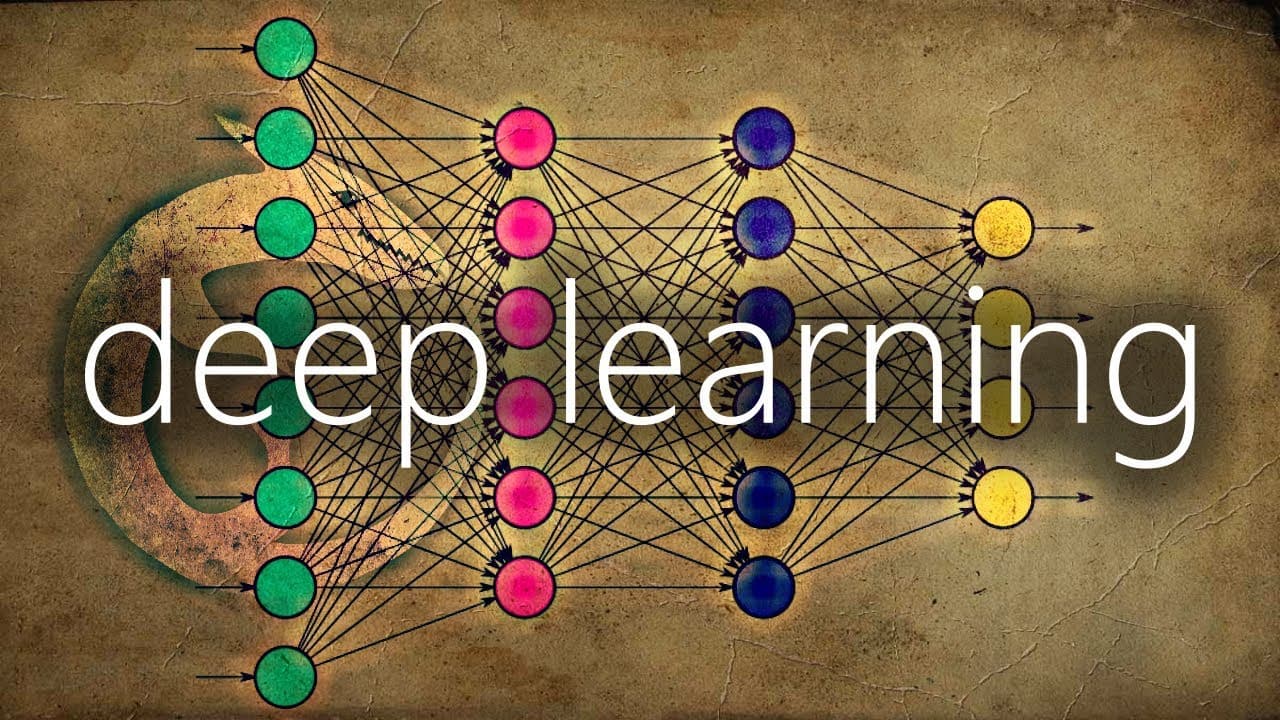
This video explains the different types of layers in artificial neural networks, how they function, and demonstrates how to build a neural network using the Keras library.
Transcript
in this video we'll be discussing the layers with an artificial neural network we'll also see how to add layers to a sequential model and caris in our last video we mentioned that the neurons within an artificial neural network are typically organized in layers and there are many different types of layers some commonly used layers are ones like den... Read More
Key Insights
- 🎯 Different types of layers in an artificial neural network include dense, convolutional, pooling, and recurrent layers, each suited for different tasks such as image data or time series data.
- 🎓 A dense layer connects each input to each output within its layer, while other layers perform specific transformations on their inputs.
- 🔌 In a neural network, each input in the input layer is connected to every unit in the next layer, forming connections that transfer output from one unit to another, with each connection having an assigned weight.
- ⚖️ The assigned weights represent the strength of the connections and are used to compute a weighted sum with each connection pointing to the same neuron.
- ➡️ The weighted sum is then passed through an activation function that transforms the result to a number between 0 and 1, which is passed on to the next neuron in the next layer.
- 🔄 The process of computing the weighted sum, applying the activation function, and passing the result to the next layer is repeated until reaching the output layer.
- 🗂️ The output layer typically represents categories, such as classifying images as cats or dogs, with each possible output having its own output unit.
- ⏩ Within Keras, a sequential model is used to build the neural network, where layers are sequentially added using the
Denseclass and activation functions are specified. Theinput_shapeparameter is used for the first layer, and subsequent layers can infer the shape of the data passed into the model.
Install to Summarize YouTube Videos and Get Transcripts
Explore YouTube Video Summarizer or Get YouTube Transcript Extractor
Questions & Answers
Q: What are the different types of layers in an artificial neural network?
There are various types of layers in an artificial neural network, including dense, convolutional, pooling, recurrent, and normalization layers. Each layer performs specific transformations on the input data, making them suitable for different tasks.
Q: How are layers connected in a neural network?
Layers in a neural network are connected through weighted connections. Each connection has its assigned weight, which determines the strength of the connection between units. The output from one unit is passed as input to the next unit through these connections.
Q: What is the role of an activation function in a neural network?
The output from a unit is passed through an activation function, which transforms the result to a number between 0 and 1. The activation function adds non-linearity to the network and helps in capturing complex patterns in the data.
Q: How are input shapes specified in a sequential model using Keras?
In a sequential model using Keras, the input shape is specified only in the first layer. This helps the model understand the shape of the data being initially passed into it. The subsequent layers can infer the shape from the previous layer.
Q: Can you add more than two layers in a sequential model?
Yes, there is no limit to the number of layers you can specify in a sequential model. You can add as many layers as required for your specific neural network architecture. Dense, convolutional, pooling, recurrent, or any other types of layers can be added based on your requirements.
Q: How do weights in a neural network change during the learning process?
The weights in a neural network continuously change during the learning process. The model learns from the data and adjusts the weights to optimize the connections between units. This iterative process helps the model improve its accuracy and performance over time.
Summary & Key Takeaways
-
Artificial neural networks consist of different types of layers, such as dense, convolutional, pooling, recurrent, and normalization layers.
-
Each layer performs different transformations on the input data, making them suitable for specific tasks.
-
Layers in a neural network are connected through weighted connections, and the output from one unit is transformed using an activation function before being passed to the next layer.
Read in Other Languages (beta)
Share This Summary 📚
Summarize YouTube Videos and Get Video Transcripts with 1-Click
Try YouTube Summary with ChatGPT & Claude or YouTube Transcript Generator
Explore More Summaries from deeplizard 📚

Summarize YouTube Videos and Get Video Transcripts with 1-Click
Try YouTube Summary with ChatGPT & Claude or YouTube Transcript Generator