The MODI Report Card - Legendary Economist Ruchir Sharma's NEUTRAL Take
TL;DR
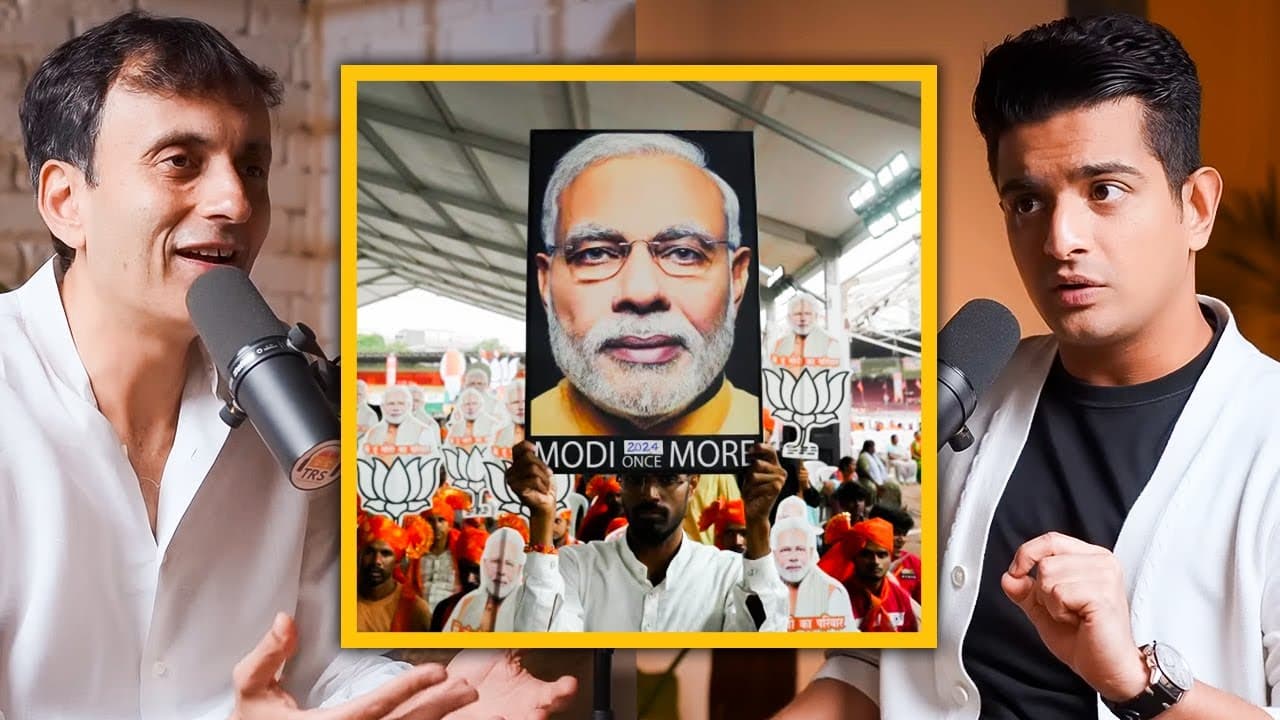
The speaker discusses the need to differentiate political opinions from economic assessments regarding India's government.
Transcript
welcome to TRS Clips where you'll find happiness through your own curiosity take the Prime Minister Narendra Modi uh in some regards you have people who really love him and then you have other people you know like who you know who have a very negative view of him for me I have to separate the two things right which is the fact that uh politically I... Read More
Key Insights
- 🔇 The speaker's commitment to democracy is central to their critique of authoritarian practices within the Indian government.
- ⚖️ Balancing economic assessments with political realities is essential for investors navigating India's political landscape.
- 🎮 The speaker argues that inflation control is a significant achievement of the current government, positively impacting everyday citizens.
- ❓ Recognition of government decision-making under pressure demonstrates a nuanced understanding of fiscal responsibility versus political expedience.
- 🧑⚖️ Historical comparisons with other countries illustrate the complexities in judging political leaders based solely on economic performance.
- 💁 The speaker's experiences with global leaders inform their perspective on the intersection of politics and economics in governance.
- 😀 Acknowledging the difficulty in separating personal beliefs from economic realities highlights the inherent challenges faced by political commentators and analysts.
Install to Summarize YouTube Videos and Get Transcripts
Explore YouTube Video Summarizer or Get YouTube Transcript Extractor
Questions & Answers
Q: What is the speaker's main stance towards Prime Minister Narendra Modi?
The speaker expresses a dual perspective on Prime Minister Modi. They personally appreciate aspects of his leadership but are critical of the political tactics employed, particularly those that undermine democracy and intimidate dissent. They advocate for a distinction between personal admiration and political disapproval.
Q: How does the speaker view the government's economic performance?
The speaker believes that the economic performance of Modi's government is not as negative as often portrayed. They argue that inflation has been managed better than it was under previous administrations, indicating that certain economic accomplishments should be recognized despite political grievances.
Q: What concerns does the speaker have regarding government spending during crises?
The speaker is concerned that excessive government spending during economic crises could jeopardize India's financial stability. They commend the government for resisting pressure to engage in fiscal irresponsibility, suggesting that such caution is essential to maintain a stable economic position.
Q: How does the speaker differentiate between political and economic evaluations?
The speaker stresses the importance of separating political biases from economic assessments. They argue that investors and the public should evaluate the government's performance based solely on data and economic outcomes, without letting personal political opinions cloud their judgment.
Q: Does the speaker believe that personal political views affect their financial decisions?
While acknowledging the potential for personal biases to impact decisions, the speaker insists that as an investor, one must focus on objective economic metrics. They recognize the challenge but stress that separating these concerns is crucial for financial success and integrity.
Q: What historical examples does the speaker draw upon to illustrate their point?
The speaker mentions their experiences with leaders like Vladimir Putin and Recep Tayyip Erdoğan, pointing out that, despite political authoritarianism, economic performance can still thrive. This parallel serves to highlight the complexity of assessing leaders beyond mere political views.
Summary & Key Takeaways
-
The speaker emphasizes their belief in democracy and the importance of free expression, criticizing the way political rivals and media are targeted under the current government.
-
While acknowledging the high unemployment and inflation rates faced by India, the speaker argues that the government's economic management has been relatively effective, especially in terms of controlling inflation.
-
The discussion highlights the need for investors to separate political sentiments from economic evaluations, suggesting that a balanced approach is essential for making sound financial decisions.
Read in Other Languages (beta)
Share This Summary 📚
Summarize YouTube Videos and Get Video Transcripts with 1-Click
Try YouTube Summary with ChatGPT & Claude or YouTube Transcript Generator
Explore More Summaries from TRS Clips 📚



Summarize YouTube Videos and Get Video Transcripts with 1-Click
Try YouTube Summary with ChatGPT & Claude or YouTube Transcript Generator