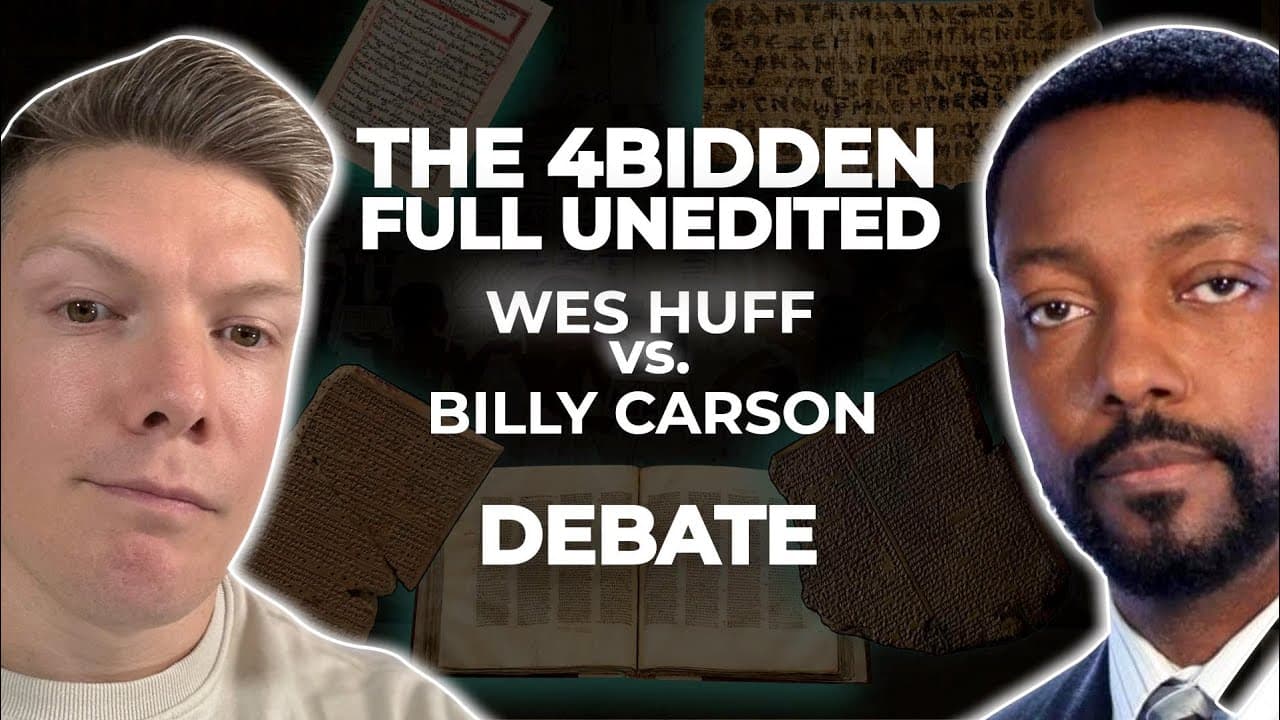
Was Jesus Crucified? Debate on Historical Evidence
TL;DR
Billy Carson and Wes Huff engage in a detailed debate about the historical accuracy of the Bible, focusing on the crucifixion of Jesus. Carson challenges traditional narratives using alternative texts, while Huff defends the reliability of canonical scriptures through historical methodologies. The discussion highlights differing interpretations and the complexities of religious texts.
Transcript
all right what's up everyone and I'm trying to move this stuff and uh yeah they'll do an awesome job editing this intro to make it way more fancy than this but I'm here with my good man Billy Carson who I've known Billy personally for for some years now yeah solid friend great character businessman he'... Read More
Key Insights
- Billy Carson questions the crucifixion of Jesus based on alternative texts like the Gospel of Barnabas.
- Wes Huff defends the crucifixion narrative using early gospel manuscripts and historical methodologies.
- The debate explores the differences between canonical and non-canonical texts in Christianity.
- Carson argues that ancient cultures have different historical accounts that challenge biblical narratives.
- Huff highlights the importance of primary sources and linguistic analysis in evaluating historical claims.
- Carson cites various global cultures' oral histories as evidence against biblical accounts.
- Huff emphasizes the methodological approach to verifying historical accuracy in religious texts.
- The discussion reveals the complexities and challenges in interpreting ancient religious documents.
Install to Summarize YouTube Videos and Get Transcripts
Explore YouTube Video Summarizer or Get YouTube Transcript Extractor
Questions & Answers
Q: How does Billy Carson challenge the crucifixion narrative?
Billy Carson challenges the crucifixion narrative by referencing alternative texts such as the Gospel of Barnabas, which he claims deny the crucifixion of Jesus. He argues that these texts, along with oral histories from various cultures, provide evidence that contradicts the traditional biblical accounts. Carson emphasizes the need to consider these alternative perspectives in understanding religious history.
Q: What is Wes Huff's defense of the crucifixion story?
Wes Huff defends the crucifixion story by relying on early gospel manuscripts and established historical methodologies. He argues that the canonical gospels provide reliable first-century eyewitness testimony. Huff emphasizes the importance of primary sources and linguistic analysis in evaluating historical claims, countering Carson's alternative narratives with scholarly research and evidence.
Q: What alternative texts does Billy Carson reference?
Billy Carson references alternative texts such as the Gospel of Barnabas and the Gospel of Jesus' Wife. He claims these texts offer different perspectives on the life and crucifixion of Jesus, challenging traditional biblical narratives. Carson uses these texts to argue for a broader understanding of religious history, suggesting that the canonical Bible may not be the only source of truth.
Q: How does Wes Huff address the reliability of biblical texts?
Wes Huff addresses the reliability of biblical texts by focusing on the historical methodologies used to evaluate them. He highlights the use of primary sources, linguistic analysis, and verifiable historical evidence to support the canonical gospels. Huff argues that these methodologies provide a robust framework for determining the credibility of religious texts, countering Carson's alternative narratives.
Q: What role do oral histories play in Carson's argument?
Oral histories play a significant role in Billy Carson's argument as he cites them as evidence against traditional biblical narratives. He references oral accounts from various global cultures, suggesting that these stories offer alternative perspectives on historical events like the crucifixion. Carson argues that these oral histories should be considered alongside written texts in evaluating religious history.
Q: How does Huff respond to Carson's use of oral histories?
Wes Huff responds to Carson's use of oral histories by emphasizing the importance of methodological analysis in verifying historical accuracy. He questions the reliability of oral accounts compared to written primary sources, arguing that established historical methodologies provide a more credible basis for understanding religious events. Huff suggests that oral histories, while valuable, require careful scrutiny and corroboration.
Q: What are the key differences between canonical and non-canonical texts?
The key differences between canonical and non-canonical texts lie in their historical acceptance, authorship, and content. Canonical texts, like the gospels in the New Testament, are widely accepted within Christianity as authoritative and historically reliable. Non-canonical texts, such as the Gospel of Barnabas, often lack historical verification and are not recognized by mainstream Christianity, leading to debates about their credibility.
Q: What methodologies does Huff use to evaluate historical claims?
Wes Huff uses methodologies such as primary source analysis, linguistic study, and historical context evaluation to assess historical claims. He emphasizes the importance of corroborating evidence and the use of established scholarly techniques to determine the reliability of religious texts. Huff's approach contrasts with Carson's reliance on alternative narratives, highlighting the need for rigorous academic scrutiny in historical research.
Summary & Key Takeaways
-
Billy Carson and Wes Huff engage in a debate about the historical accuracy of the Bible, focusing on Jesus' crucifixion. Carson cites alternative texts like the Gospel of Barnabas, questioning traditional narratives. Huff defends the reliability of canonical scriptures through historical methodologies, emphasizing the importance of primary sources and linguistic analysis.
-
Carson argues that ancient cultures offer different historical accounts that challenge biblical narratives. He cites oral histories from various global cultures as evidence against the traditional crucifixion story. Huff counters by highlighting the methodological approach to verifying historical accuracy in religious texts, emphasizing the differences between canonical and non-canonical texts.
-
The debate reveals the complexities and challenges in interpreting ancient religious documents. While Carson presents alternative viewpoints, Huff focuses on the established historical methodologies used to evaluate the credibility of religious texts. The discussion underscores the ongoing dialogue between different interpretations of religious history.
Read in Other Languages (beta)
Share This Summary 📚
Summarize YouTube Videos and Get Video Transcripts with 1-Click
Try YouTube Summary with ChatGPT & Claude or YouTube Transcript Generator
Explore More Summaries from Wes Huff 📚

Summarize YouTube Videos and Get Video Transcripts with 1-Click
Try YouTube Summary with ChatGPT & Claude or YouTube Transcript Generator