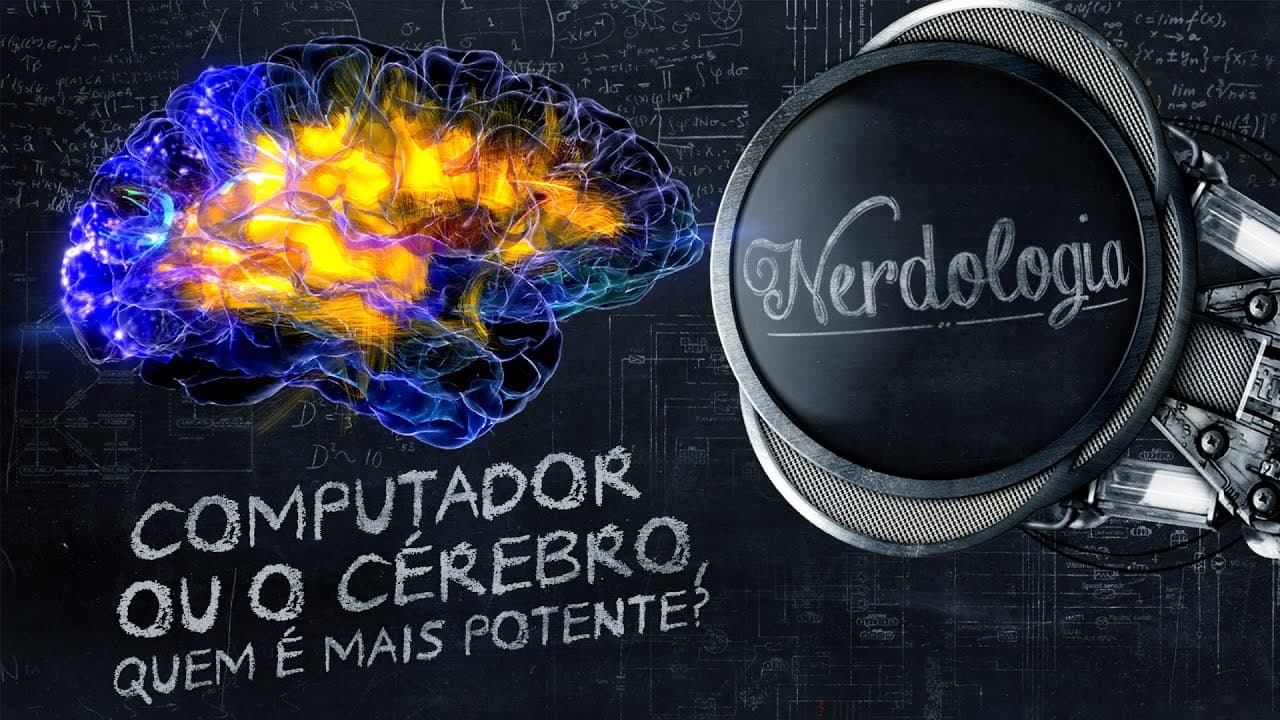
O computador ou o cérebro, quem é o mais potente? | Nerdologia
TL;DR
Explores the similarities between brain functions and modern computing.
Transcript
Welcome to Nerdology I'm Atila, biologist, researcher, and I'm needing a multicore processor to be able to think Today we will see what our brain has to do with the most complex computing available What do you think easier: make an account with 19,154 pies divided by 61 pies, or recognize Deadpool? If watching a movie seems to be much easier, it's ... Read More
Key Insights
- The human brain's ability to recognize complex patterns and images surpasses current computing capabilities, highlighting its advanced processing power.
- Neural networks in computing mimic the brain's learning process, using systems that decompose information and reinforce correct connections.
- Vision development in humans involves training visual centers in the brain during childhood, emphasizing the importance of early visual experiences.
- Modern computing, through deep learning, can perform tasks like image recognition and language processing, similar to human cognitive functions.
- The shift in computing from specialized programming to generalist systems allows for a broader range of tasks and learning capabilities.
- Neuroscientific discoveries, such as those by Hubel and Wiesel, have informed the development of visual processing models in computing.
- Despite advances, computers still lack the brain's efficiency, needing significantly more power to perform similar tasks.
- Future improvements in computing power may lead to machines capable of understanding complex human emotions and sarcasm.
Install to Summarize YouTube Videos and Get Transcripts
Explore YouTube Video Summarizer or Get YouTube Transcript Extractor
Questions & Answers
Q: How does the brain recognize complex images?
The brain recognizes complex images by breaking them down into simpler geometric shapes, such as lines and edges. Neurons in the visual cortex process these shapes and integrate the information to form a complete image. This process involves both dorsal and ventral pathways, which help identify movement and object identity, respectively.
Q: What role do neural networks play in computing?
Neural networks in computing are designed to mimic the brain's learning process. They decompose information into smaller parts, analyze each part, and reinforce connections that yield correct results. This allows computers to learn from data, perform tasks like image recognition, and adapt to new information, similar to human cognitive processes.
Q: Why is early visual experience crucial for brain development?
Early visual experiences are crucial because they help develop the brain's visual centers during critical periods in childhood. Neurons form connections based on visual stimuli, and those that aren't stimulated may die off. This process ensures that the brain can effectively process and interpret visual information as the child grows.
Q: How does deep learning differ from traditional programming?
Deep learning differs from traditional programming by focusing on systems that learn from data rather than following predefined rules. It uses neural networks to analyze large datasets, identify patterns, and make decisions, allowing computers to perform complex tasks like language processing and image recognition without explicit programming for each task.
Q: What are the current limitations of computers compared to the brain?
Current limitations of computers compared to the brain include their inefficiency in power usage and inability to process complex emotions and sarcasm. While computers can perform many cognitive tasks, they require significantly more energy and lack the nuanced understanding of human emotions that the brain can achieve effortlessly.
Q: How do advances in computing power affect machine learning?
Advances in computing power enhance machine learning by enabling faster data processing and more complex neural networks. This allows machines to learn from larger datasets, improve accuracy in tasks like image and speech recognition, and potentially achieve more human-like cognitive abilities in the future, such as understanding emotions.
Q: What impact did Hubel and Wiesel's research have on computing?
Hubel and Wiesel's research on visual processing in the brain informed the development of models for image recognition in computing. Their discoveries about how neurons process geometric shapes and integrate visual information have been applied to the design of neural networks, improving computers' ability to recognize patterns and images.
Q: What future developments are anticipated in computing related to brain functions?
Future developments in computing related to brain functions include machines with improved cognitive abilities, such as understanding complex emotions and sarcasm. As computing power and neural network techniques advance, computers may become more efficient and capable of performing a wider range of tasks, approaching the brain's processing capabilities.
Summary & Key Takeaways
-
The video discusses the parallels between the human brain and modern computing, focusing on pattern recognition and image processing. It explains how neural networks in computers are designed to mimic the brain's learning process, allowing machines to perform complex tasks like image and speech recognition.
-
It highlights the importance of early visual experiences in developing the brain's visual centers, as demonstrated by Hubel and Wiesel's research. The video also explores how modern computing has evolved to perform tasks traditionally associated with human cognition, such as understanding language and recognizing patterns.
-
The discussion emphasizes the current limitations of computers compared to the human brain, particularly in terms of power efficiency and the ability to understand emotions. However, advancements in computing power and deep learning techniques suggest that machines may soon achieve more human-like cognitive abilities.
Read in Other Languages (beta)
Share This Summary 📚
Summarize YouTube Videos and Get Video Transcripts with 1-Click
Try YouTube Summary with ChatGPT & Claude or YouTube Transcript Generator
Explore More Summaries from Nerdologia 📚





Summarize YouTube Videos and Get Video Transcripts with 1-Click
Try YouTube Summary with ChatGPT & Claude or YouTube Transcript Generator