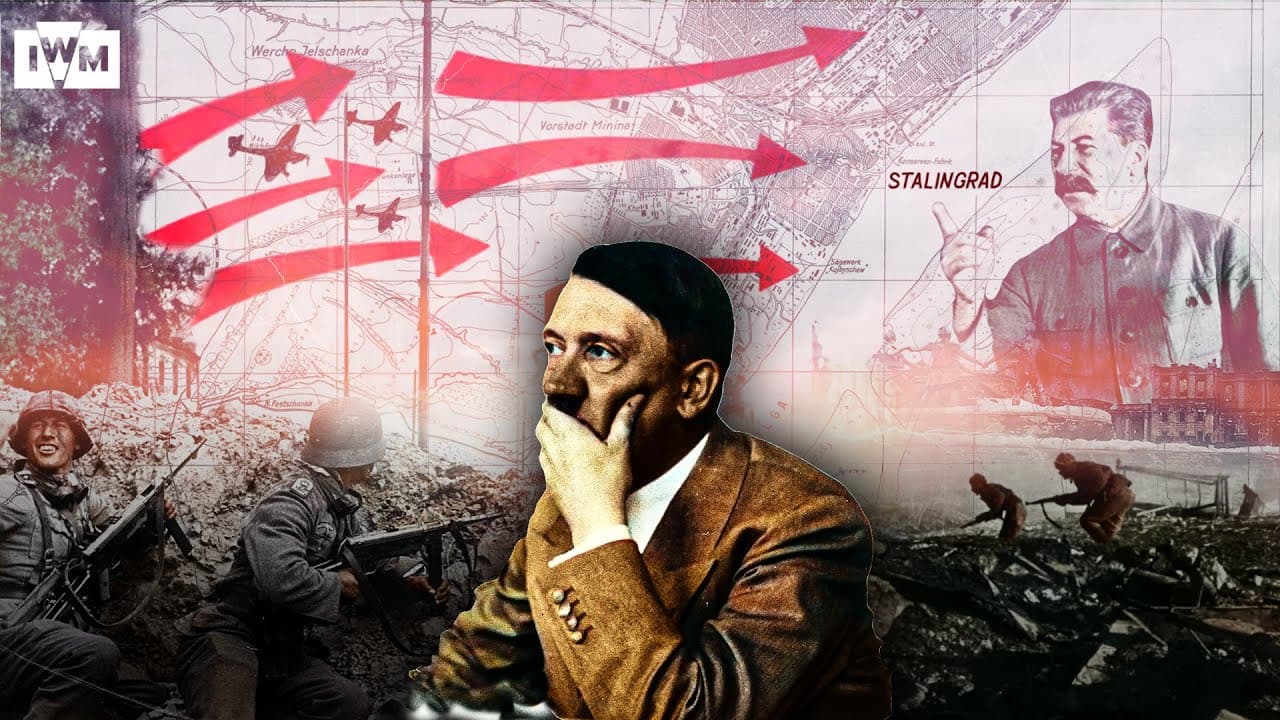
The Battle of Stalingrad was doomed from the start, and here's why
TL;DR
Hitler's plan to capture the oil fields of the Caucasus in the Battle of Stalingrad as a means to secure victory in World War II ultimately failed due to logistical issues, Soviet resilience, and the encirclement of the German forces.
Transcript
for Nazi Germany 1941 had been a disaster after invading the Soviet Union in June they had expected to defeat the Red Army in six weeks we only have to kick in the door said Adolf Hitler and the whole rotten structure will come crashing down but he was wrong by December German forces had been held at the gates of Moscow before being thrown back by ... Read More
Key Insights
- 🤔 The German invasion of the Soviet Union in 1941 was a disaster, leading to unexpected resistance and a shortage of supplies from their former ally, the Soviets. The entry of the United States into the war posed a threat of a two-front war, causing Hitler's window of opportunity to win closing rapidly.
- ⚙️ Germany's need for raw materials, especially oil, drove their campaign in the East. The capture of the oil fields in the Southern Caucasus was crucial for Germany's victory in the war.
- 📝 The German plan for Operation Blau, the campaign to capture the oil fields, had multiple flaws. Logistics and supplies were strained, the German forces had to rely on poorly equipped allies, and Hitler underestimated the Soviets' strength, both in numbers and in their ability to create new armies.
- 🏰 The Battle of Stalingrad, seen by many as the turning point of the war, was a desperate urban battle that favored the Soviets' superior urban warfare skills. The defense of Stalingrad became a symbol of Soviet resistance.
- 🥀 Operation Blau ultimately failed due to logistical problems, stretched forces, and a lack of resources. The Soviets, receiving substantial reinforcements and supplies, launched a successful counter-offensive and encircled the German Sixth Army.
- 💔 Hitler's plan to relieve the besieged Sixth Army failed, leading to their eventual surrender in January 1943. The battle marked a significant decline for Hitler's ambitions in the East and showcased the growing military power of the USSR.
- 🔍 Stalingrad had a significant impact on the course of the war. It eroded Hitler's image as a battlefield strategist, tarnished Germany's public perception, and set the stage for further resistance against Hitler's leadership.
- 💭 The entire campaign was a gamble for Germany, with overwhelming odds stacked against them. Even before Operation Blau and the Battle of Stalingrad, Germany's fortunes in other parts of the war were also experiencing major setbacks. Germany's war had become defensive, desperate, and facing an inevitable defeat.
Install to Summarize YouTube Videos and Get Transcripts
Explore YouTube Video Summarizer or Get YouTube Transcript Extractor
Questions & Answers
Q: How did the Battle of Stalingrad impact the course of World War II?
The Battle of Stalingrad marked a turning point in the war, as it weakened Nazi Germany's position and demonstrated the growing strength of the Soviet Union as a military power.
Q: What were the main reasons for the failure of Operation Blau and the Battle of Stalingrad?
The failure of Operation Blau and the Battle of Stalingrad can be attributed to logistical issues, underestimation of Soviet resistance, and the encirclement of German forces in Stalingrad.
Q: How did Hitler's gamble to capture the oil fields of the Caucasus contribute to the failure at Stalingrad?
Hitler believed that capturing the oil fields would provide Germany with the necessary resources to sustain the war and weaken the Soviet war machine. However, the plan was flawed, as the German forces faced logistical challenges and fierce Soviet resistance.
Q: How did the Battle of Stalingrad impact Germany's public perception of Hitler?
The catastrophic defeat at Stalingrad eroded Hitler's image as a skilled military strategist and further tarnished his public perception. The battle played a role in the subsequent bomb plot against him in 1944.
Q: What role did Soviet resilience and reinforcements play in the outcome of the Battle of Stalingrad?
The Soviet forces displayed remarkable resilience and were able to replenish their supplies and manpower, while the German forces faced shortages and logistical difficulties. The Soviet reinforcements, along with their strategic counter-attacks, played a crucial role in encircling and defeating the German Sixth Army.
Summary & Key Takeaways
-
In 1941, Nazi Germany invaded the Soviet Union but faced setbacks and shortages of raw materials, particularly oil, for sustaining the war effort.
-
Operation Blau, aimed at capturing the oil fields of the Southern Caucasus, culminated in the Battle of Stalingrad, where the Germans faced significant resistance and unfavorable conditions.
-
Hitler's decision to change the plan for Operation Blau, stretch out his forces, and focus on capturing Stalingrad ultimately led to the encirclement and defeat of the German Sixth Army.
Read in Other Languages (beta)
Share This Summary 📚
Summarize YouTube Videos and Get Video Transcripts with 1-Click
Try YouTube Summary with ChatGPT & Claude or YouTube Transcript Generator
Explore More Summaries from Imperial War Museums 📚


Summarize YouTube Videos and Get Video Transcripts with 1-Click
Try YouTube Summary with ChatGPT & Claude or YouTube Transcript Generator