What Happens to Your Muscles When You Work Out?
TL;DR
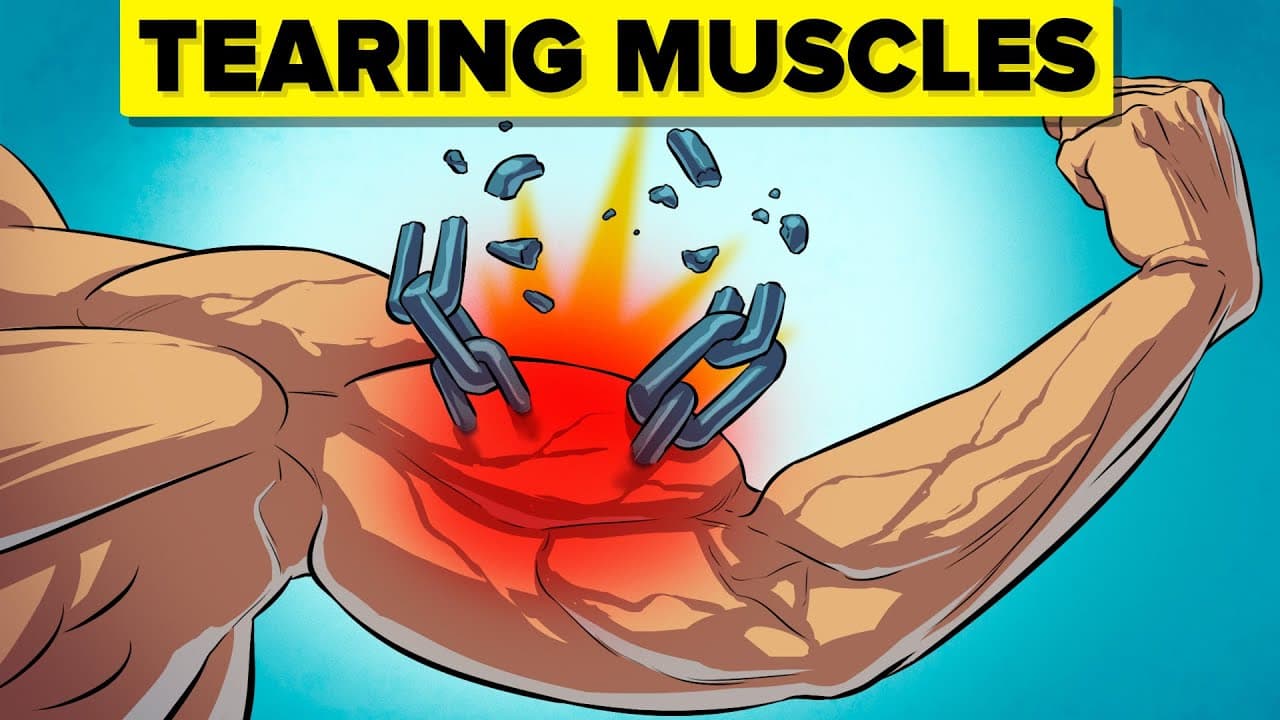
During workouts, muscle fibers contract and sustain tiny tears, which are crucial for muscle growth. Strength training, supported by hormones like testosterone, promotes muscle repair through satellite cells that fuse with damaged fibers. Proper recovery, including hydration and nutrition, is vital for enhancing growth and preventing strain.
Transcript
Maybe you want to up your cardio game, build muscle, or simply live a healthier lifestyle, but whatever the reason, the result is the same: You want to start working out. Great job! But just what happens to our muscles when we work out, especially during strength-based training? And what happens to our bodies as we build muscle mass? Can ... Read More
Key Insights
- The human body contains three types of muscles: cardiac, smooth, and skeletal, with skeletal muscles making up 30-40% of total body mass.
- Muscle contraction during workouts causes tiny tears in muscle fibers, which are essential for muscle growth but can lead to strain if over-exercised.
- Strength training, not aerobic exercise, is crucial for muscle building, and can be achieved using weights, resistance bands, or body weight.
- Hormones like testosterone aid muscle growth by improving protein processing and activating satellite cells, which are vital for muscle development.
- Satellite cells repair muscle tears by replicating and fusing with damaged fibers, leading to increased muscle size and strength.
- Proper recovery, including hydration, nutrition, and rest, is essential for muscle repair and growth, with protein and carbohydrates playing key roles.
- Dynamic stretching before workouts reduces injury risk, while static stretching can lead to fatigue and muscle damage if overused.
- Active recovery through low-intensity exercises like yoga or cycling helps circulate waste products and aids muscle recovery.
Install to Summarize YouTube Videos and Get Transcripts
Explore YouTube Video Summarizer or Get YouTube Transcript Extractor
Questions & Answers
Q: What are the three types of muscles in the human body?
The human body has three types of muscles: cardiac, smooth, and skeletal. Cardiac muscles make up the heart's walls, responsible for heart contractions. Smooth muscles form the walls of the intestines, uterus, blood vessels, and internal eye muscles. Skeletal muscles, attached to bones by tendons, are responsible for voluntary movements.
Q: What happens to muscle fibers during a workout?
During a workout, muscle fibers contract and stretch repeatedly, causing tiny tears. These tears are normal and essential for muscle growth as they trigger the body's repair process. However, over-exercising can lead to larger tears and muscle strain, highlighting the importance of balanced exercise routines.
Q: How do hormones like testosterone influence muscle growth?
Hormones like testosterone stimulate muscle growth by enhancing protein processing, activating anabolic hormones, and activating satellite cells, which are crucial for muscle development. Strength and resistance training can increase the release of growth hormones from the pituitary gland, further encouraging muscle growth and improving muscle sensitivity to testosterone.
Q: What role do satellite cells play in muscle repair?
Satellite cells are myogenic stem cells located between the external lamina and sarcolemma of skeletal muscles. They repair muscle tears by replicating, maturing, and fusing with damaged muscle fibers, forming new muscle protein strands. This process increases muscle size and strength, aiding in muscle growth after workouts.
Q: Why is hydration important for muscle recovery?
Hydration is vital for muscle recovery as it aids in muscle repair and prevents dehydration-related issues. Dehydrated muscles cannot contract properly, increasing the risk of injury and fatigue. Hydration ensures muscles are lubricated, enhancing performance and recovery, and preventing negative impacts on both athletic and everyday movements.
Q: What is the difference between dynamic and static stretching?
Dynamic stretching involves compound movements that keep the body mobile, such as lunges and hip circles, and is recommended before workouts to reduce injury risk. Static stretching, which involves holding stretches while standing still, can lead to fatigue and muscle damage if overused, and is less effective than dynamic stretching.
Q: How does muscle tension contribute to muscle growth?
Muscle tension, such as lifting progressively heavier weights, changes muscle chemistry, aiding satellite cell activation. This activation is crucial for muscle repair and growth. Muscle tension, along with muscle damage and metabolic stress, contributes to muscle development by triggering processes that increase muscle size and strength.
Q: What are the benefits of active recovery after workouts?
Active recovery through low-intensity exercises like yoga or cycling helps circulate waste products from rigorous activities, aiding muscle recovery. It promotes blood flow, reduces soreness, and accelerates the removal of lactic acid from muscles, enhancing overall recovery and allowing individuals to maintain fitness levels without overexertion.
Summary & Key Takeaways
-
During workouts, muscle fibers contract and stretch, causing tiny tears essential for growth. Strength training is key for muscle building, with hormones like testosterone aiding the process. Proper recovery, including hydration and nutrition, is crucial for repair.
-
Satellite cells play a vital role in muscle repair by fusing with damaged fibers, leading to muscle growth. Dynamic stretching is recommended before workouts to reduce injury risk, while active recovery through low-intensity exercises aids muscle recovery.
-
Hydration and a balanced diet rich in protein and carbohydrates are essential for muscle recovery. Over-exercising can lead to strain, so rest is crucial. Hormones and satellite cells contribute to muscle development, with proper recovery enhancing growth.
Read in Other Languages (beta)
Share This Summary 📚
Summarize YouTube Videos and Get Video Transcripts with 1-Click
Try YouTube Summary with ChatGPT & Claude or YouTube Transcript Generator
Explore More Summaries from The Infographics Show 📚



Summarize YouTube Videos and Get Video Transcripts with 1-Click
Try YouTube Summary with ChatGPT & Claude or YouTube Transcript Generator