How to Analyze Productivity Differences in Economies
TL;DR
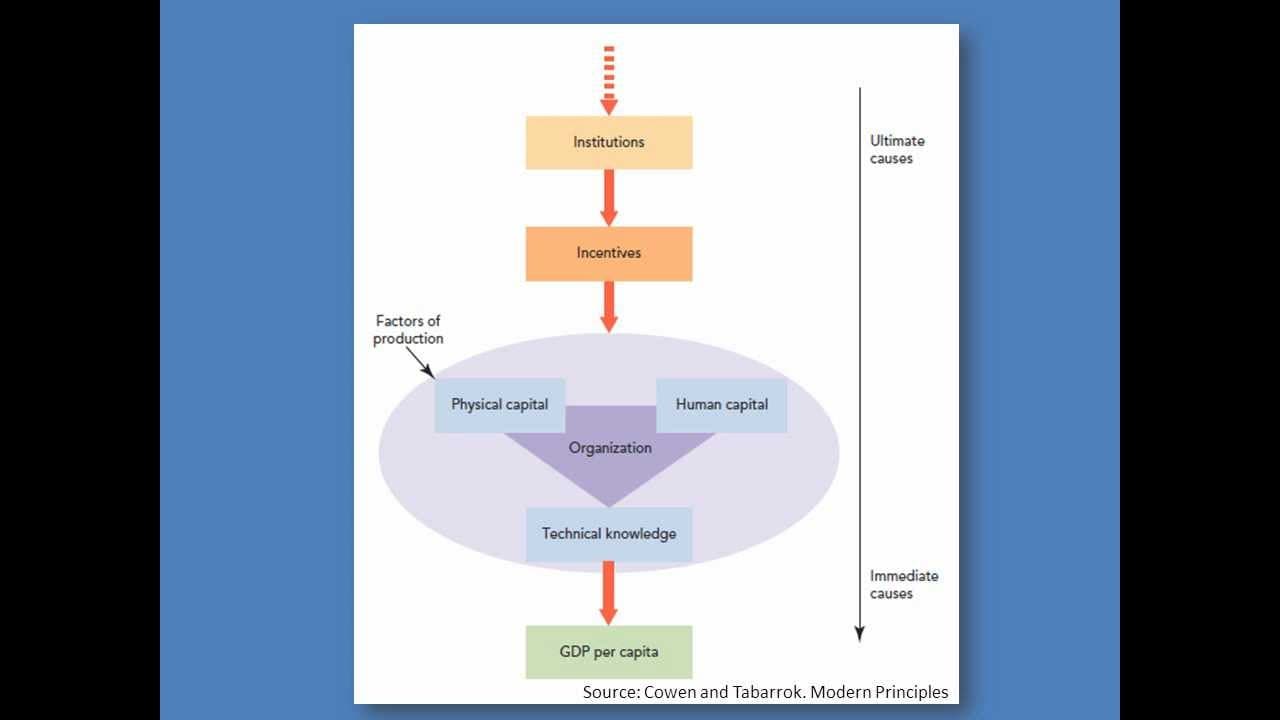
Productivity differences across countries significantly impact GDP per capita. While physical and human capital are crucial, they don't fully explain these differences. Efficient organization and utilization of resources, influenced by incentives and institutions, are essential for higher productivity. Countries with restrictive regulations struggle to optimize productivity, affecting economic growth.
Transcript
so in our last lecture on the solo model we'll be going beyond the model to talk about productivity this lecture will also be have useful material even if you haven't uh watched or followed completely the first three lectures on the solo model you'll have to bear with me I as I go through a little bit of math but uh if you do that there'll still be... Read More
Key Insights
- The Solow model highlights physical and human capital as key factors in GDP per capita but fails to account for productivity differences.
- Productivity is not just about the availability of ideas but how effectively capital and labor are combined to produce output.
- Empirical data shows significant productivity disparities across countries, impacting GDP per capita.
- In Mexico, productivity and factors of production explain only half of its GDP per capita compared to the US.
- Japan's productivity excels in certain industries like steel and automotive but lags in sectors like retail, affecting overall economic output.
- Regulations and restrictions in countries like Japan and India hinder efficient capital and labor utilization, reducing productivity.
- Incentives and institutions play a critical role in motivating efficient organization of resources, impacting productivity.
- Understanding productivity differences is crucial for economic development and requires examining incentives and institutional frameworks.
Install to Summarize YouTube Videos and Get Transcripts
Explore YouTube Video Summarizer or Get YouTube Transcript Extractor
Questions & Answers
Q: How does productivity affect GDP per capita?
Productivity significantly impacts GDP per capita as it determines how efficiently a country utilizes its resources to produce output. Higher productivity means more output from the same level of inputs, leading to a higher GDP per capita. Countries with better organization and utilization of capital and labor typically achieve greater economic growth.
Q: Why does the Solow model fail to fully explain economic growth?
The Solow model primarily focuses on physical and human capital as drivers of economic growth but overlooks productivity differences. It assumes technical knowledge as a public good, available to all, and doesn't account for how effectively countries organize and utilize their resources. This limitation makes it inadequate in explaining the large GDP per capita disparities observed across countries.
Q: What role do incentives and institutions play in productivity?
Incentives and institutions are crucial in shaping productivity by influencing how resources are organized and utilized. Effective institutions and positive incentives encourage efficient resource allocation, innovation, and entrepreneurship, leading to higher productivity. Conversely, restrictive regulations and poor institutional frameworks can hinder productivity, affecting economic growth.
Q: How do regulations impact productivity in countries like Japan and India?
Regulations in countries like Japan and India often restrict the size and operations of firms, limiting their ability to utilize resources effectively. For instance, Japan's retail sector is dominated by inefficient mom-and-pop shops due to past restrictions on store size. Similarly, India's regulatory barriers create inefficiencies in resource allocation, reducing overall productivity and economic growth.
Q: What evidence supports the claim of productivity differences between countries?
Empirical data shows that productivity levels vary significantly across countries, impacting GDP per capita. For example, studies have found that Mexico's output per worker is significantly lower than the United States, with productivity accounting for a substantial part of this difference. Similar disparities are observed in other countries, highlighting the importance of productivity in economic performance.
Q: How does Japan's productivity compare across different industries?
Japan excels in industries like steel, automotive, and consumer electronics, where productivity levels are high, allowing for competitive exports. However, other sectors like retail and construction have lower productivity levels compared to the United States. These disparities indicate that while Japan is efficient in certain areas, overall productivity is affected by inefficiencies in other significant sectors.
Q: What challenges do countries face in improving productivity?
Countries face challenges in improving productivity due to restrictive regulations, inefficient institutions, and lack of incentives for innovation and entrepreneurship. These barriers hinder effective resource allocation and utilization, reducing productivity. Overcoming these challenges requires policy reforms, better institutional frameworks, and incentives that encourage efficient organization of resources.
Q: Why is understanding productivity differences important for development?
Understanding productivity differences is crucial for development as it helps identify the factors that contribute to economic disparities between countries. By analyzing productivity, policymakers can address inefficiencies, improve resource utilization, and implement reforms that enhance economic growth. Recognizing the role of productivity in development can lead to targeted strategies for boosting economic performance.
Summary & Key Takeaways
-
Productivity differences across countries are crucial in explaining variations in GDP per capita. While the Solow model emphasizes physical and human capital, it overlooks the role of productivity, which involves the efficient combination of resources. Countries with restrictive regulations often face challenges in optimizing productivity, affecting economic growth.
-
Empirical evidence highlights significant productivity disparities between countries, with nations like Mexico and Zambia showing lower productivity levels compared to the United States. These differences are not solely due to capital and labor but also how effectively they are organized and utilized.
-
Incentives and institutions greatly influence productivity by affecting how resources are organized and utilized. Countries with supportive policies and efficient institutions tend to have higher productivity, leading to better economic outcomes. Addressing regulatory and institutional barriers is essential for improving productivity and fostering economic growth.
Read in Other Languages (beta)
Share This Summary 📚
Summarize YouTube Videos and Get Video Transcripts with 1-Click
Try YouTube Summary with ChatGPT & Claude or YouTube Transcript Generator
Explore More Summaries from Marginal Revolution University 📚


Summarize YouTube Videos and Get Video Transcripts with 1-Click
Try YouTube Summary with ChatGPT & Claude or YouTube Transcript Generator