How Does the Hypothalamus Affect Emotions?
TL;DR
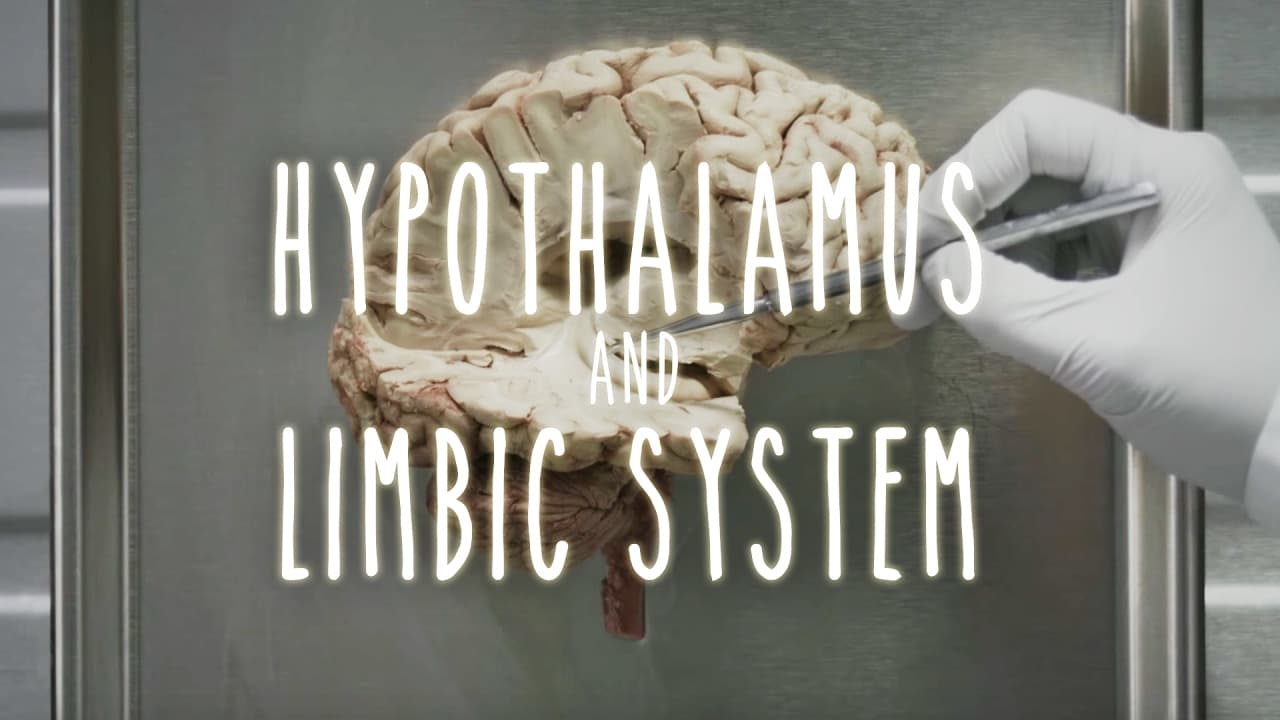
The hypothalamus and limbic system play crucial roles in emotional processing and maintaining homeostasis. The hypothalamus, though small, is vital for responding to internal and external stimuli. The limbic system, including the hippocampus and amygdala, is central to learning, memory, and emotional behavior, with interconnected pathways influencing various physiological and emotional responses.
Transcript
it is intuitive to understand how sensory information gets to the brain and how motor information can travel to muscles together these two systems allow us to detect and respond to the world around us but how do we engage with that world how do we determine what is important how do we fall in love these higher cortical functions involves the comple... Read More
Key Insights
- The hypothalamus is critical for life, maintaining homeostasis by responding to internal and external environments.
- The limbic system is essential for learning, memory, and emotional aspects of behavior.
- The hypothalamus and limbic system are interconnected, influencing both endocrine and emotional responses.
- The hypothalamus is part of the diencephalon but functions as part of the limbic system through reciprocal connections.
- The limbic lobe spans frontal, parietal, and temporal lobes, including the cingulate gyrus and parahippocampal gyrus.
- The hippocampus is primarily involved in memory, while the amygdala is responsible for emotional processing.
- The Papez circuit is a classic pathway involved in learning, memory, and emotion, linking the hippocampus, fornix, mammillary bodies, and thalamus.
- Connections between the amygdala and hypothalamus are crucial for fear responses and salience filtering.
Install to Summarize YouTube Videos and Get Transcripts
Explore YouTube Video Summarizer or Get YouTube Transcript Extractor
Questions & Answers
Q: How does the hypothalamus maintain homeostasis?
The hypothalamus maintains homeostasis by regulating the body's response to internal and external stimuli. It influences the endocrine system and both the sympathetic and parasympathetic nervous systems, ensuring balance in physiological processes such as temperature regulation, hunger, thirst, and sleep. It acts as a control center, receiving signals from the body and initiating appropriate responses to maintain equilibrium.
Q: What role does the limbic system play in emotion?
The limbic system plays a crucial role in emotion by integrating sensory input with emotional responses. It includes structures like the amygdala and hippocampus, which are involved in processing emotions and memory. The amygdala is particularly important for emotional reactions, such as fear, while the hippocampus is key in forming emotional memories, allowing individuals to respond appropriately to emotional stimuli.
Q: What is the Papez circuit and its function?
The Papez circuit is a neural pathway involved in emotion and memory processing. It connects the hippocampus, fornix, mammillary bodies, anterior thalamic nuclei, and cingulate gyrus. This circuit facilitates the integration of emotional experiences with memory formation, allowing for the emotional coloring of memories. It is integral to the limbic system's role in processing emotions and linking them to physiological responses.
Q: How are the hypothalamus and limbic system interconnected?
The hypothalamus and limbic system are interconnected through reciprocal neural pathways. The hypothalamus, though part of the diencephalon, functions within the limbic system due to these connections, influencing emotional and physiological responses. This integration allows the hypothalamus to regulate endocrine and autonomic functions, while the limbic system processes emotions, creating a comprehensive response to environmental stimuli.
Q: What is the function of the hippocampus in the limbic system?
The hippocampus is a critical structure within the limbic system, primarily involved in memory formation and spatial navigation. It helps convert short-term memories into long-term ones and plays a role in learning. The hippocampus also interacts with other limbic structures to integrate emotional content into memories, influencing how individuals recall and react to past experiences.
Q: What is the significance of the amygdala in emotional processing?
The amygdala is a key structure in the limbic system, essential for processing emotions, particularly those related to survival, such as fear and aggression. It evaluates emotional stimuli and triggers appropriate physiological responses, such as the fight-or-flight reaction. The amygdala also plays a role in emotional memory, helping individuals remember emotionally charged events and respond accordingly in future situations.
Q: How does the limbic lobe contribute to the limbic system?
The limbic lobe, part of the limbic system, spans the frontal, parietal, and temporal lobes, including the cingulate gyrus and parahippocampal gyrus. It serves as a bridge between the neocortex and deeper limbic structures, integrating sensory information with emotional and memory processing. This integration allows for the coordination of emotional and physiological responses to environmental stimuli, essential for adaptive behavior.
Q: What are the evolutionary aspects of the limbic system?
The limbic system is considered evolutionarily ancient, providing foundational structures for emotional and memory processing. Its development allowed early mammals to respond to environmental challenges with complex emotional and social behaviors. The limbic system's integration with the neocortex enabled more sophisticated processing of sensory information, contributing to the evolution of advanced cognitive functions and adaptive behaviors in humans.
Summary & Key Takeaways
-
The hypothalamus and limbic system are key structures in the brain that support higher cortical functions such as emotion and memory. The hypothalamus, despite its small size, is vital for maintaining homeostasis and responding to environmental stimuli. The limbic system, including structures like the hippocampus and amygdala, is crucial for learning, memory, and emotional processing.
-
The hypothalamus is structurally part of the diencephalon but acts as part of the limbic system through its connections. It influences the body's endocrine systems and autonomic nervous systems, playing a critical role in homeostasis. The limbic system, on the other hand, serves as a bridge between the hypothalamus and neocortex, integrating emotional, visceral, and voluntary responses.
-
The hippocampus, involved in memory, and the amygdala, involved in emotional processing, are deep structures of the limbic system. The Papez circuit is a key pathway involving these structures, linking them to the thalamus and other parts of the brain. This circuit is integral to processing emotions and memory, with modern neuroscience highlighting the importance of amygdala-hypothalamus connections in fear and salience.
Read in Other Languages (beta)
Share This Summary 📚
Summarize YouTube Videos and Get Video Transcripts with 1-Click
Try YouTube Summary with ChatGPT & Claude or YouTube Transcript Generator
Explore More Summaries from UBC Medicine - Educational Media 📚

Summarize YouTube Videos and Get Video Transcripts with 1-Click
Try YouTube Summary with ChatGPT & Claude or YouTube Transcript Generator