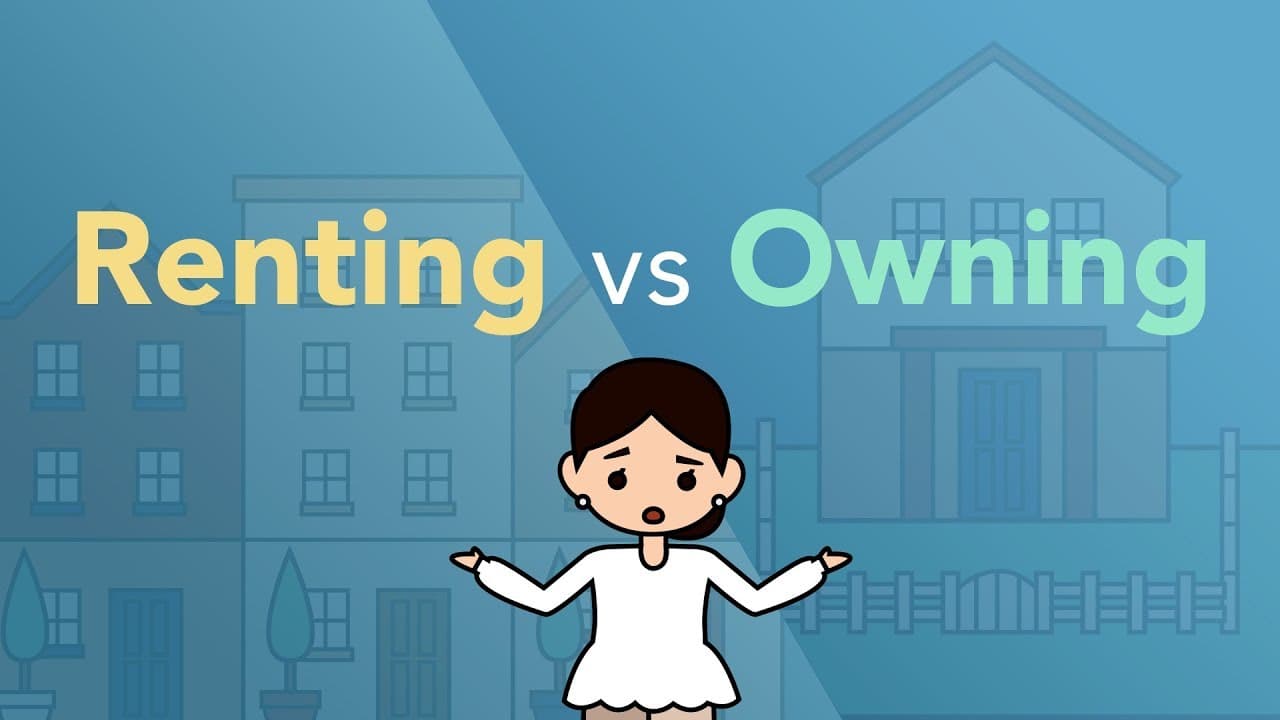
Why You Should Rent vs Own | Phil Town
TL;DR
Renting can be financially better than owning when comparable rent costs less than a mortgage and the savings can be invested for potentially higher returns. Phil Town argues that renters can also build cash, avoid excessive mortgage debt, and wait until a desirable house sells below its true value. Read on for his framework for comparing rent, investment returns, market value, and home equity.
Transcript
hey guys I'm Phil town from rule one investing and today I want to tell you why you should rent instead of own a house oh this is gonna go against the the big meme out there about buying homes renting a house or apartment can sometimes feel like you're just watching money burn up and smoke right each months rent buys only the right to live there an... Read More
Key Insights
- Rent is not automatically waste: A rent payment purchases the right to occupy a home for another 30 days without building ownership or equity. Town accepts that limitation, but rejects the conclusion that renting is therefore always financially unsound. Its value depends on what renting costs relative to ownership and how the renter uses the resulting savings.
- Compare genuinely similar homes: The relevant comparison is between rent and the mortgage payment on a home of similar value. Town says renting can be considerably cheaper in some cases. That monthly difference is central to his argument because it creates cash that can be directed toward investing and an eventual home purchase.
- Savings require purposeful investing: Renting does not create an investment by itself. The financial case depends on placing the money saved over owning into the stock market and investing it correctly. Town believes a Rule One investor can earn better returns there than by putting the same money into a home.
- Younger renters gain two options: People who are young may have little extra money available for stocks. Lower housing costs can give them a practical way to start investing while simultaneously accumulating funds to buy a home when they are older. Renting therefore supports both present investing and a possible future purchase.
- Home flipping carries danger: Town distinguishes ordinary homeownership from flipping houses and points to 2007 as evidence that flipping has a certain amount of danger. He says buying a home is rarely based solely on investment potential. Buyers should still give the investment side meaningful weight because it can improve their long-term financial position.
- True value guides the purchase: Rule One investing calls for waiting until a company's market price falls below its true value. Town transfers the same principle to housing because both stock and real estate markets rise and fall. A desirable house becomes attractive when its market price moves below what the buyer judges to be its true value.
- Renting preserves buyer patience: A renter can watch the housing market from the sidelines instead of purchasing immediately. During that waiting period, the renter can invest the difference between rent and ownership costs. This combination preserves the ability to act when the right house finally becomes available below true value.
- Some markets flatten instead: Town recognizes that waiting for a dramatic decline can take a long time. Drawing on homes he owned near the West Coast ocean and in Jackson Hole, Wyoming, he says expensive markets may stop rising and remain flat rather than fall aggressively. That possibility makes the monthly cost comparison especially important.
- Premium locations may favor renting: Even when purchase prices in expensive areas do not fall, renting can remain cheaper on a monthly payment basis. Town specifically mentions homes near the beach and in Jackson Hole, Wyoming. Renters in these markets can avoid the higher ownership payment and invest what they save elsewhere.
- Property defects can create bargains: A below-value house often comes with a reason for its discount. It may be in foreclosure, run down, in need of paint, require a roof repair, or occupy an edgy location. Buyers applying Rule One must evaluate whether the lower price adequately compensates for the property's particular problem.
- Debt compounds against the owner: Mortgage debt carries interest that compounds, just as investment returns compound. Town warns that a massive mortgage can drive a household further into debt and drain its finances. The investment potential of a house therefore depends on more than appreciation, because the amount and cost of debt also matter.
- Cash creates protective equity: Town recommends waiting until a buyer can pay a significant portion of the house price in cash. A larger upfront payment creates substantial equity and reduces the debt required. Unless a house is available far below true value, building cash before buying can limit the burden of a large mortgage payment.
Install to Summarize YouTube Videos and Get Transcripts
Explore YouTube Video Summarizer or Get YouTube Transcript Extractor
Questions & Answers
Q: Why should you rent instead of own a house?
Renting may be the better choice when it costs considerably less than the mortgage on a similar-value home. The renter can invest the monthly savings in the stock market and continue accumulating cash for a future purchase. Renting also creates time to wait until a desirable house is priced below its true value. Phil Town argues that these benefits can outweigh the lack of ownership and equity, particularly when buying would require a large mortgage.
Q: How can renting help a younger person build wealth?
Younger people may not have much extra money available to invest after paying housing costs. If rent is cheaper than the mortgage on a comparable home, they can put the difference into the stock market. Town says investing correctly can produce better returns than placing that money in a house. They can invest now while also saving enough cash to purchase a home when they are older.
Q: When does Phil Town think buying a home makes sense?
Buying becomes compelling when a house can be purchased well below its true value. Town describes this as an extraordinary buying opportunity and applies the Rule One principle of buying on sale. He also wants the buyer to have enough cash to pay a significant portion upfront. The combination of a favorable price and substantial starting equity improves the home's investment potential while limiting mortgage debt.
Q: How does Rule One investing apply to buying a house?
Rule One investors wait to buy a company until its market price is below its true value. Town says a prospective homeowner should use the same discipline because real estate prices also move up and down. Renting allows the buyer to watch from the sidelines until a suitable house becomes undervalued. The principle is to treat the home as an investment decision and buy it on sale.
Q: Can renting be cheaper in an expensive housing market?
Yes, Town says homes near the beach and in Jackson Hole, Wyoming, can cost much less to rent than to buy on a monthly payment basis. In such markets, prices may stop rising and remain flat instead of dropping aggressively. A renter can use the lower monthly cost to invest elsewhere while waiting. This makes renting financially useful even if the hoped-for purchase discount takes a long time to appear.
Q: What can make a house sell below its true value?
Town identifies several conditions that may produce a bargain. A house may be in foreclosure, run down, need paint, require a roof repair, or sit in an edgy location. These problems can reduce the market price enough to create a buying opportunity. The buyer must recognize why the discount exists and apply the Rule One requirement of purchasing on sale.
Q: Why does Phil Town describe a mortgage as a liability?
A mortgage can require a massive amount of debt and impose interest that compounds over time. Town says this compounding works like investment growth, except that it can drive the borrower further into debt. A large payment can consequently drain the owner's finances rather than function as a productive investment. Waiting, saving more cash, and borrowing less reduces that liability.
Q: How much cash should someone have before buying a house?
Town does not provide a fixed amount or percentage. He says buyers should wait until they can pay a significant portion of the house price in cash and hold substantial equity from the start. Renting longer can help them build that cash while avoiding a large mortgage. The reason is to lessen debt unless an extraordinary opportunity allows the house to be purchased well below true value.
Summary & Key Takeaways
-
Why renting gets dismissed: Phil Town begins with the common objection that monthly rent buys only another 30 days in a home. It does not create ownership, equity, or an investment, so many people regard renting as an unsound temporary arrangement while they save a down payment. He challenges that view by arguing that, in certain situations, renting rather than buying can be the best financial decision available.
-
Investing the monthly difference: Renting a house can cost considerably less than the mortgage on a similarly valued home. Although rent itself is not an investment, Town says the money saved each month can be invested in the stock market. When invested correctly by a Rule One investor, he expects that money to produce better returns than money placed in a home. This approach can particularly help younger people begin investing while also saving for a later purchase.
-
Waiting for a better price: Town applies a Rule One investing principle to housing, waiting until the market price falls below true value. Renting lets a prospective buyer remain on the sidelines, invest the savings, and watch for that opportunity. He acknowledges that some desirable markets may stay elevated or simply flatten instead of dropping sharply. Even there, homes near the beach or in Jackson Hole, Wyoming, may be cheaper to rent than buy on a monthly payment basis.
-
Finding houses sold on sale: Buying below true value often means accepting a property with a specific problem. Town lists foreclosure, neglected condition, needed paint, roof repairs, or an edgy location as possible sources of a bargain. His broader point is that Rule One investors should seek a sale price in every investment, including their homes. Until such a buying opportunity appears, he believes renting and investing the money saved elsewhere can be the better choice.
-
Reducing the mortgage burden: Mortgages can function more like liabilities than investments because they require substantial debt and compounding interest. Town recommends waiting not only for a favorable purchase price, but also until the buyer can pay a significant portion in cash and begin with substantial equity. Unless an extraordinary below-value opportunity appears, renters can keep building cash, reduce the future mortgage burden, and invest toward returns potentially exceeding neighborhood house-price growth.
Read in Other Languages (beta)
Share This Summary 📚
Summarize YouTube Videos and Get Video Transcripts with 1-Click
Try YouTube Summary with ChatGPT & Claude or YouTube Transcript Generator
Explore More Summaries from Rule #1 Investing 📚


Summarize YouTube Videos and Get Video Transcripts with 1-Click
Try YouTube Summary with ChatGPT & Claude or YouTube Transcript Generator