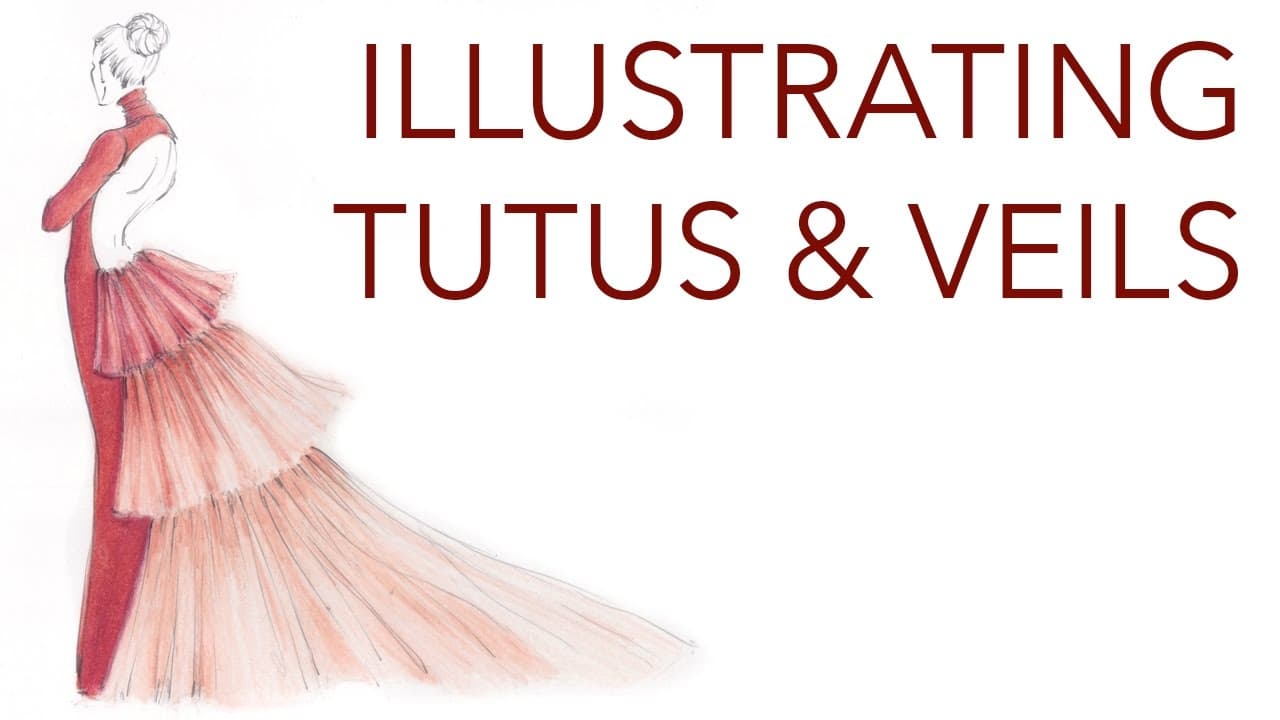
Fashion Illustration Tutorial: Tutus, Veils, Crinolines
TL;DR
Learn how to render veils and tutus using various media and techniques, including color pencil, markers, and opaque wash.
Transcript
hello everyone today's tutorial will be about veils and tutus and crinoline you know all manner of gathered netting materials like tulle and crinoline and net in various colors and stiffnesses and different media and i'm gonna start with color pencil I'm gonna have a list of all the materials that I use in this video in the description box and you ... Read More
Key Insights
- 🧑🎨 The artist emphasizes the importance of considering the fabric's drape and wrap around when rendering veils and tutus.
- 🔉 Different media, such as color pencil, markers, and opaque wash, can be used to achieve various effects.
- 🎨 Gathered tool fabrics do not require hemming unless for specific design purposes.
- ✏️ Blending techniques with color pencil, such as rubbing alcohol or blending pencils, can be used for realistic rendering.
- 🤍 Sheer fabrics can be rendered by using multiple shades of white and layering.
- 💃 Attention to detail, such as showing the back of a dress and adding subtle shadows, contributes to a 3D effect.
- 👨🎨 The artist advises allowing layers to dry before adding more paint or pencil work.
Install to Summarize YouTube Videos and Get Transcripts
Explore YouTube Video Summarizer or Get YouTube Transcript Extractor
Questions & Answers
Q: What is the artist's checklist for rendering fabric?
The artist's checklist includes selecting the media and colors, drawing the garment with consideration for wrap around and drape, filling in the background color, and adding the three types of shadows.
Q: Should gathered tool fabrics be hemmed?
No, gathered tool fabrics do not need to be hemmed, as they do not unravel. Hemming is only necessary if a specific look or design requires it.
Q: What blending techniques can be used with color pencil?
Blending techniques with color pencil include using blending tools, blending pencils, rubbing alcohol, and baby oil. The artist personally prefers rubbing alcohol and blending pencils.
Q: How can different shades of white be rendered for sheer fabrics?
Multiple shades of white can be achieved by using opaque wash or diluting white marker colors. Layering and letting each layer dry is essential for creating a sheer effect.
Summary & Key Takeaways
-
The tutorial demonstrates the process of rendering veils and tutus using different materials such as tulle, crinoline, and netting.
-
The artist explains the importance of selecting appropriate media and colors for the desired effect.
-
Techniques for drawing the garment, considering its wrap around and drape, are discussed.
Read in Other Languages (beta)
Share This Summary 📚
Summarize YouTube Videos and Get Video Transcripts with 1-Click
Try YouTube Summary with ChatGPT & Claude or YouTube Transcript Generator
Explore More Summaries from Zoe Hong 📚


Summarize YouTube Videos and Get Video Transcripts with 1-Click
Try YouTube Summary with ChatGPT & Claude or YouTube Transcript Generator