Why is Pessimism About the Eurozone Warranted?
TL;DR
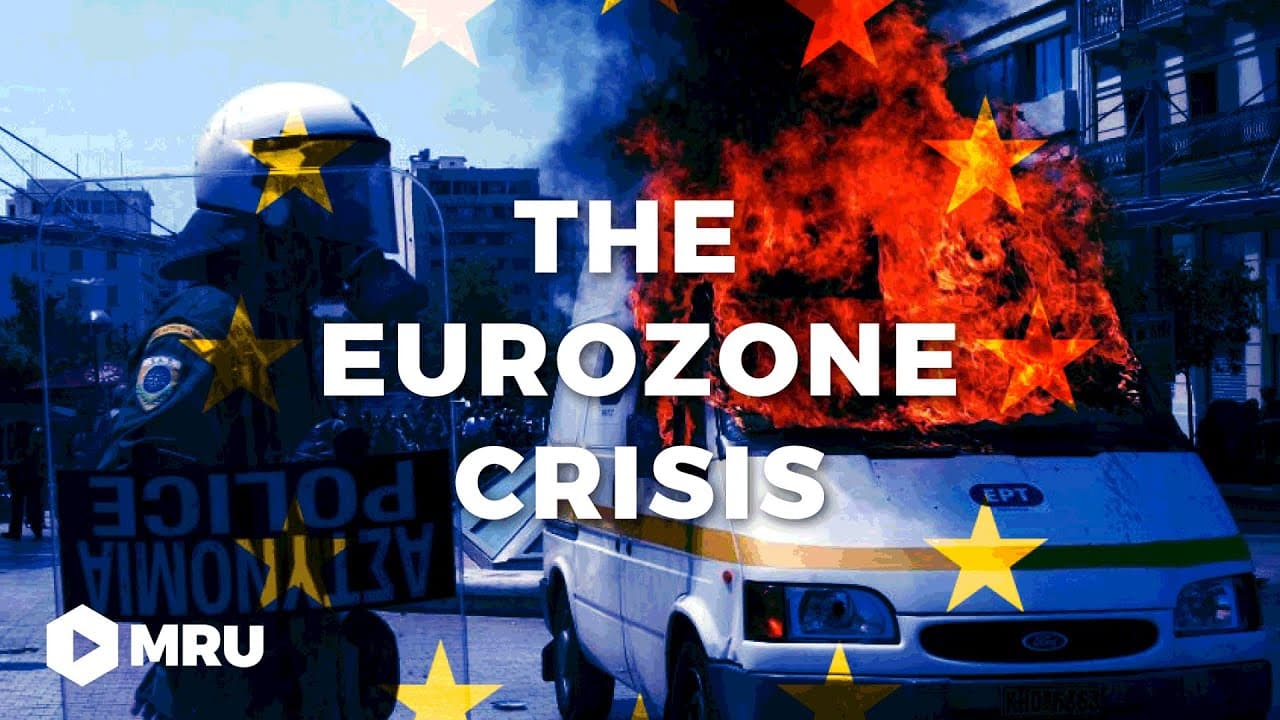
Pessimism about the Eurozone is justified due to its lack of being an optimum currency area, causing economic strain on weaker nations facing tighter monetary policies. Austerity measures have failed, unemployment remains high, and there's a rising nostalgia for the pre-Euro era, all while achieving consensus among 17 diverse nations proves increasingly difficult, raising doubts about the union's long-term stability.
Transcript
Now let's consider the case for pessimism about the Eurozone. But of course, you should view this video together with its companion on the case for optimism. The first point is that the Eurozone is probably not what is called an optimum currency area by economists. That is the economically weaker economies in the Eurozone will prefer a currency ... Read More
Key Insights
- The Eurozone is not an optimum currency area, causing tension between stronger and weaker economies over monetary policy preferences.
- Austerity measures in troubled Eurozone economies have not proven successful, leading to prolonged economic and political struggles.
- Nostalgia for the pre-Euro European Union is growing, as current economic hardships persist.
- Economic plans in the Eurozone often delay tough decisions, avoiding direct resolution of financial losses and accountability.
- The complexity of achieving consensus among 17 nations with diverse political systems and interests poses a significant challenge.
- Current economic gains in the Eurozone are minimal and do not indicate a return to sustainable growth.
- The inverted pyramid of fiscal support in the Eurozone is becoming unstable, with fewer countries able to support the struggling economies.
- Germany, a key player in the Eurozone, faces its own fiscal challenges and growing bailout fatigue, complicating its role in the union.
Install to Summarize YouTube Videos and Get Transcripts
Explore YouTube Video Summarizer or Get YouTube Transcript Extractor
Questions & Answers
Q: Why is the Eurozone not considered an optimum currency area?
The Eurozone is not considered an optimum currency area because it comprises economies with varying levels of strength. Weaker economies prefer a weaker currency and higher inflation to stimulate growth, while stronger economies favor tighter monetary policies. This disparity leads to tension and economic challenges within the union.
Q: What are the main issues with austerity measures in the Eurozone?
Austerity measures in the Eurozone have not effectively resolved financial crises, resulting in high unemployment and prolonged economic difficulties. These measures often involve several years of economic hardship and political confrontation, leading countries to question the benefits of remaining in the Eurozone under such conditions.
Q: How does nostalgia for the pre-Euro era affect the Eurozone?
Nostalgia for the pre-Euro era is growing as current economic hardships persist. This sentiment leads countries to question whether the European Union before the Euro was more beneficial, especially as they face ongoing economic challenges. Such nostalgia could influence decisions about remaining in the Eurozone.
Q: What challenges does the Eurozone face in achieving consensus among its member nations?
The Eurozone faces challenges in achieving consensus among its 17 member nations due to diverse political systems and interests. Each nation has its own electorate, coalition governments, and independent judiciaries, making it difficult to agree on and implement solutions to economic problems. This complexity hinders effective decision-making.
Q: Why are current economic gains in the Eurozone considered minimal?
Current economic gains in the Eurozone are considered minimal because they do not indicate a return to sustainable growth. While borrowing rates may decrease and liquidity may improve, these are seen as temporary measures that avoid more severe outcomes rather than genuine signs of economic recovery.
Q: What is the inverted pyramid concept in the Eurozone's fiscal support system?
The inverted pyramid concept describes the Eurozone's fiscal support system, where a few stronger economies support many weaker ones. As more countries require assistance, the pyramid becomes unstable, with fewer nations able to provide support. This creates a precarious situation that threatens the stability of the Eurozone.
Q: What fiscal challenges does Germany face within the Eurozone?
Germany faces fiscal challenges within the Eurozone, including a debt-to-GDP ratio over 80% and low birth rates. Additionally, Germany experiences bailout fatigue, having a history of bailing out other nations. These factors complicate Germany's role as a key player in supporting the Eurozone's stability.
Q: Why is the future stability of the Eurozone uncertain?
The future stability of the Eurozone is uncertain due to economic disparities, ineffective austerity measures, political complexity, and fiscal challenges faced by key players like Germany. The lack of consensus on resolving these issues and the growing nostalgia for the pre-Euro era add to the uncertainty surrounding the union's longevity.
Summary & Key Takeaways
-
The Eurozone is not considered an optimum currency area, leading to conflicts between stronger and weaker economies over monetary policy. Weaker economies are often subjected to tighter monetary policies than they prefer, causing economic strain.
-
Austerity measures have not effectively resolved financial crises in the Eurozone, leading to high unemployment and prolonged economic difficulties. This situation fosters nostalgia for the pre-Euro era, as countries question the benefits of remaining in the Eurozone.
-
The Eurozone's complex political landscape, involving 17 nations, makes consensus difficult to achieve. Economic plans often delay crucial decisions, and Germany's fiscal challenges and bailout fatigue add to the uncertainty about the union's future stability.
Read in Other Languages (beta)
Share This Summary 📚
Summarize YouTube Videos and Get Video Transcripts with 1-Click
Try YouTube Summary with ChatGPT & Claude or YouTube Transcript Generator
Explore More Summaries from Marginal Revolution University 📚

Summarize YouTube Videos and Get Video Transcripts with 1-Click
Try YouTube Summary with ChatGPT & Claude or YouTube Transcript Generator