Lex Fridman's first time inside the Metaverse
TL;DR
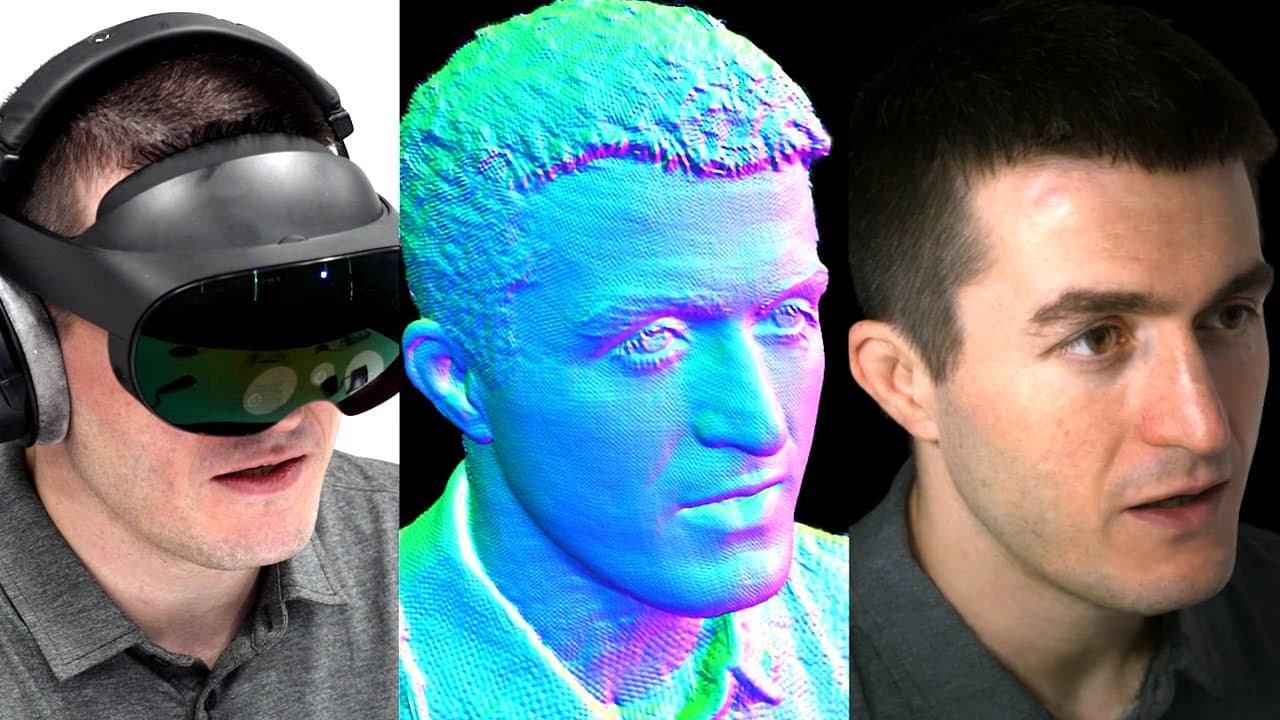
The content explores the development of photorealistic avatars for virtual and augmented reality, discussing the potential for immersive communication and the challenges of making this technology accessible.
Transcript
[Laughter] this is so great lighting change wow yeah we can put the light anywhere and it doesn't awkward to be really close to you no it does I actually moved you I moved you back a few feet before you got into the headset you were like right here I don't know if people can see this but this is incredible the realism here is just incredible where ... Read More
Key Insights
- 💨 Photorealistic avatars offer a revolutionary way to achieve immersive and realistic communication in virtual reality.
- 😑 The ability to capture and transmit subtle facial expressions and imperfections greatly enhances the sense of presence and realism.
- 🤩 Making the scanning process more accessible through smartphone technology is a key focus for future development.
- 🎮 Beyond video calls, there is potential for photorealistic avatars to enable interactive experiences, meetings, and games in the metaverse.
- 😌 The challenge lies in balancing computational demands, body movement capture, and the need for personal customization of avatars.
- 😒 The use of photorealistic avatars has the potential to break geographic and physical barriers in communication.
- 🈸 The development and broader adoption of mixed reality devices will further enhance the possibilities and applications of photorealistic avatars.
Install to Summarize YouTube Videos and Get Transcripts
Explore YouTube Video Summarizer or Get YouTube Transcript Extractor
Questions & Answers
Q: How do photorealistic avatars capture realistic facial expressions?
Photorealistic avatars are created by scanning facial expressions and body movements, building a computer model that represents each person's face and expressions. This encoded version of their appearance is then transmitted over the wire, creating a realistic representation in virtual reality.
Q: Will the photorealistic avatars include flaws and imperfections?
Yes, the avatars are designed to capture the subtleties of the human face, including flaws, like freckles, asymmetry, and wrinkles. These imperfections contribute to the realism and immersion of the experience.
Q: What is the timeline for making photorealistic avatars accessible?
The rollout will start with a small number of people undergoing detailed scans, and then progress towards a quicker scanning process using smartphones. The goal is to integrate photorealistic avatars into various applications, such as work meetings and remote hang sessions, over the next few years.
Q: How will the technology handle full-body movements and gestures?
The challenge lies in finding the optimal level of fidelity for full-body movements. While the face is the most expressive and important aspect to capture, efforts are being made to include body movements in a lower fidelity version to maintain realism and reduce computational demands.
Summary & Key Takeaways
-
The content discusses the creation of photorealistic avatars using scanned facial expressions and body movements for a realistic communication experience in virtual reality.
-
The technology aims to capture the subtleties of human expressions, including flaws and variations in color, to enhance immersion.
-
The vision is to make the scanning process more accessible by using smartphones and to expand the applications of photo-realistic avatars beyond video calls to include interactive experiences and meetings in the metaverse.
Read in Other Languages (beta)
Share This Summary 📚
Summarize YouTube Videos and Get Video Transcripts with 1-Click
Try YouTube Summary with ChatGPT & Claude or YouTube Transcript Generator
Explore More Summaries from Lex Clips 📚

Summarize YouTube Videos and Get Video Transcripts with 1-Click
Try YouTube Summary with ChatGPT & Claude or YouTube Transcript Generator