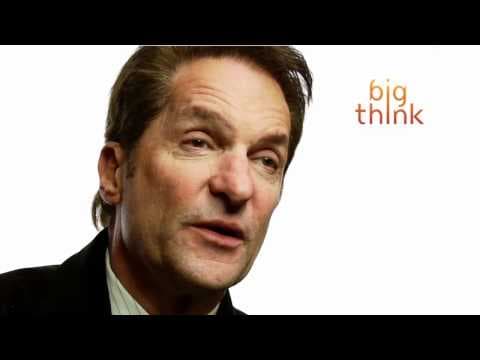
Awakening the Food Giant Peter Brabeck | Big Think

TL;DR
Growing up in a war-torn city, the CEO of Nestle shares his love for nature, optimism, and his journey into multinational companies like Nestle, along with the changing dynamics of global markets.
Transcript
well i was born in a austrian city that was one of the heaviest bombed during the second world war and my first memories of course are of a city that has been burnt down and that there was basically no house standing and but at the same time there was a magnificent surrounding of lakes and mountains and my parents since i was able to walk took me o... Read More
Key Insights
- 😂 The CEO's love for nature and the contrasting experiences of a war-torn city shaped his character and outlook on life.
- ❓ Multinational companies like Nestle had to navigate the complex political, social, and cultural contexts of the regions they operated in.
- ❣️ Latin America experienced a shift from heavy state interventions to more market-oriented economies, driven by political changes and economic successes.
- 🤗 The fall of the Berlin Wall and other global events opened up new markets for companies like Nestle, presenting opportunities for expansion.
- 👶 Africa and the Middle East are emerging markets that offer new prospects for Nestle's global expansion.
- 🌐 Adapting to the political, social, and cultural realities of different regions is crucial for successful global expansion.
Install to Summarize YouTube Videos and Get Transcripts
Explore YouTube Video Summarizer or Get YouTube Transcript Extractor
Questions & Answers
Q: How did the CEO's upbringing in a war-torn city impact his character and outlook on life?
The CEO's memories of the destruction contrasted with the beauty of nature surrounding him, forging a resilient and optimistic mindset.
Q: How did the CEO secure a position in Latin America while working at Nestle?
He expressed his interest in Latin America to multinational companies and eventually found an opportunity with a subsidiary of Nestle, combining his career with his passion for climbing mountains.
Q: What were the prevailing political ideologies and policies in Latin America during the 60s?
The 60s marked a time of socialism and anti-capitalism in Latin America, with heavy state interventions, import substitutions, and policies favoring joint ventures.
Q: How did the market dynamics change in Latin America?
The introduction of a more open and free economy, driven by political changes and economic success in countries like Chile, led to reduced state intervention, more competition, and increased productivity.
Summary & Key Takeaways
-
The CEO of Nestle recalls growing up in a city destroyed during World War II, where he found solace in nature and developed a resilient and optimistic mindset.
-
He joined Nestle with the goal of combining his passion for climbing mountains with a career, eventually securing a position in Latin America.
-
The political climate in the 60s heavily influenced state interventions and policies favoring joint ventures and import substitution in Latin America, but the market dynamics changed with the introduction of more open and free economies.
Read in Other Languages (beta)
Share This Summary 📚
Summarize YouTube Videos and Get Video Transcripts with 1-Click
Try YouTube Summary with ChatGPT & Claude or YouTube Transcript Generator
Explore More Summaries from Big Think 📚

Summarize YouTube Videos and Get Video Transcripts with 1-Click
Try YouTube Summary with ChatGPT & Claude or YouTube Transcript Generator