The Passage of Time and the Meaning of Life | Sean Carroll
TL;DR
Time is a complex concept that poses a challenge when reconciling the perspective of physicists with the everyday human experience, as it appears that time passes and flows in our lives, but not according to the fundamental laws of physics.
Transcript
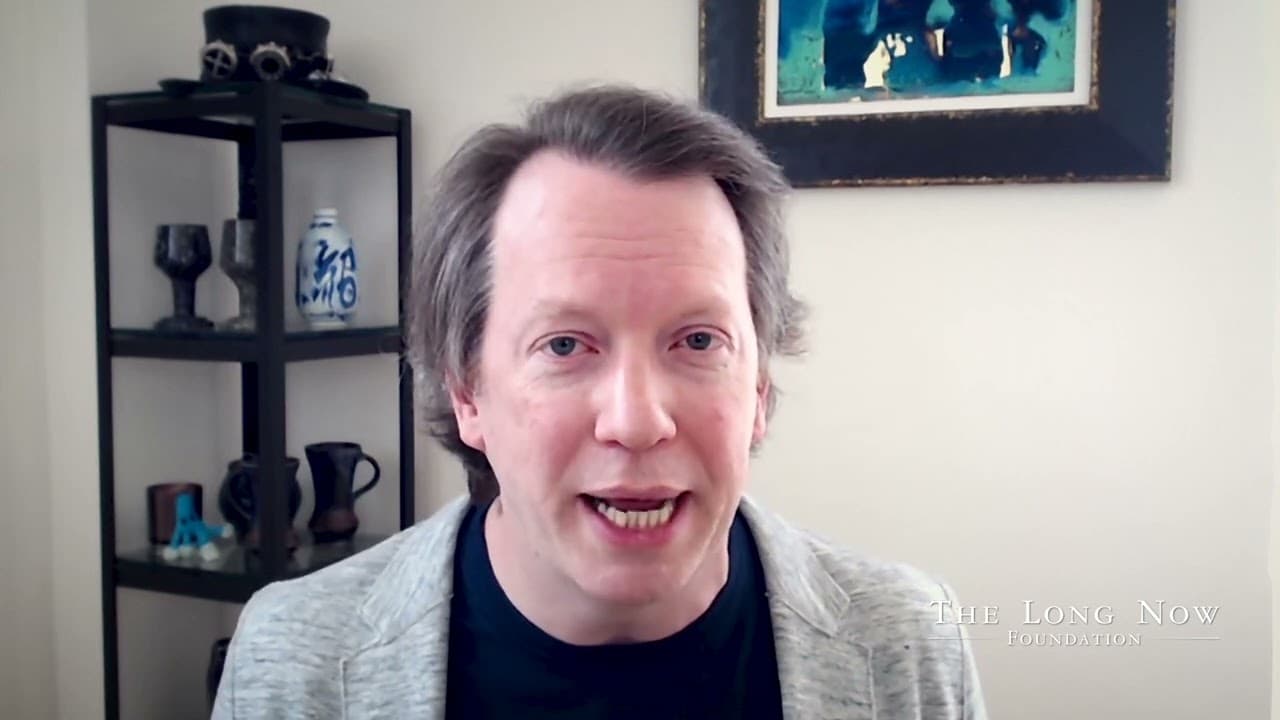
hello i'm alexander rose the executive director here at long now today i'm going to be joined by sean carroll from caltech and santa fe institute who's a theoretical physicist who's been really studying the nature of time itself and the human experience of time and really how we fit in it and here at long now we've been doing talks that kind of rel... Read More
Key Insights
- 🛟 Time is a fundamental aspect of human existence, influencing our perception and experience of life.
- ⏳ Physicists view time differently, where it is not a passing or flowing entity, but rather a way to label moments in the universe.
- 🖐️ The second law of thermodynamics and the concept of entropy play a crucial role in understanding the asymmetry between past and future.
- 👻 The increase of entropy over time allows for complexity and the existence of life, which temporarily maintains patterns before eventually reaching a high entropy state.
- ⏳ Human beings have the unique ability to imagine and think about the past and the future, creating a sense of flow through time.
Install to Summarize YouTube Videos and Get Transcripts
Explore YouTube Video Summarizer or Get YouTube Transcript Extractor
Questions & Answers
Q: Why does the concept of time as passing or flowing disappear when studied from a physicist's perspective?
Physicists view time as moments in the universe, and according to the fundamental laws, all moments are treated equally without a sense of passing or flowing.
Q: What is the role of entropy in understanding the asymmetry between past and future?
Entropy, which refers to the disorder or randomness of a system, increases over time according to the second law of thermodynamics. This increase in entropy gives rise to the arrow of time and the difference between the past and the future.
Q: How does the asymmetry between past and future manifest in our everyday lives?
We have more knowledge about the past, which we can access through records, memories, and artifacts, compared to the future, where predictions can be uncertain. Additionally, we have the ability to influence the future through our choices and actions.
Q: How does the growth of entropy relate to the existence of life and complexity?
Complex patterns, such as living organisms, can persist over time by using up the entropy in their surroundings. This persistence of patterns is made possible by the increase of entropy in the universe, which allows for complexity to arise temporarily before ultimately increasing to a high entropy state.
Summary & Key Takeaways
-
Time is a crucial aspect of human existence, influencing our planning for the future and our memories of the past.
-
Physicists have a different perspective on time, where it is not a flowing or passing entity, but rather a label for moments in the universe.
-
The fundamental laws of physics treat all moments of time as equal and do not account for the asymmetry between past and future that we experience in our everyday lives.
Read in Other Languages (beta)
Share This Summary 📚
Summarize YouTube Videos and Get Video Transcripts with 1-Click
Try YouTube Summary with ChatGPT & Claude or YouTube Transcript Generator
Explore More Summaries from Long Now Seminars 📚
Summarize YouTube Videos and Get Video Transcripts with 1-Click
Try YouTube Summary with ChatGPT & Claude or YouTube Transcript Generator