The Largest Sloth in History & Other Insanely Large Animals
TL;DR
Ancient animals grew to enormous sizes due to various factors such as increased oxygen levels, warm climate, lack of predators, and availability of large prey.
Transcript
[♪INTRO] Sharks bigger than a city bus. Snakes twice as long as anyone alive has ever seen. Go to a natural history museum, and it’s populated with giants so huge, everything alive today seems small by comparison. Unless, of course, you’re a blue whale. Those hold the title of being the largest animal to ever exist. Still, whales aside, what made i... Read More
Key Insights
- 👻 Increased oxygen levels in the Permian period allowed Meganeuropsis to grow larger than modern insects, while larvae adapted to handle the surplus oxygen.
- 🦕 Deinosuchus may have grown large to compete with dinosaurs or prey on them, evidenced by bite marks on dinosaur bones and the presence of turtle shell fragments in its coprolites.
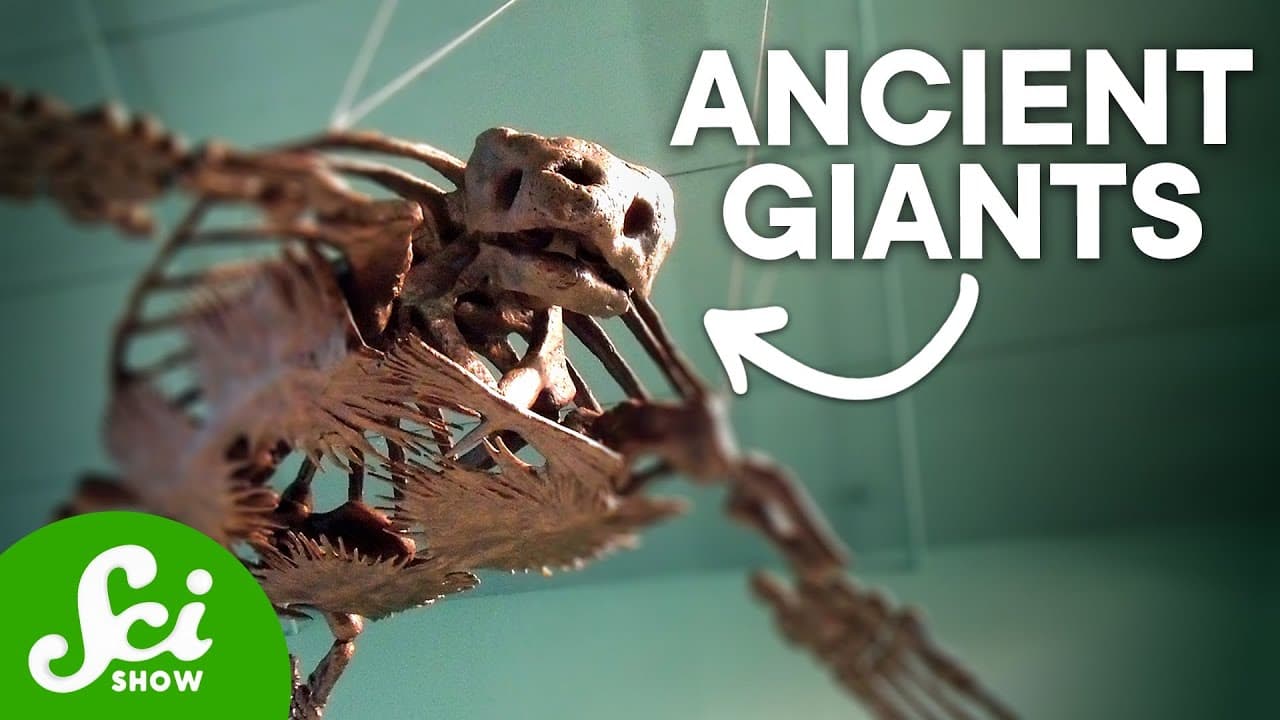
- 🐚 Archelon, a giant sea turtle, had a thinner shell and might have used its size to avoid predation by large marine reptiles. Its diet is under investigation.
- 🦻 Megalodon's size was likely facilitated by an abundance of large prey, and it may have had warm-blooded characteristics, aiding in its hunting abilities.
- 👻 Titanoboa's enormous size suggests a warm climate during the Paleocene epoch that allowed it to regulate its body temperature.
- 🤱 Terror birds in South America filled the predator niche after the extinction of dinosaurs, but their exact feeding habits and preferred prey are still debated.
Install to Summarize YouTube Videos and Get Transcripts
Explore YouTube Video Summarizer or Get YouTube Transcript Extractor
Questions & Answers
Q: What allowed Meganeuropsis to grow much larger than modern insects?
One hypothesis suggests that the increased oxygen levels in the Permian period allowed Meganeuropsis to grow larger as more oxygen could diffuse through its respiratory system. Another idea suggests that larvae grew quickly to decrease their surface area to volume ratio, making it easier to manage the extra oxygen.
Q: Why did Deinosuchus keep growing throughout its lifespan?
The growth rings in Deinosuchus' skin indicate that it continued growing until around the age of thirty-five. Scientists believe it may have needed to grow larger to compete with dinosaurs or to tackle large prey such as dinosaurs.
Q: What was the likely diet of Archelon?
While the details of Archelon's diet are still being studied, it might have eaten slow-moving or stationary prey due to its large size. It likely had a powerful bite and possibly fed on squid, soft prey, or even plant matter.
Q: How did Megalodon grow to such enormous sizes?
Megalodon's size was likely influenced by the abundance and diversity of large prey during its time. It may have also possessed warm-blooded characteristics, keeping it more active and providing an advantage in pursuing large prey.
Summary & Key Takeaways
-
Giant arthropods like Meganeuropsis flourished in the Carboniferous and Permian periods, possibly due to high oxygen levels in the atmosphere during that time.
-
Deinosuchus, an early alligator of the Cretaceous period, grew to massive sizes and could have competed with or preyed on dinosaurs.
-
Archelon, a giant sea turtle from the Cretaceous, had a massive size and thin shell, possibly to avoid predation by large marine reptiles.
-
Megalodon, the largest shark known to exist, benefited from an abundance of large prey and potentially had warm-blooded characteristics.
-
Titanoboa, a snake from the Paleocene, grew to enormous sizes due to a warm climate that allowed it to regulate its body temperature.
-
Terror birds filled the predator niche in South America after the extinction of dinosaurs, but their feeding habits and prey preferences are still debated.
-
Megatherium, the largest ground sloth, likely grew to its enormous size to access vegetation at greater heights.
Read in Other Languages (beta)
Share This Summary 📚
Summarize YouTube Videos and Get Video Transcripts with 1-Click
Try YouTube Summary with ChatGPT & Claude or YouTube Transcript Generator
Explore More Summaries from SciShow 📚


Summarize YouTube Videos and Get Video Transcripts with 1-Click
Try YouTube Summary with ChatGPT & Claude or YouTube Transcript Generator