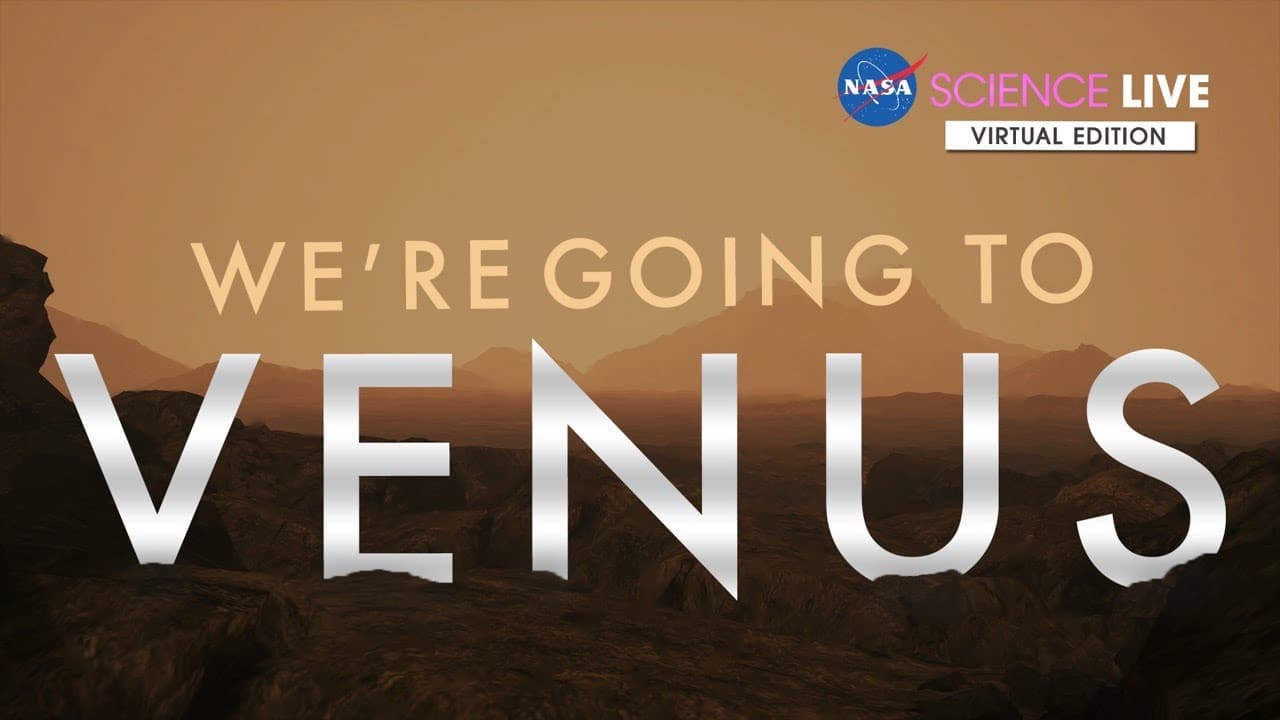
NASA Science Live: We’re Going to Venus - NASA Selects Two New Missions
TL;DR
NASA announces two new missions, Veritas and Davinci, to explore and study Venus, a planet with a thick atmosphere and mysteries about its past habitability.
Transcript
hello and welcome to another episode of nasa science live my name is karen fox and i'm nasa's senior science communications officer and your host for today's episode it's exciting to think about all we can learn from these two new missions to explore venus and later in the show you will have the chance to hear from scientists about each of these ne... Read More
Key Insights
- 🪐 Venus, with its thick atmosphere and extreme conditions, offers a unique opportunity to study the evolution and habitability of rocky planets.
- 👶 Veritas and Davinci aim to map the surface and analyze the atmosphere of Venus, providing new insights into its geology, climate, and changes over time.
- 🙂 The missions will help us understand the potential habitability of exoplanets and shed light on the history and future of Earth's own climate.
Install to Summarize YouTube Videos and Get Transcripts
Explore YouTube Video Summarizer or Get YouTube Transcript Extractor
Questions & Answers
Q: Why is Venus such an interesting planet to study?
Venus has a thick atmosphere and extreme temperature conditions, making it a unique and challenging planet to understand. It also holds clues about the evolution and habitability of rocky planets, including Earth.
Q: How will Veritas and Davinci explore Venus?
Veritas will orbit Venus and use radar imaging to create 3D reconstructions of the planet's topography and study active processes like volcanism. Davinci will plunge through Venus's atmosphere, making measurements of its composition and analyzing its history using instruments like spectrometers.
Q: What can the study of Venus tell us about exoplanets?
By understanding Venus, scientists hope to gain insights into the evolution and habitability of rocky planets. Studying Venus's atmosphere and history can help us understand similar exoplanets that may exist in other solar systems.
Q: How do these missions support NASA's overall goals in space exploration?
The missions to Venus not only expand our knowledge of our neighboring planet but also contribute to our understanding of planetary science, habitability, and the search for life beyond Earth. They provide important data and insights that can inform future missions to the Moon, Mars, and other destinations.
Summary & Key Takeaways
-
Veritas and Davinci are two new missions that aim to explore Venus, a planet that has not been visited by NASA in over 30 years.
-
Veritas will focus on mapping the surface of Venus and studying its geology and active processes like plate tectonics and volcanism.
-
Davinci will analyze the atmosphere of Venus, measuring its composition and searching for clues about its past habitability and the loss of its oceans.
Read in Other Languages (beta)
Share This Summary 📚
Summarize YouTube Videos and Get Video Transcripts with 1-Click
Try YouTube Summary with ChatGPT & Claude or YouTube Transcript Generator
Explore More Summaries from NASA 📚

Summarize YouTube Videos and Get Video Transcripts with 1-Click
Try YouTube Summary with ChatGPT & Claude or YouTube Transcript Generator