Parametric vs. Cartesian (vid#1): Graphing & Converting
TL;DR
Learn how to graph parametric equations and convert them to Cartesian form in this tutorial.
Transcript
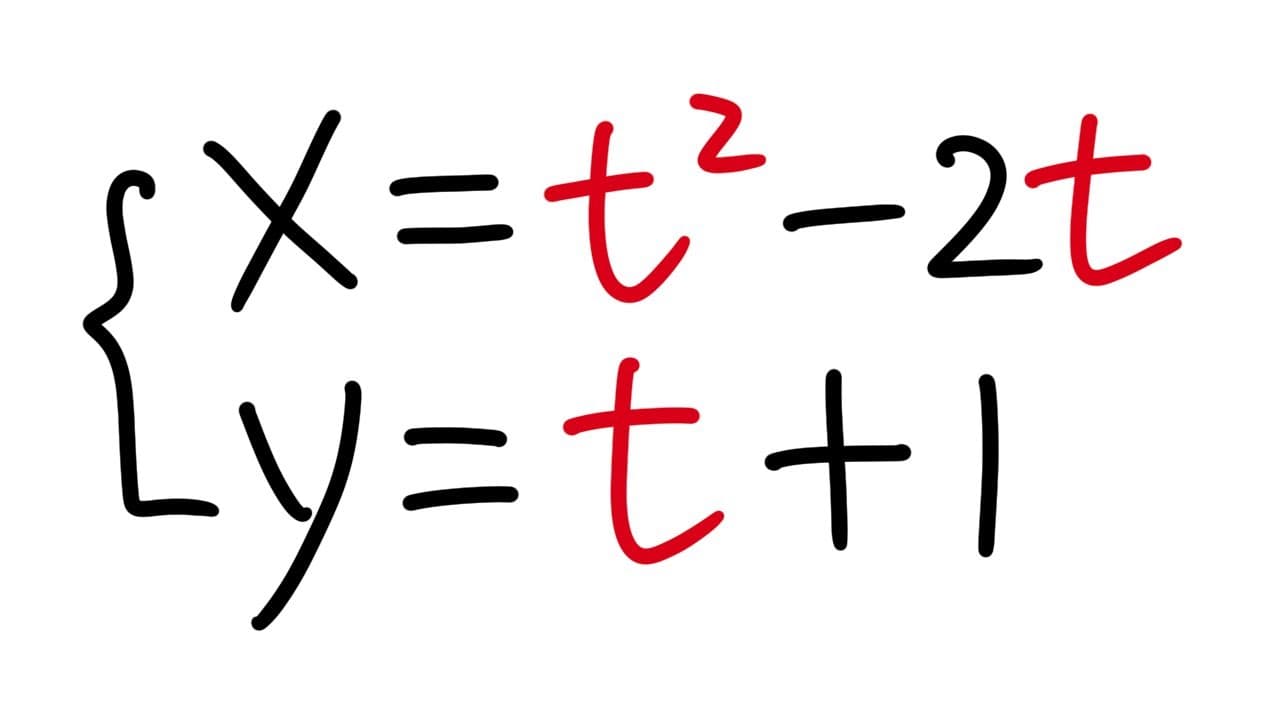
okay Griffin name in this series of videos I will show you guys how to work with parametric questions and for this video I will show you guys how to graph the curve defined by this parametric equation and I will show you guys how to change this to the Cartesian form so let's get started with this right here we have X is equal to T squared minus 2t ... Read More
Key Insights
- 📈 Graphing a curve defined by a parametric equation involves choosing values for the independent variable and calculating corresponding X and Y values.
- 💁 Converting a parametric equation to Cartesian form requires isolating one variable and substituting it into the other equation.
- 🦖 Negative values of the parameter T can be graphed by plugging them into the parametric equation.
- 👻 Cartesian form provides advantages such as simplifying the equation and allowing for easier analysis and calculation of derivatives.
Install to Summarize YouTube Videos and Get Transcripts
Explore YouTube Video Summarizer or Get YouTube Transcript Extractor
Questions & Answers
Q: How do you graph a curve defined by a parametric equation?
To graph a curve defined by a parametric equation, choose values for the independent variable, calculate the corresponding X and Y values, and plot the points on a graph. This will create a curve that represents the parametric equation.
Q: How do you convert a parametric equation to Cartesian form?
To convert a parametric equation to Cartesian form, isolate one variable in the equation and substitute it into the other equation. This will eliminate the parameter and express Y in terms of X, resulting in a Cartesian equation.
Q: Can you graph negative values for the parameter T?
Yes, you can graph negative values for the parameter T. When plugging in negative values of T into the parametric equation, calculate the corresponding X and Y values and plot the points on the graph. Negative values of T may result in points located in different quadrants.
Q: What are the advantages of using Cartesian form over parametric form?
Cartesian form allows you to express the equation in terms of X and Y only, making it easier to analyze the equation and calculate derivatives. It also enables you to graph the equation using a calculator by simply graphing two separate curves.
Summary & Key Takeaways
-
The video provides a tutorial on graphing a curve defined by a parametric equation and converting it to Cartesian form.
-
The tutor demonstrates how to choose values for the independent variable, calculate corresponding values for X and Y, and plot the points on a graph.
-
The tutor also explains how to change the parametric equation to Cartesian form by isolating one variable and substituting it into the other equation.
Read in Other Languages (beta)
Share This Summary 📚
Summarize YouTube Videos and Get Video Transcripts with 1-Click
Try YouTube Summary with ChatGPT & Claude or YouTube Transcript Generator
Explore More Summaries from blackpenredpen 📚
Summarize YouTube Videos and Get Video Transcripts with 1-Click
Try YouTube Summary with ChatGPT & Claude or YouTube Transcript Generator